The Hidden Connection
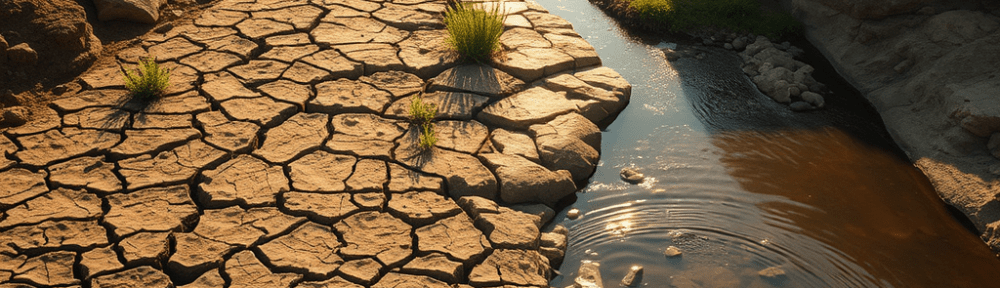
Many people are unaware that rivers, streams, and wetlands often depend on groundwater for their flow. When we over-extract sediment aquifers, we are not just jeopardizing our future water supply—we are effectively “pulling the plug” on the surface waters that support both human communities and natural ecosystems.

For example, in the western United States, over-pumping has led to the loss of up to 50% of river baseflow in some regions, leaving dry riverbeds and vanishing springs (Gleeson et al. 2012). Globally, about 1.7 billion people live in areas where groundwater is being extracted faster than it can recharge, highlighting the scale of this invisible crisis (Gleeson et al. 2012).
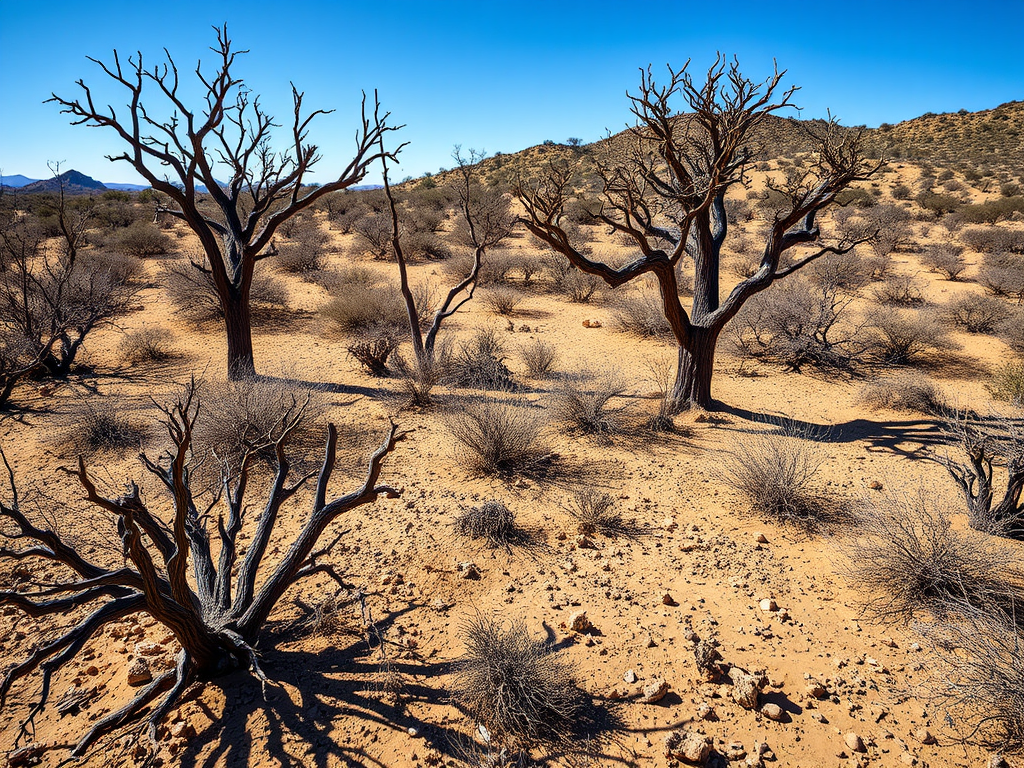
Around Phoenix, Arizona, groundwater withdrawal for agriculture led to the water table dropping beyond the reach of the native mesquite woodland. The trees died and most of the shrubs joined them (Rogers 1974).
The crisis deepens when we consider that depleted aquifers may never fully recover. Soil compaction caused by excessive pumping reduces an aquifer’s ability to store water in the future. Once aquifer systems collapse, they may be permanently damaged. This results in a long-term loss of water storage capacity and critical ecosystem support.
Communities Adapting
The groundwater crisis continues to intensify, but local solutions provide significant promise. Success hinges on:
- Understanding Local Hydrogeology: Effective management begins with a clear understanding of groundwater systems.
- Community Engagement: Active participation in conservation efforts fosters sustainable use.
- Long-Term Planning: Developing and implementing strategies that account for future demand and environmental constraints.
- Integrated Water Management: Managing surface water and groundwater as a single resource to ensure balanced use.
The city of Tucson, Arizona, provides a success story. By implementing aggressive water conservation, recycling greywater, and carefully managing aquifer recharge, the city has stabilized groundwater levels despite ongoing drought.

References:
Gleeson T, Wada Y, Bierkens MF, van Beek LP. 2012. Water balance of global aquifers revealed by groundwater footprint. Nature. 488(7410):197–200. doi:10.1038/nature11295.
Luo Y, Jinno K, Tsutsumi A, Kawamura A, Berndtsson R, Uvo CB. 2016. Groundwater as a buffer to climate variability: Patterns revealed by modeling. Hydrological Processes. 30(23):4354–4367. doi:10.1002/hyp.10883.
Famiglietti JS. 2014. The global groundwater crisis. Nature Climate Change. 4(11):945–948. doi:10.1038/nclimate2425.
Rogers, G. 1974. Vegetation change in relation to groundwater depletion and climate fluctuation in south-central Arizona: 1868-1974. Master’s thesis, Arizona State University.
Latest Posts
- Post 3: Pathological Industrial Adolescence
- Post 2: The Human Paradox
- Post 1: The Biosphere as Cognitive Community
- The Innocence of Ignorance: A New Perspective on Environmentalism
- Manifesto of the Initiation
 GarryRogers Nature Conservation