
Roadside Biology of Arizona

Project Overview
The Roadside Biology project seeks to engage a broad audience in appreciating the biodiversity that lines roadsides. The guide will feature narratives, maps, and photographs, and it will include a glossary and a wildlife checklist. As the project unfolds from literature review to fieldwork, and eventually to publication, it aspires to foster a deeper connection between travelers and the natural world, turning ordinary roadside views into gateways of ecological discovery and conservation awareness.
Click here for a list of possible Routes, Stops, and More
Introduction
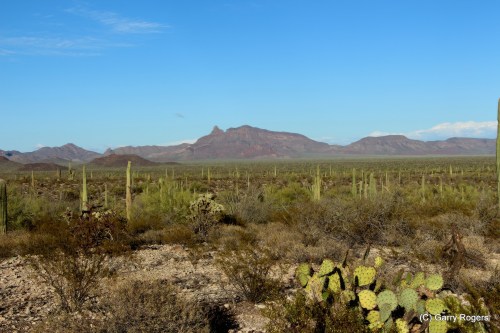
The Roadside Biology of Arizona is an interpretive field guide in atlas format. It is intended to introduce children, adults, and families to the visible biological landscape. Inspired by Halka Chronic’s Roadside Geology of Arizona, the Roadside Biology of Arizona will cover 48 routes and 60 stops across the state. Vegetation maps will illustrate the routes. Stops will have more detailed maps, repeatable photographs, and illustrations of the soil, plants, birds, and terrestrial animal signs visible at the stop.
The book’s appendix will include a glossary and a wildlife checklist. The checklist will resemble a geographical atlas’s gazetteer but with conservation status instead of population as the added information. Keywords: roadside biology, Arizona, vegetation, soils, wildlife.

Draft Atlas Forward
The plants growing beside the road are the major subjects of roadside biology. Plants are the primary producers that use solar energy to convert soil and water into living tissue. Plants provide the food, fiber, and shelter that animals require. They are the habitat. Once we learn to recognize habitats, we can anticipate which animals and signs we might see as we drive by or stop to explore.
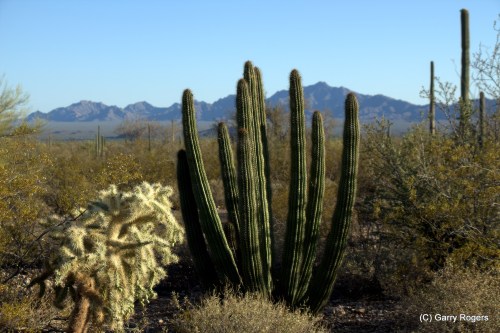
For 48 highway segments, the Atlas will include maps, photographs, diagrams, and narrative descriptions of dominant plant and animal species. For 60 stops, there will be detailed maps, repeatable photographs, and illustrations of the soil, plants, birds, and terrestrial animal signs.
The project begins at the Arizona-Mexico border on SR-85. This route runs 129 miles north to I-10. The first 25 miles pass through Organ Pipe National Monument.

Conclusion
The Roadside Biology of Arizona sets the stage for more public involvement in nature conservation. Learning that different vegetation provides habitats for different animal species can lead to interest and concern for the health and survival of wild creatures and that will benefit us all.
Your message has been sent

 GarryRogers Nature Conservation