India: Selling Out To Monsanto. GMOs and the Bigger Picture

On 15 August, India will mark its 67th anniversary of independence from Britain. It may seem strange to some that a nation would publicly celebrate its independence while at the same time it less publicly cedes it to outsiders. The gleaming façade of flags and fly-pasts will belie the fact that national security and independence do not depend on military might and patriotic speeches. Eye-catching celebrations will take place in Delhi and much of the media will mouth platitudes about the strength of the nation and its independence. The reality is, however, an ongoing, concerted attempt to undermine and destroy the very foundation and security of the country.”

Source: www.globalresearch.ca

Thanks to Humans in Shadow and Spirit and Animal for reporting on this article.

GR:  It is painful to compare old films of India’s hopeful, jubilant national attitude and plans for a great future after independence, with conditions today.  We underestimated the power of human nature, especially our innate desires and fears.  Some of the worst elements of our nature are desire to reproduce, desire for wealth,fear of competitors, and fear of strangers.

Red tide bloom moves in on Florida

“A monstrous red tide bloom, the largest seen in Florida since 2006 is advancing on the state’s beaches. It has already killed thousands of fish in the Gulf of Mexico, and officials are now concerned about health risks if it washes ashore.”  Source: elispiritweaver.wordpress.com

GR:  August 11 (latest update:  August 9, map)  According to the Florida Fish and Wildlife Conservation Commission, “Satellite images from the Optical Oceanography Laboratory at the University of South Florida show a patchy bloom up to 60 miles wide and 90 miles long, at least 20 miles offshore between Dixie and northern Pinellas counties in northwest and southwest Florida. This bloom has caused an ongoing fish kill.  FWC’s Fish Kill Hotline has received reports of thousands of dead and moribund benthic reef fish including various snapper and grouper species, hogfish, grunts, crabs, flounder, bull sharks, lionfish, baitfish, eel, sea snakes, tomtates, lizardfish, filefish, octopus, and triggerfish. Water discoloration and respiratory irritation have been reported offshore in the bloom patch. Forecasts by the Collaboration for Prediction of Red Tides show little movement of the surface bloom and slow east/southeast movement of bottom waters, which should keep the bloom offshore within the next few days.”

GR:  Red tides have occurred in the Gulf of Mexico for at least 400 years.  There is evidence that they have become larger and more frequent over the past 50 years (Wikipedia).

Algae has now (August 11) fully covered the smallest of my three ponds.  Previous blooms killed all the fish, this one will have to be content with the smaller organisms.  The larger ponds are threatened, but the abundant waterlilies on those ponds are holding on for now.  By occupying the surface of the ponds the lilies physically block the algae. The excess nitrates that enrich the pond water and promote excess algae growth come from the farm just upstream of my place.  Or perhaps there is a huge bat guano deposit on the floodplain of the river, or perhaps prehistoric settlers polluted the area, or maybe it was just the Martians dropping flying saucer wastes.

Fracking’s Unlikely Opponents: German Breweries

GR:  In the United States, people have begun filtering and drinking their urine.  How can the beer makers complain about recycling filthy water; the issue has been discussed ever since indoor toilets were invented.

Brewers say that contaminated groundwater would ruin a centuries-old tradition and industry.

“When the Bavarian Purity Law was first declared in 1487, not a single European had stepped on the land above the Marcellus Shale in the Eastern United States. The First Nations of Canada weren’t fighting natural gas pipelines, because as far as natural resources go, the Alberta tar sands were centuries away from being in the picture—as was the internal combustion engine.
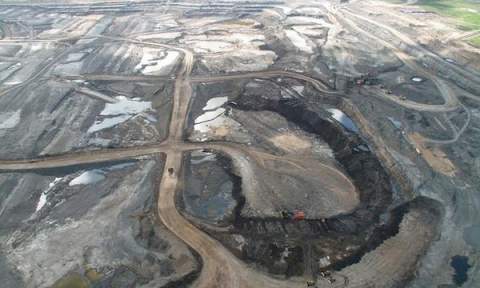
“Yet the law, the Reinheitsgebot, which strictly dictates the ingredients that can be used in making beer, is giving the powerful German brewing industry historic ammunition against the creeping potential for new natural gas exploration.

Source: www.takepart.com

Canadians Can’t Drink Their Water After 1.3 Billion Gallons of Mining Waste Flows into Rivers

Hundreds of people in British Columbia can’t use their water after more than a billion gallons of mining waste spilled into rivers and creeks in the province’s Cariboo region.

A breach in a tailings pond from the open-pit Mount Polley copper and gold mine sent five million cubic meters (1.3 billion gallons) of slurry gushing into Hazeltine Creek in B.C. That’s the equivalent of 2,000 Olympic swimming pools of waste, the CBC reports. Tailings ponds from mineral mines store a mix of water, chemicals and ground-up minerals left over from mining operations.

The flow of the mining waste, which can contain things like arsenic, mercury, and sulfur, uprooted trees on its way to the creek and forced a water ban for about 300 people who live in the region. That number could grow, as authorities determine just how far the waste has traveled. The cause of the breach is still unknown.

Source: www.nationofchange.org

GR:  Such a great waste of the land.  Ecological succession, the natural process of recovery after a landslide or flood can take hundreds of years.  However, the mined landscape looks almost as harsh as a lava flow.  Humans could be long gone by the time nature reclaims the land.  Oh Canada, what have you done?

Cowspiracy: The Sustainability Secret–Livestock Impacts

Livestock Impacts

GR:  The Earth could get along just fine without us.  If anyone can think of an ecosystem function that requires our presence, I would like to hear about it.  Circumstantial and fossil evidence indicates that even when human numbers were small, the fires, animal drives, and plant preferences had harmful effects.  Ecosystem resilience absorbed early human impacts, but now with more than seven billion of us, the impacts are simply overwhelming earth ecosystems. Livestock?  Earth could tolerate a few domestic beasts, but not the billions we have now.  Watch the video.

The following By Read on The Wildlife News

“The movie goes far beyond the obvious impacts of livestock production such as overgrazing of rangelands, and talks about everything from water pollution (from manure) to energy use in the production of meat to the mistreatment of meat producing animals by humans. Overall it makes a very cogent and articulate argument against meat/dairy consumption.

“They even take on Alan Savory, advocate of more livestock production as a means of reducing global warming, pointing out that methane production from domestic animals is one of the largest contributors to warming climate, and vastly exceeds any ability of grazed grassland ecosystems to absorb more carbon.

“The video is full of facts illustrated with great graphs like how many more gallons of water or the amount of land required in the production of a hamburger vs. a veggie burger that will make it easy to understand why livestock are one of the greatest threats to global biodiversity and ecosystems” By

Source: www.thewildlifenews.com

Endangered Species Condoms

“The world’s population now numbers more than 7 billion, and we add another 227,000 people to the planet every day. More people means less room for wildlife. The Endangered Species Condoms Project provides people with a unique, engaging way to talk about the connection between human population growth and the extinction crisis.”

Source: www.biologicaldiversity.org

GR:  Sign up to participate in the endangered species program.  The massive human population and its resource use are responsible in our time for the great extinction of plants and animals.  In all our endeavors for wildlife protection, we must never forget that the problems we see are often just symptoms of human overpopulation.

US Fish and Wildlife Service Ending Neonic and GMO Use in Most National Wildlife Refuges

These elements of “industrial agriculture” are not needed at refuges.  Pressure to ban neonictinoid pesticides and mobilization against GE crops has been growing. The U.S. government is perceived by man…

Source: www.thewildlifenews.com

GR:  The US Fish and Wildlife Service will terminate use of Neonics and GMOs in most wildlife refuges by 2016. Let’s hope this is the start of a change across the US Department of the Interior, the largest manager of US public lands. It will be a struggle; Bayer, Monsanto, Syngenta, and the other large producers of pesticides and/or GMOs will oppose the change with millions of dollars spent on politicians and leaders of the Interior Department’s nine bureaus.

Why Killing Wildlife Is Very Bad For Our Health

“A just-published study in the online journal PLOS Biology says that shrinking biodiversity means a rise in tropical diseases including malaria and dengue fever.

“One-third of the world’s species are now threatened with extinction. It is a massive loss of biodiversity that has serious implications for our health and for the earth’s health: A just-published study in the online journal PLOS Biology says that shrinking biodiversity could mean a rise in tropical diseases including malaria and dengue fever. The study makes a case for why, in fighting human disease, ecological preservation is just as important as medicine and vaccines.

“As more and more species of animals and plants face extinction, humans are at greater risk of being affected by parasitic and vector-borne diseases. The latter term refers to bacterial and viral diseases transmitted by mosquitos, ticks and fleas. The reason for the rising risk is that, with a decreasing variety of animal carriers for a disease, an illness’ “life cycle” is less likely to be disrupted, as Matthew Bonds, a researcher at Harvard Medical School and the study‘s lead author, explains to NPR.”

Source: www.care2.com

GR:  I suppose that the surviving wildlife species will also have to tolerate more and more diseases.  That is one creepy sign.  So don’t go down to the woods today, because you won’t be alone.

Plant Trees, Save Lives

Plant a tree, save a life

Cottonwood Tree

Cottonwood Tree

“Air pollution is a serious problem in the United States. As a young child growing up in suburban Los Angeles, I remember days in which we were not allowed to play outside because of the air quality. Kids in other states had snow days, or so I was led to believe, but we had smog days.

“LA is doing better now. We don’t have smog days anymore. But air pollution still causes quite a bit of problems, both for public health as well as for the cost of health care. It’s been implicated in diseases like bronchitis, asthma, and other respiratory conditions. It impacts the cardiac, vascular, and even neurological systems. It leads to emergency room visits, hospital admissions, and sometimes morality. Kids miss school, adults miss work. Thankfully, we have trees. It is not an exaggeration to say that trees save both lives and money. That’s because they scrub the air of pollution.

The Clean Air Act required the U.S. Environmental Protection Agency to set air quality standards for six “criteria pollutants” that are both common throughout the country and detrimental to human health and welfare: carbon monoxide, nitrogen dioxide, ozone, lead, sulfur dioxide, and particular matter, which includes tiny little bits of stuff less than 2.5 microns in diameter. In 2005, particulate matter was implicated in some 130,000 deaths, and 4700 were related to ozone.

“But the truth is, those numbers could have been much worse if not for the trees. That’s according to a new study by U.S. Forest Service researcher David J. Nowak and colleagues, published this week in the journal Environmental Pollution.”

Read More

GR:  Of course, in the Southwest we can’t plant more trees because the supply of water is dwindling.  Over the past year, I’ve had to turn six large native cottonwood trees into wildlife woodpiles.  Cottonwoods are phreatophytes whose roots draw on groundwater.  If nearby wells withdraw so much groundwater that the water level sinks below the reach of the roots, the trees will die.  The demand for groundwater where I live is growing along with the local population.  More trees are dying and I will have to cut them this winter.