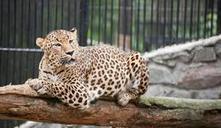
 The South China Morning Post reports on the response of David Neale, Animal Welfare Director, Animals Asia Foundation, to a suggestion that Hong Kong needs another zoo.
“For generations we have wilfully destroyed natural habitats and caused a global species crisis,” said Neale. “In an attempt to rectify this appalling situation, we convince ourselves it is okay to keep wild animals in captivity so that we can ‘educate’ people about the threats to their survival, with the belief that displaying animals in unnatural environments and, in a number of cases, training them to perform for our entertainment, will help to reverse this downward spiral.
“This approach needs a fundamental shift if we are to prevent the further destruction of habitats and loss of species we are currently experiencing. Children must learn about nature and the need to protect it by experiencing nature for themselves, and this experience must be within the natural environment and not within the confines of a concrete and wire enclosure.
“Hong Kong is home to almost 3,000 varieties of flowering plants, and more than 2,000 moth, 110 dragonfly and 230 butterfly species. It is home to many native birds, reptiles, amphibians and mammals.
“This includes two resident cetaceans, the Chinese white dolphin and the finless porpoise.
“As educators we should foster empathy and respect for this rich array of native wildlife, and use this empathy and respect as a springboard for our children to learn about other non-native species.
“We must ensure our children are aware of their presence and the threats they face. Our children can then think about the choices they can make to help to protect and conserve these species within their natural environment.
“Having another zoo in Hong Kong would create the opposite scenario, teaching children that it is acceptable to keep animals outside their natural habitats, and for us to manage individual animals’ lives so that we are able to view them for our own pleasure and entertainment.
“Animals Asia Foundation is opposed to the development of another zoo in Hong Kong. It urges the government to ensure that all schoolchildren have access to humane education opportunities that develop a connection with the native wildlife of Hong Kong, ensuring that the next generation can find the necessary solutions to the current national and international biodiversity crisis which has been created by this one.”
See on http://www.wildlifeextra.com
 Two whale sharks destined for an ocean theme park in China were rescued after an 18-month investigation by Wildlife Conservation Society, covered by investigative photojournalist Paul Hilton. The operation, supported by Indonesia’s marine police, revealed where the protected species were being illegally caught and kept in sea pens by a major supplier of large marine megafauna to the international wildlife tradePaul HiltonMonday 6 June 2016 06.29 EDT. More: Rescued whale sharks released back into the ocean – in pictures | Environment | The Guardian
 GarryRogers Nature Conservation