Making Friends With Crows

GR:  Here’s an excellent DIY post for all you biophiliacs.  We have ravens (also corvids) around Coldwater Farm, but they will probably respond just as the crows do.

Feeding and watching wildlife can be worthwhile, but can lead to problems. Here are two links to the laws and advice concerning wildlife in Arizona:  FAQ (covers laws),   Living With Wildlife (covers individual species).

Crow“It’s a lot of fun to feel like you have wild friends, and feeding birds is a great way to connect with nature.  I’ve been asked many times how to make friends with local corvids, crows in particular.  While this post is mostly aimed at American crows in North America, it’s applicable to most corvids.  However, please be aware of local laws regarding feeding birds.

“The best way to get on a crow’s good side is through their stomach.  Unsalted peanuts in-shell work wonders (i.e. crow crack).  The best thing you can do is put out peanuts consistently and don’t look directly at the birds when you do so (at least initially).  Be conspicuous about you being the one to drop the food, but do not throw the food toward the crows or look at them initially, but do make sure they are in the area.  Then, go back inside.  It may take them no time at all to come to your food, or it may take them a while before they trust it.  Crows are very neophobic and suspicious, and even if it’s a food they love, they will be careful simply because it came from a human.  (I suspect if you live in an area with high traffic or restaurants nearby, they will take less time to come to your offering than if you live in a quiet, low-traffic suburban area.)”  From:  The Corvid Blog By Jennifer Campbell-Smith
Arizona Wildlife Notebook Revised – #Wildlife, #Arizona, #Conservation

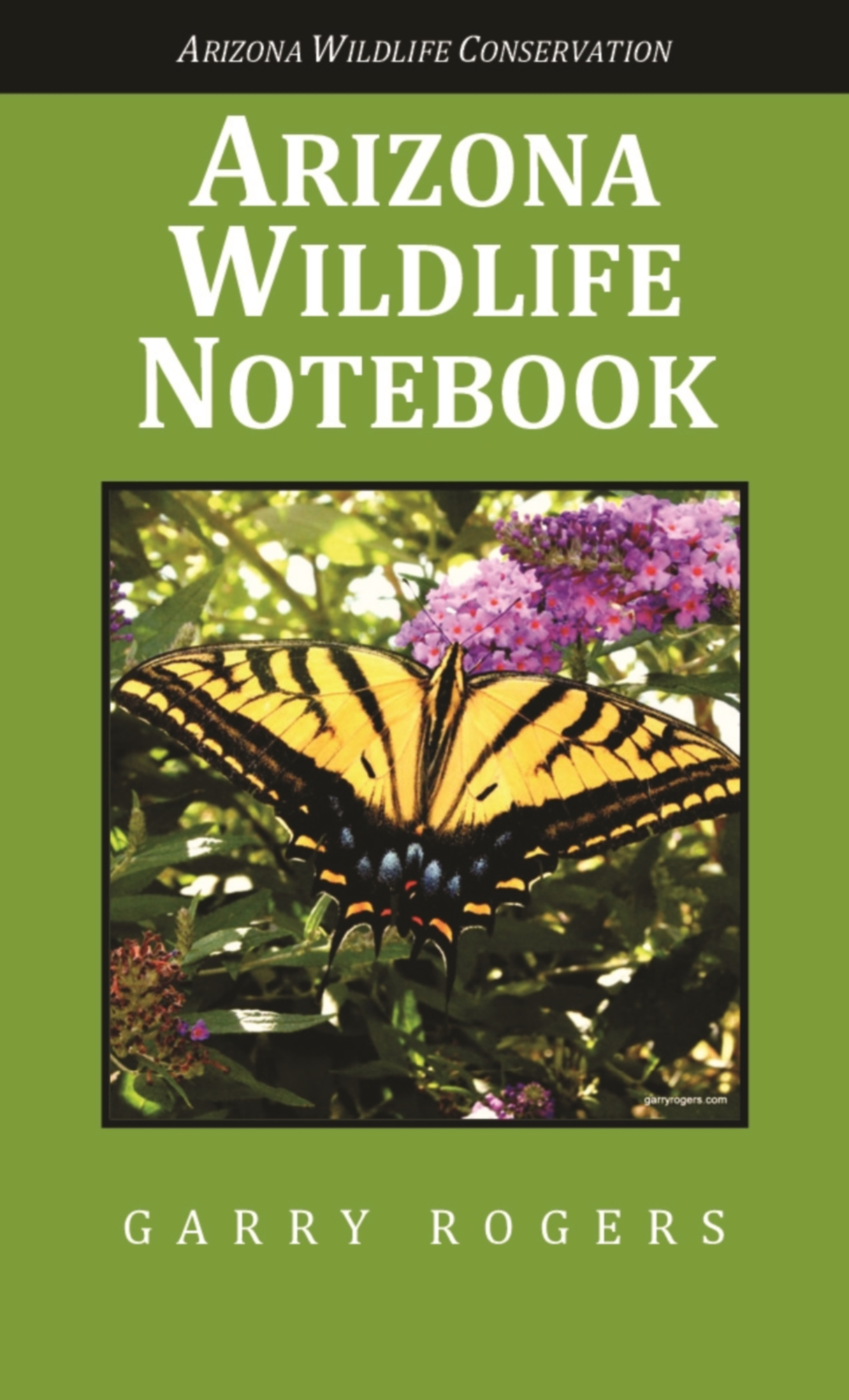
Arizona Wildlife Notebook

A new edition of the “Arizona Wildlife Notebook” is available.

In the year, 2015, lethal heat waves and storms made it clear that humanity was changing the Earth.  Anyone who paid attention to the news knew that Earth’s animals and plants were disappearing.

Animal Declines

This figure from the review by the World Wildlife Fund (2014) shows that, from 1970 to 2010, Earth’s animals declined by 52%.

I have come to believe that nature conservation is the great challenge of our time. Human beings are imposing a mass extinction that will eliminate almost all animals on Earth. We may not be able to stop this, but I believe that the Notebook will be useful for anyone who hasn’t given up and wishes to work to protect Earth’s creatures.

Arizona Species Conservation Status

For this edition of the Notebook, I added more information on conservation.  The table below shows group status for species that AZGFD specialists consider critically imperiled (S1), imperiled (S2), and vulnerable (S3).  It also shows group status according to the Endangered Species Act (ESA) for Threatened (LT) and Endangered (LE) species.  I didn’t include butterflies, moths, damselflies, and dragonflies in this table because the status of most species in those groups is unknown.

Many species that the AZGFD says are critically imperiled are not given national recognition and protection by the U. S. Endangered Species Act (ESA).  It seems that only after species are mostly gone that protection becomes available.  Thus, the ESA achieves very little overall protection from biodiversity loss.

ARIZONA WILDLIFE CONSERVATION STATUS

Species Group

Total  minus

Exotic & Extinct

AZGFD

S1+S2+S3

ESA

LT+LE

Amphibians

31

18 (58%)

2

Birds

451

260 (58%)

9

Fish

40

40 (100%)

13

Lizards

67

27 (40%)

0

Mammals

189

64 (34%)

15

Snakes

76

35 (46%)

1

Turtles

10

6 (67%)

2

TOTAL

864

450 (52%)

42

The third column shows how many species AZGFD considers at risk.  For instance, all native Arizona fish species are at risk, and about one-third of native Arizona mammals are at risk.  Being “at risk” usually means that numbers are dropping.  The principal causes are construction of buildings and roads, and invasive plants and animals.

Click–Arizona Wildlife Notebook–for a free copy of the 168-page book formatted as a PDF “fillable form.” If you like the book, tell others. Write a review for Amazon: http://mybook.to/AZWildlifeNotebook , or Goodreads: http://bit.ly/1Mkgmei.  If you would like to review a printed copy of the book, send a note using the form below.  Thank you.

Now that you’ve downloaded the book, you have a conversation-starter for tonight’s warm-up party for World Animal Day!

Go back

Your message has been sent

Warning
Warning
Warning
Warning

Warning.

Sightings of Australia’s common birds are declining

Sightings of some of Australia’s most common birds, including those that have inspired folk songs and become mascots of football teams, are decreasing in parts of Australia, according to a major report on the health of the country’s bird population.

Among the species for which fewer sightings have been recorded are the laughing kookaburra, magpie and willie wagtail.

Released by Environment Minister Greg Hunt on the eve of Thursday’s Threatened Species Summit at Melbourne Zoo, the State of Australia’s Birds 2015 report’s surprise finding was that it was the country’s “common birds” that weren’t faring so well.

Sourced through Scoop.it from: www.theage.com.au

GR:  This is being reported around the world, and not just for birds; most species are declining.

Operation Owl: boxes help save these beautiful bellwethers of biodiversity

A Working-based volunteer group strives to create habitats for these nocturnal birds and inspire children to help in conservation, discovers Patrick Barkham.

“These mostly nocturnal birds of prey are an enduring symbol of wisdom and mystery in our culture and children’s books. Harry Potter has triggered a renewed fascination with them. Everyone seems to love owls but there is a problem: populations, particularly of barn owls, have massively declined because of habitat loss but also partly because there are no homes for these much-loved species.

“The possibilities for inspiring schools and young people are endless: owls are a keystone species, bellwethers of biodiversity, and Operation Owl hope that sparking local interest in owls at the apex of a food chain will help people treasure prey species – voles, shrews and invertebrates – and the healthy grasslands, heathlands and woodlands on which they all depend” (Source: www.theguardian.com).

How to set up your own Operation Owl

1-IMG_2241GR:  At least three species of owls live all or part of the year around my place.  We have a Barn Owl, Northern Pygmy-Owls, and Great Horned Owls.  Last fall I installed a Barn Owl box, and I hope to have residents this summer.  Our local Barn Owl story is here.

Recovery Strategy for the Golden-winged Warbler

Source: ovnaturalists.wordpress.com

Environment Canada of the Canadian Wildlife Service has called for comments on their proposed recovery strategy for the threatened Golden-winged Warbler.  The public notice with contact information are in the image below.  Follow the link and look under December 31, 2014.

Golden-winged Announcement

Are human behaviors affecting bird communities in residential areas?

A new study from the Wildlife Conservation Society shows that habitat alteration may be less important than other factors- such as human behavior- in driving the effects of “exurban” development on bird communities.  Source: phys.org

GR:  This limited study needs repetition.  Its results suggest that the human impacts identified in other studies overwhelm the contribution of natural habitat diversity.  Thus, regulation of human activity can be equal across habitats, and need not vary with habitat structural diversity.  The human activities include initial construction that eliminates habitat, introduction of exotic species, movements, noise, lighting, and pets that degrade habitat quality.  We really need to stop destroying habitat.  A first step is revising our building and zoning codes to combine new residences and community activities into single tall buildings.

Collapse of Avian Biodiversity in the Pacific – MAHB

We arrived off Ducie Island at dawn on October 12. The rough seas and the air above the low atoll in the Pitcairn group of the South Pacific were alive with birds.

Our last stop was Easter Island, one of the most isolated islands in the world, some 1200 miles east of the Pitcairn group and 2000 miles from South America.  Easter Island is the site of an ecocatastrophe, made famous by Jared Diamond.[4]  All of its native birds are extinct, replaced by a collection of “garbage birds” (ones not sought by bird-watchers), especially the wide-ranging South American Diuca finch pictured here, which flits among the looming stone heads.

The state of the birds on these islands is a harbinger of a catastrophe that looms globally,

Source: mahb.stanford.edu

GR:  Our leaders could promote nature preservation.  Our college planning departments could recommend zoning and construction changes that would avoid so many animal deaths.  Without leadership and rules, our urban population will remain unconcerned with the fate of wild animals.  Perhaps a few hundred years from now people will have learned to appreciate the species that remain.  For those of us afflicted with biophilia, this is a painful prospect.  Would it be effective to conduct petition campaigns aimed at our planning education and government departments?

Protections blocked, but sage grouse work goes on

(AP)—U.S. wildlife officials will decide next year whether a wide-ranging Western bird species needs protections even though Congress has blocked such protections from taking effect, Interior Secretary Sally Jewell said Wednesday.

Source: phys.org

GR:  And the prize goes to……….Homo sapiens!  The U. S. Congress has protected the grazing and mining industries from the endangered Sage Grouse.  Thank you Thank you.  Nothing can stand against us!  Cheers, cheers, cheers!