Inventory of Moths

Biodiversity in the Andes: Teaming up international colleagues, an entomologist of Jena University identifies nearly 2,000 geometrid moth species in the South-American Andes The rain forests in the mountains of the tropical Andes are amongst the… From: www.innovations-report.com

GR:  Yes!  We need more work like this.  And we need repeated surveys to show when species are having trouble.
Biologists estimate that only about 10% of all moth species have been identified.  Nighttime pollinators as sensitive to pesticides as their daytime counterparts, the butterflies, these innocent creatures could be going extinct faster than we are finding them.  We, the only species capable of caring for the others, might never know how many moths there were before the current mass extinction.

Nature Conservation Is Impossible Without Field Inventories

Nature Conservation Requires Field Inventories

We are not meeting a fundamental requirement for nature conservation.  Simple repeated inventories of what is and what is not present is the first step toward preserving balanced ecosystems.  We have very few.  We can’t act to control invasive species or work to maintain native species when we don’t know where they are, and we don’t know how their numbers are changing.

We focus too much of our energy and resources on inventories made from satellites.  Remote sensing that cannot identify species of plants and is totally blind to animal presence has very little value compared to what observers can record during on-the-ground surveys.

inventory (ecologyllc.com)So what can we do?  We can call for citizen-naturalist volunteers to take pencil and paper outdoors and record what they see.  A few weeks training can prepare most people to make useful observations.  For an example of the value of such work, look at the Audubon Society’s Christmas Bird counts.

Here’s an article that discusses the lack of information on species distribution.

Gaps in our information about biodiversity means we are at risk of focussing our conservation efforts in the wrong places.

“New research from Newcastle University, UK, University College London (UCL) and the University of Queensland, Australia, highlights the uncertainty around our global biodiversity data because of the way we record species sightings.

The study explains how a lack of information about a species in a particular location doesn’t necessarily mean it’s not there and that recording when we don’t see something is as important as recording when we do.

Publishing their findings today in the academic journal Biology Letters, the team say we need to change the way we record sightings — or a lack of them — so we can better prioritise our conservation efforts in light of the Convention on Biological Diversity.

“Dr Phil McGowan, one of the study’s authors and a Senior Lecturer in Biodiversity and Conservation at Newcastle University, said:

“Where there is no recent biodiversity data from an area then we might assume a species is no longer found there, but there could be a number of other possible reasons for this lack of data.

“It could be that its habitat is inaccessible — either geographically or due to human activity such as ongoing conflict — or perhaps it’s simply a case that no-one has been looking for it.

“Unless we know where people have looked for a particular species and not found it then we can’t be confident that it’s not there.”

“To test the research, the team used the rigorously compiled database of European and Asian Galliformes — a group of birds which includes the pheasant, grouse and quail.

“Our long-standing love of the Galliformes goes back hundreds of years which means we have records that are likely to be much better than for other groups of animals or plants,” explains Dr McGowan.

“Not only have these birds been hunted for food, but their spectacular colours made them valuable as trophies and to stock the private aviaries of the wealthy. In the late 1800s and the turn of the last century, the Galliformes were prized specimens in museum and private collections and today they are still a favourite with bird watchers.”

“Analysing 153,150 records dating from 1727 to 2008 and covering an area from the UK to Siberia and down to Indonesia, the team found that after 1980, there was no available data at 40% of the locations where Galliformes had previously been present.” Newcastle University. (2016, March 8). Scientists call for a shake-up in the way we record biodiversity. ScienceDaily. Retrieved March 9, 2016 from http://www.sciencedaily.com/releases/2016/03/160308211807.htm
Moorland Forum – Understanding Predation Report Launch

Framing a new dialogue for biodiversity: science and local knowledge https://t.co/wWXE28S37p #BTO #GWCT #RSPB #NGO https://t.co/3Mk3cRlpT4... www.moorlandforum.org.uk

GR:  This work begins with an inventory of a select group of species.  And this is where research on the factors contributing to species numbers must begin (http://wp.me/p26kDO-xC).  Predation is mentioned, but many other factors could be involved.  Human impacts through habitat use and removal, climate change, toxic chemicals, livestock, and recreation are just a few of the possible explanations for wildlife population changes.

Rethinking assessment of biodiversity in northern New Zealand forests: Incorporating lichens, a neglected but important group, in vegetation monitoring

The Australia & Pacific Science Foundation is supporting an @UnitecNZ biodiversity project https://t.co/PhtjHseILQ    from: www.apscience.org.au

GR:  Information on distribution, numbers, and trends is lacking for many species groups.  This project aims to add information for New Zealand forest lichens.  Many similar projects are needed worldwide.

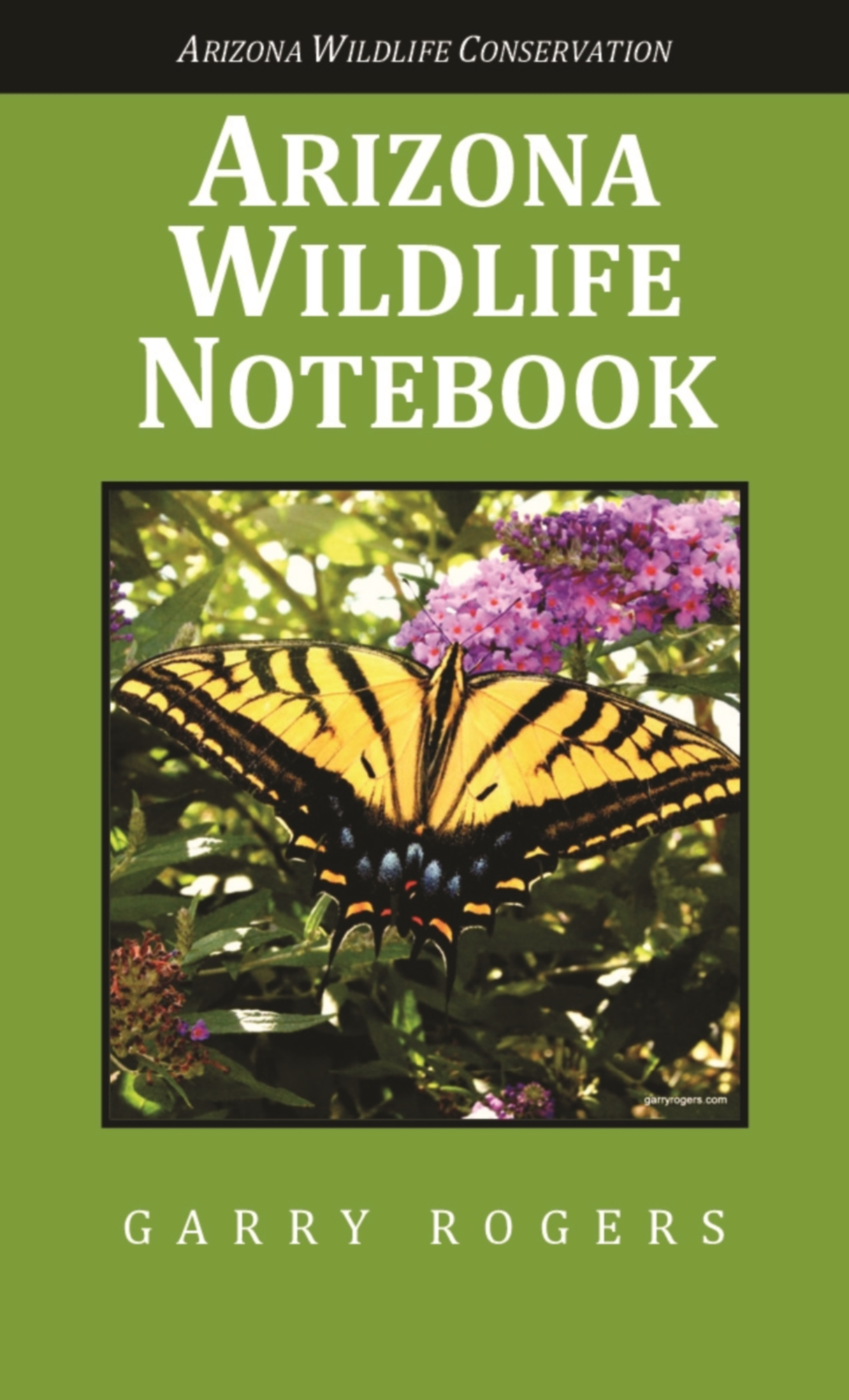
Arizona Wildlife Notebook Revised – #Wildlife, #Arizona, #Conservation

Arizona Wildlife Notebook

A new edition of the “Arizona Wildlife Notebook” is available.

In the year, 2015, lethal heat waves and storms made it clear that humanity was changing the Earth.  Anyone who paid attention to the news knew that Earth’s animals and plants were disappearing.

Animal Declines

This figure from the review by the World Wildlife Fund (2014) shows that, from 1970 to 2010, Earth’s animals declined by 52%.

I have come to believe that nature conservation is the great challenge of our time. Human beings are imposing a mass extinction that will eliminate almost all animals on Earth. We may not be able to stop this, but I believe that the Notebook will be useful for anyone who hasn’t given up and wishes to work to protect Earth’s creatures.

Arizona Species Conservation Status

For this edition of the Notebook, I added more information on conservation.  The table below shows group status for species that AZGFD specialists consider critically imperiled (S1), imperiled (S2), and vulnerable (S3).  It also shows group status according to the Endangered Species Act (ESA) for Threatened (LT) and Endangered (LE) species.  I didn’t include butterflies, moths, damselflies, and dragonflies in this table because the status of most species in those groups is unknown.

Many species that the AZGFD says are critically imperiled are not given national recognition and protection by the U. S. Endangered Species Act (ESA).  It seems that only after species are mostly gone that protection becomes available.  Thus, the ESA achieves very little overall protection from biodiversity loss.

ARIZONA WILDLIFE CONSERVATION STATUS

Species Group

Total  minus

Exotic & Extinct

AZGFD

S1+S2+S3

ESA

LT+LE

Amphibians

31

18 (58%)

2

Birds

451

260 (58%)

9

Fish

40

40 (100%)

13

Lizards

67

27 (40%)

0

Mammals

189

64 (34%)

15

Snakes

76

35 (46%)

1

Turtles

10

6 (67%)

2

TOTAL

864

450 (52%)

42

The third column shows how many species AZGFD considers at risk.  For instance, all native Arizona fish species are at risk, and about one-third of native Arizona mammals are at risk.  Being “at risk” usually means that numbers are dropping.  The principal causes are construction of buildings and roads, and invasive plants and animals.

Click–Arizona Wildlife Notebook–for a free copy of the 168-page book formatted as a PDF “fillable form.” If you like the book, tell others. Write a review for Amazon: http://mybook.to/AZWildlifeNotebook , or Goodreads: http://bit.ly/1Mkgmei.  If you would like to review a printed copy of the book, send a note using the form below.  Thank you.

Now that you’ve downloaded the book, you have a conversation-starter for tonight’s warm-up party for World Animal Day!

Go back

Your message has been sent

Warning
Warning
Warning
Warning

Warning.

Help wanted on tracking biodiversity from space

“Conservation organisations and space agencies are being called on to join forces to decide how changes in biodiversity can be monitored globally. What, exactly, should be measured by satellites?

“Biodiversity refers to the different types of life found on Earth. While it is a measure of the variety of organisms in ecosystems, it is difficult to quantify because it cannot be assessed in physical units, unlike other aspects of global change.

“Biodiversity is not evenly distributed, but varies greatly around the globe as well as within regions. Among other factors, the diversity of all living things depends on temperature, precipitation, altitude, soils, geography and the presence of other species.”    www.esa.int

GR:  Here’s a new call:  This post mentions a recent study that concluded that half of all Earth’s wildlife has died.  That study did not use satellite information.  If we relied on remote sensing from satellites, we would not know that most animals had died.  We can’t identify animals or most plant species from space.  We can’t see them, count them, or study them.  We need to get all our spacers on the ground with clipboards counting animals.  Of course, sitting at a desk, sipping coffee, studying a monitor is much more comfortable than being outdoors.  But what will they do if all the animals die?

Annual Changes in Hummingbird Migration Revealed by Citizen Naturalists

By Victoria.  “Imagine circling the Earth twice on foot while drinking your weight in flower nectar each day. That’s the human equivalent of what Calliope Hummingbirds do, by wing, twice a year, in their migrations between Washington and Mexico.

“Using data from the eBird citizen-science project, researchers patched together hummingbird sightings from more than 300,000 checklists across North America to track the central hub of migration over a five-year period. Based on the number of eBird sightings at different locations, researchers calculated the average location of hummingbird populations for each day. For example, of the estimated 2 million Calliope Hummingbirds in North America, some individuals were recorded by eBird participants during the study period from 2008 to 2013. Researchers used these sightings to then find the average location of all Calliope Hummingbirds each day and visualize overall movement of the species throughout migration” Source:  Cornell Lab of Ornithology.

GR:  Calliopes pass through my region, but they are rare here.  What’s interesting is that checklists by citizen naturalists have made an analysis possible that could never have been done by ornithologists alone.

The Wildlife Information Centre – SBIF Conference 2015

“If you record or are interested in recording wildlife then we would love to hear from you. We can offer advice and support, access to some training and help with managing data and providing data to TWIC. If you would like maps, data or any other information to help you with your recording work then get in touch and we will see how we can help.

“Every year we organise survey work at a number of sites and are always looking for more recorders to help. We also organise public surveys, to encourage as many people as possible to get involved in recording. See the link to recording events to see reports of recent meetings and find out what is going on in the near future. We also occasionally put out special requests for sightings of particular species – see the Request for Data page.

“For help with the identification of particular groups see the ‘List of Local Experts’.”

Source: www.wildlifeinformation.co.uk

GR:  Scotland has a smaller population than Arizona, my home state. Yet I am not aware of a comparable program here.  If any of you Arizona readers know of a state supported program like this, please add a comment.  Thank you.

P.S.  Note that none of the wildlife information being collected could be acquired from space.

Majority of Threatened African Amphibians May be ‘Invisible’ Under Climate Change

It turns out that the majority of threatened species are “invisible” when using modern methods to predict species distributions under climate change. This is especially true when it comes to African amphibians, many of which are under the threat of extinction.

Source: www.scienceworldreport.com

GR:  Simple presence/absence trends are lacking for most species.  In Arizona, US, where I live, we lack status and trend information for even common, highly visible, groups such as butterflies (http://wp.me/p26kDO-2ZR).

Learn about species checklists.