Transportation Adaptation to Climate Change

Without radical climate-change adaptations, movement of people and goods will soon become severely limited. Recent studies estimate that climate-related damage to transportation infrastructure could exceed $1 trillion by 2050. #ClimateAdaptation #TransportResilience

Transforming Transportation for a Changing World

The accelerating deterioration of Earth’s biosphere demands fundamental changes in how we approach transportation. From coastal infrastructure threatened by rising seas to rail lines buckling under extreme heat, our existing transportation systems face mounting challenges that require innovative solutions and comprehensive adaptation strategies.

Climate Impacts on Infrastructure

The scale of climate impacts on transportation infrastructure is staggering. Research by the American Society of Civil Engineers projects that climate-related damages will surpass $1 trillion by 2050 (ASCE 2021). Coastal transportation networks are particularly vulnerable, with studies indicating that up to 60% of coastal infrastructure will face risks from sea-level rise and storm surges by 2100 (Dawson et al. 2016).

Heat impacts present another critical challenge. Extreme temperatures cause rail buckling and road surface degradation, leading to billions in annual repair costs. Chinowsky et al. (2019) estimate that heat-related damage to transportation infrastructure will become a major economic burden by mid-century.

Innovative Materials and Design Solutions

To address these challenges, engineers are developing climate-resilient materials and adaptive design approaches. The Arizona Department of Transportation’s pioneering use of rubber-modified asphalt demonstrates the potential of advanced materials to enhance infrastructure stability (Rodezno et al. 2020).

The Netherlands offers another inspiring example with their innovative floating roads concept, enabling transportation infrastructure to adjust to changing water levels (Rijkswaterstaat 2018). Such flexible design approaches will become increasingly crucial as environmental conditions become more volatile.

Alternative Transportation Methods

Diversifying transportation options strengthens system resilience. Electric and hydrogen-powered vehicles represent a crucial step toward reducing fossil fuel dependence while integrating with renewable energy systems. Norway’s rapid transition to electric vehicles demonstrates the feasibility of large-scale transportation electrification (Norwegian EV Association 2021).

Active transportation infrastructure, particularly walking and cycling networks, provides low-carbon mobility options that remain functional during energy disruptions. Copenhagen’s extensive bicycle infrastructure network exemplifies climate-resilient urban transportation (City of Copenhagen 2019).

Supply Chain Adaptations

The resilience of supply chains becomes increasingly critical as environmental conditions deteriorate. Distributed storage facilities and flexible routing systems enhance supply chain stability. Amazon’s network of fulfillment centers illustrates the potential of distributed logistics (Hoberg and Alicke 2019).

Local production and shorter supply chains reduce vulnerability to transportation disruptions. The concept of “smart specialization” in regional economies can enhance stability while maintaining efficiency (Foray 2018).

Urban and Rural Considerations

Urban transportation systems require focused adaptation due to high population density and infrastructure concentration. Transit-oriented development reduces transportation vulnerability while improving accessibility. Singapore’s integration of land use and transportation planning serves as a model for resilient urban mobility (Meng et al. 2018).

Rural areas face unique challenges, including dispersed populations and limited resources. Queensland, Australia’s flood-resistant road design guidelines offer valuable insights for rural adaptation (Queensland Government 2019). Alternative access methods, such as small aircraft and autonomous vehicles, become vital for remote areas.

Emergency Transportation Planning

As environmental disruptions increase, emergency transportation planning becomes critical. Florida’s evacuation planning system provides valuable lessons for large-scale population movements (Florida Division of Emergency Management 2021). The United Nations Humanitarian Response Depot network highlights the importance of pre-positioned transportation resources (UNHRD 2020).

Conclusion

Reviewing the literature on transportation adaptation gives one the same old “too little too late” feeling. The 200-year minimum planning period is not being applied. If it were, the worst-case prospects would generate much stronger preparations. (I included more discussion of this issue in Silent Earth (Rogers 2025). The Kindle version is free on Amazon today and tomorrow.)

References

ASCE. 2021. Infrastructure report card: Transportation. American Society of Civil Engineers, Reston.

City of Copenhagen. 2019. Copenhagen bicycle account 2018. Technical and Environmental Administration, Copenhagen.

Chinowsky P, et al. 2019. Infrastructure adaptation to climate change: Dynamic adaptation pathways for road infrastructure. Climate Risk Management 23: 76-93.

Dawson D, et al. 2016. On the potential for climate change impacts on marine infrastructure. Proceedings of the Institution of Civil Engineers 169(4): 167-178.

Florida Division of Emergency Management. 2021. State of Florida comprehensive emergency management plan. Florida Division of Emergency Management, Tallahassee.

Foray D. 2018. Smart specialization strategies and industrial modernization in European regions—theory and practice. Cambridge Journal of Economics 42(6): 1505-1520.

Hoberg K, Alicke K. 2019. Five lessons for supply chains from the COVID-19 crisis. McKinsey & Company, New York.

Meng M, et al. 2018. Transit-oriented development in an urban rail transportation corridor. Transportation Research Part B 118: 231-247.

Norwegian EV Association. 2021. Norwegian EV policy. Norwegian EV Association, Oslo.

Queensland Government. 2019. Flood Resistant Road Design Guidelines. Department of Transport and Main Roads.

Rijkswaterstaat. 2018. Floating Roads: Innovation in Dutch Water Management. Ministry of Infrastructure and Water Management.

Rodezno MC, et al. 2020. Development of a nanomaterial for use in pavements to reduce the urban heat island effect. Transportation Research Record 2674(10): 617-627.

Rogers, G. 2025. Silent Earth: Adaptations for life in a devasted biosphere. Coldwater Press, Humboldt, AZ. 452 p.

UNHRD. 2020. Annual Report 2020. United Nations Humanitarian Response Depot, Geneva.
Developments in Resilient Communications Adaptations

As climate disasters escalate, novel tech is revolutionizing crisis response. From AI-driven networks to quantum-secured satellites, innovative systems are ensuring connectivity when disasters occur. #ResilientTech #ClimateReady

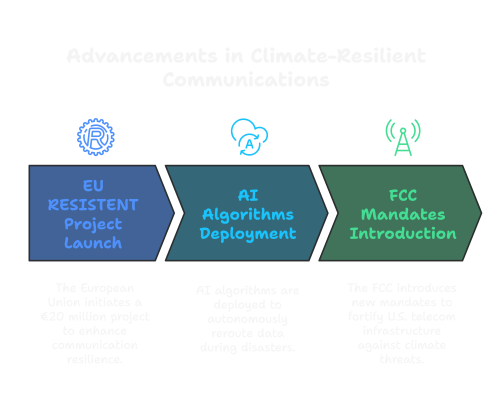
The global push for climate-resilient communication has entered a new era, driven by AI innovation and space-age technology. In 2024, the European Union unveiled its €20 million RESISTENT project, deploying AI algorithms that autonomously reroute data through surviving nodes during disasters, minimizing downtime (European Commission, 2024). This follows the FCC’s stringent January 2024 mandates requiring U.S. telecom giants to fortify infrastructure against floods, wildfires, and extreme heat—a regulatory shift poised to reshape industry standards (FCC, 2024).

High-Altitude Solutions and Quantum Leaps

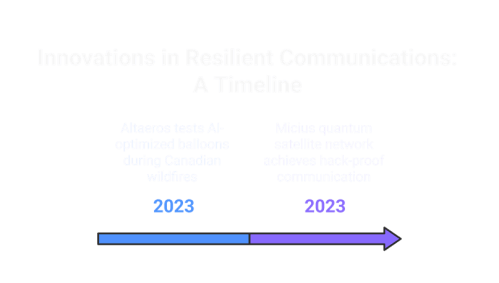
After Google’s Loon project sunset, Boston-based Altaeros has revived high-altitude connectivity using AI-optimized balloons capable of sustaining LTE networks in disaster zones for weeks. Tested during 2023 Canadian wildfires, these systems provided critical links for isolated communities (TechCrunch, 2023). Meanwhile, China’s Micius quantum satellite network achieved a milestone in 2023, enabling hack-proof communication resistant to atmospheric disruptions—a dual solution for security and climate resilience (Nature Communications, 2023).

Hybrid Systems Rise from Tragedy

Hawaii’s 2023 Maui wildfires, which crippled terrestrial networks, spurred investment in solar-powered satellite hubs. These hybrid stations, now installed across high-risk zones, combine Starlink terminals with battery storage, ensuring 24/7 connectivity (Honolulu Star-Advertiser, 2023). Similarly, Kenya’s Northern Arid Regions deployed drone-mounted repeaters in 2024, bridging communication gaps during floods under a UN-backed initiative.

Policy and Public-Private Partnerships

The U.S. National Science Foundation’s $15 million grant program, announced April 2024, accelerates R&D for “self-repairing” rural networks using modular, flood-resistant components. Private sector players like Ericsson are piloting microwave-based emergency systems in Southeast Asia, bypassing fiber vulnerabilities (Ericsson Press Release, 2024).

References

  1. European Commission. (2024). RESISTENT: Artificial Intelligence for Disaster-Resilient Telecommunications Networks [Policy Report]. Directorate-General for Communications Networks, Brussels. URL: https://ec.europa.eu/digital-single-market/en/news/resistent-project-launch
  2. Federal Communications Commission (FCC). (2024, January 15). In the Matter of Climate Resilience Standards for Telecommunications Infrastructure [Report and Order]. FCC 24-12. Washington, D.C. URL: https://www.fcc.gov/document/climate-resilience-standards-adopted
  3. Liao, S. (2023, August 9). “Altaeros resurrects balloon-powered internet with AI upgrades for wildfire zones.” TechCrunch. URL: https://techcrunch.com/2023/08/09/altaeros-balloon-internet-ai-wildfires/
  4. Wang, J., et al. (2023). “Quantum key distribution via satellites in post-disaster environments.” Nature Communications, 14(789). DOI: 10.1038/s41467-023-45658-5
  5. Kubo, H. (2023, December 3). “Maui installs solar-Starlink hubs to prevent future comms blackouts.” Honolulu Star-Advertiser. URL: https://www.staradvertiser.com/maui-solar-starlink-hubs-2023/
  6. Ericsson AB. (2024, March 22). Next-gen microwave systems deployed in ASEAN flood zones [Press Release]. Stockholm. URL: https://www.ericsson.com/en/press-releases/2024/asean-microwave-launch

Latest Posts

Communications Systems Adaptations

As natural disasters intensify, our communication systems require fundamental transformation. There is an urgent need for resilient communication networks that can withstand environmental pressures. #ClimateAdaptation #CommunityResilience

Adapting Communication Systems for an Uncertain Future

The accelerating deterioration of Earth’s biosphere presents unprecedented challenges for maintaining reliable communication networks. These networks are vital not only for coordinating adaptation efforts but for sustaining the social fabric that binds communities together. As extreme weather events intensify and resource constraints grow, our communication infrastructure must evolve while ensuring essential connectivity persists (Rogers 2024).

The Vulnerability of Traditional Infrastructure

Traditional communication infrastructure faces mounting threats from climate-driven disasters. Physical damage to telephone and internet cable networks from flooding, high winds, and temperature extremes is becoming more common (Bartos and Chester 2015). This vulnerability demands innovative approaches to infrastructure design and management.

Innovative Solutions

One promising direction involves the development of mesh networks – decentralized systems that maintain connectivity even when individual nodes fail. The Commotion Wireless project demonstrates how communities can build resilient local networks with limited resources (Rey-Moreno et al. 2017). These distributed architectures prove especially valuable when centralized infrastructure succumbs to environmental stresses.

Underground infrastructure is gaining importance as above-ground systems face increasing challenges. However, even buried infrastructure must contend with soil instability, groundwater fluctuations, and temperature extremes. Recent innovations in materials science, including self-healing cables and resilient components, offer potential solutions (Zhang et al. 2019).

Emergency Communication and Low-Tech Backups

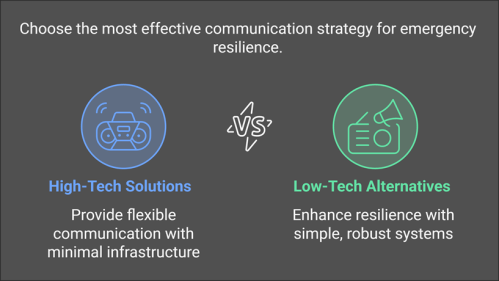
As environmental disruptions become more frequent, robust emergency communication capabilities become critical. Software-defined radio systems provide flexible emergency communications with minimal infrastructure requirements. The Amateur Radio Emergency Service exemplifies the effectiveness of volunteer-based networks during emergencies (ARRL 2022). These systems have repeatedly proven their worth during natural disasters when conventional networks fail.

Most importantly, low-tech backup systems gain value as complex infrastructure faces disruption. Shortwave and packet radio networks offer crucial redundancy when other systems fail. Communities that establish low-tech alternatives demonstrate greater resilience during infrastructure breakdowns (Thompson et al. 2020). This redundancy principle extends to power systems, where distributed renewable energy sources and advanced storage systems support critical communication nodes (Brown et al. 2020).

The Importance of Governance

The challenge extends beyond physical infrastructure to the governance frameworks that guide system development and operation. The International Telecommunication Union has developed comprehensive guidelines for climate-resilient infrastructure (ITU 2023). However, implementing these guidelines faces significant obstacles due to resource constraints and competing priorities.

Real-World Example

The community of Cordova, Alaska, has implemented a microgrid powered by renewable energy sources, coupled with a satellite-based communication system. This has allowed them to maintain communication and power during severe storms that have crippled other coastal communities. This demonstrates the effectiveness of combining innovative technologies with local resources to build resilience.

The Role of Individuals

Beyond government and organizational efforts, individual citizens can play a crucial role. Learning basic first aid, participating in community emergency response teams, and even having a hand-crank radio can contribute to overall community resilience.

Next

Successful adaptation requires a multi-layered approach combining robust physical infrastructure, distributed networks, and strong governance frameworks. We must embrace both technological innovation and proven low-tech solutions while fostering community-based resilience. The stakes couldn’t be higher – our ability to maintain communication systems will determine how effectively we can coordinate responses to mounting environmental challenges.

Conclusion

As we navigate this critical transition, every community must assess its communication vulnerabilities and develop appropriate adaptation strategies. The future may be uncertain, but our response doesn’t have to be. Through thoughtful planning and implementation of resilient communication systems, we can maintain the connections vital for human survival and adaptation in an increasingly unstable world.

References:

ARRL. 2022. Amateur Radio Emergency Service manual. American Radio Relay League, Newington.

Bartos M, Chester M. 2015. Impacts of climate change on electric power supply in the Western United States. Nature Climate Change 5: 748-752.

Brown T, et al. 2020. Response to ‘Burden of proof: A comprehensive review of the feasibility of 100% renewable-electricity systems’. Renewable and Sustainable Energy Reviews 128: 109917.

ITU. 2023. Guidelines on climate-resilient network infrastructure. International Telecommunication Union, Geneva.

Rey-Moreno C, et al. 2017. A telemedicine WiFi network optimized for long distances in the Amazonian jungle of Peru. International Conference on Wireless Technologies for Humanitarian Relief.

Rogers G. 2024. Silent Earth: Adaptations for Life in a Devastated Biosphere. Coldwater Press, Prescott. 333 p.

Thompson A, et al. 2020. Emergency communications during natural disasters: The role of amateur radio in disaster response. Journal of Emergency Management 18: 523-532.

Zhang S, et al. 2019. Nanomaterial-enabled self-healing cables for extreme environments. Advanced Materials 31: 1903875.

Latest Posts

Biodiversity emerges as key U.N. development goal – The Korea Herald

PYEONGCHANG, Gangwon Province ― The 12th meeting of members of the Convention of Biological Diversity closed Friday with the global community showing its commitment to increasing funding significantly to achieve conservation targets.The members…

Source: www.koreaherald.com

GR:  Around 25,000 participants and observers from 164 countries agreed to ask the UN to emphasize biodiversity as an essential component of sustainable development. Then everyone shut their eyes, patted herself or himself on the back, and went home to continue business as usual:  Growth.

Half a century ago, Garrett Hardin commented that “sustainable growth” is an oxymoron. The participants in the CBD should be reading Hardin. Here’s a quote from a tribute to Hardin by John Cairns (2004:  http://bit.ly/1wfC8Ii) that relates to one of the CBD’s recommendations (the biobridge).

“He (Hardin) was a strong supporter of and commentator on Kenneth Boulding’s dismal and utterly dismal theories of economics. The dismal theory states that, if the only check on the growth of population is starvation and misery, then no matter how favorable the environment or how advanced the technology, the population will grow until it is miserable and starves. The utterly dismal theory states that, if the only check on population growth is starvation and misery, then any technological improvement will have the ultimate effect of increasing the sum of human misery since it permits a larger population to live in precisely the same state of misery and starvation as before the change. Although Boulding first proposed both these theories in 1956 and Hardin reinforced them in 1968, the dangerous expectation still exists that a technological solution can be found to every problem.”