
#WildforLife – Backed by Stars, UN Campaign Seeks to Mobilize Millions to End Illegal Trade in Wildlife

GR.–Publicity campaigns work best when we design them to appeal to the correct audience.  Is the typical customer for poached animals and their body parts likely to respond to celebrity messages?  It seems unlikely that the poachers will.  Nevertheless, celebrities will draw attention to the issue, and though they might not evoke a response among the customers, they might create public attitudes that can indirectly influence customers.  And for the public, knowing a problem exists is a great step toward solution.

Ban Ki-moon, Gisele Bündchen, Yaya Touré and Ian Somerhalder among those aiming to spur action to protect endangered species

UN, Nairobi, Wednesday, 25 May 2016.–“The United Nations, backed by A-list celebrities from across the globe, today launched an unprecedented campaign against the illegal trade in wildlife, which is pushing species to the brink of extinction, robbing countries of their natural heritage and profiting international criminal networks.

“Each year, thousands of wild animals are illegally killed, often by organized criminal networks motivated by profit and greed,” said Secretary-General Ban Ki-moon. “I call on all Governments and people everywhere to support the new United Nations campaign, Wild for Life, which aims to mobilize the world to end this destructive trade. Preserving wildlife is crucial for the well-being of people and planet alike.”

“#WildforLife, launched today at the second United Nations Environment Assembly (UNEA-2) in Nairobi in front of environment ministers from every corner of the planet, aims to mobilize millions of people to make commitments and take action to end the illegal trade.”  Continue reading:  Backed by Stars, Unprecedented UN Campaign Seeks to Mobilize Millions to End Illegal Trade in Wildlife
Save

Legal ivory sale drove dramatic increase in elephant poaching, study shows | Environment | The Guardian

Damian Carrington, Monday 13 June 2016:  Research shows the legal sale in 2008 catastrophically backfired – but two African nations want to repeat the stockpile sell-off.

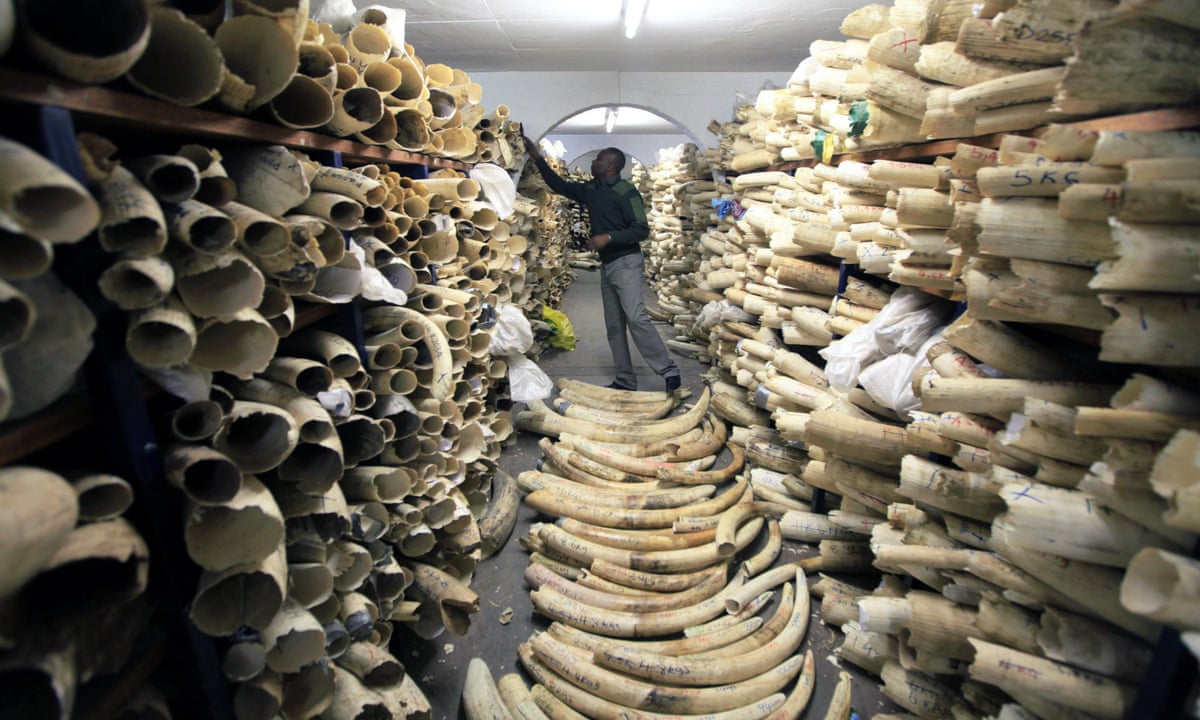
A huge legal sale of ivory intended to cut elephant poaching instead catastrophically backfired by dramatically increasing elephant deaths, according to new research.

The revelation comes just months before a decision on whether to permit another legal sale and against a backdrop of more African elephants being killed for ivory than are being born. In 2015 alone, 20,000 elephants were illegally killed.

The international trade in ivory was banned in 1989 but, in 2008, China and Japan were allowed to pay $15m for 107 tonnes of ivory stockpiled from elephants that died naturally in four African nations. The intention was to flood the market, crash prices and make poaching less profitable.

But instead, the legal sale was followed by “an abrupt, significant, permanent, robust and geographically widespread increase” in elephant poaching, concluded researchers Prof Solomon Hsiang at the University of California Berkeley and Nitin Sekar at Princeton University, whose work was published on Monday.  Continue Reading: Legal ivory sale drove dramatic increase in elephant poaching, study shows | Environment | The Guardian

Save

T-shirt Time! | Fight for Rhinos

We need to raise $1,152 to support Chloe’s canine ranger class at Hoedspruit Endangered Species Centre. With the purchase of a tee, you can help do that and SHOW your support by being a valuable part of our Rhino Security Team!

T-shirts are 100% cotton, available in 4 colors from S to XL, at a cost of just $19.99 usd.

Not purchasing a tee? Please consider a straight donation through our Paypal button on the top left of the page. Your support means a lot.

Source: T-shirt Time! | Fight for Rhinos

Save

Save

Wildlife Weekly Wrap-up – Defenders of Wildlife Blog

Weekly Wildlife Wrap-up Stories

Cracking Down on Ivory

This week, the U.S. Fish and Wildlife Service finalized new regulations to help protect elephants from the demands of the ivory trade. Previous rules had loopholes that allowed those selling illegal ivory attempt to pass it off as legal. But with the new regulations comes a near-total ban on the commercial trade of ivory in the U.S., putting an end to the trade of products that had served as a cover for illegal ivory. More than 300,000 African elephants are killed for their ivory tusks each year, pushing the species closer to the brink of extinction.

Learn about the new ivory regulations

Back in the Wild Again . . . .

A Bear Doesn’t Care . . . .

Protect the Pallid! . . . .

Source: Wildlife Weekly Wrap-up – Defenders of Wildlife Blog

Save

What Do Elephants and Cocaine Have in Common? – Scientific American Blog Network

Wildlife products and drugs both fuel massive levels of international crime, according to a new United Nations report.

A massive new report published this week by the United Nations Office on Drugs and Crime (UNODC) proves what conservationists have been saying for years: smuggling of wildlife products is huge business.

The report—compiled from records of 164,000 seizures related to wildlife crime in 120 countries—details the illegal trade in flora and fauna used to create furniture, fashion items, cosmetics, food and medicine, and jewelry, as well as the rampant smuggling of live animals for the pet trade and entertainment venues.

Source: What Do Elephants and Cocaine Have in Common? – Scientific American Blog Network

Is the lion the new rhino?

Is poaching coming to the domain of the lion? This is the third of these brutal incidents in less than a week.

Source: Is the lion the new rhino?

Meet Chloe | Fight for Rhinos

The Hoedspruit Endangered Species Centre is a South African wildlife sanctuary devoted to rehabilitating endangered and vulnerable animals, most notably the cheetah and rhino. In recent weeks, they…

Source: Meet Chloe | Fight for Rhinos

Together we can end wildlife crime | Environment | The Guardian

Paula Kahumbu: A global alliance to end wildlife crime is within reach. Let’s start talking about how it can be made to work

Source: Together we can end wildlife crime | Environment | The Guardian

2015 poaching stats: what do they mean?

GR:  We can’t seem to put the brakes on for wildlife or habitat. Our population growth and our homocentric lack of concern for other species is devastating nature.

White-Rhino

Tisha Wardlow's avatarFight for Rhinos

South Africa DEA (Department of Environmental Affairs) has released the “official” 2015 rhino poaching statistics – 1175. This is a decrease from 2014 which was 1215.

Reason for optimism?

Keep in mind the following: Kruger is the size of Israel, not all carcasses are recovered in a timely manner, or at all.  The statistics also do NOT include the following:

  • poaching survivors (like Hope)
  • orphans whose mothers are killed, but they are NOT rescued and do not survive alone
  • unborn baby rhinos

While the DEA pat themselves on the back for a “decline” in numbers, reality is this month, there have already been 37 poached at the time of this post, and the orphanages are seeing no shortage of rescued orphans.

In fact there had been a 10% INCREASE in poaching activity in Kruger National Park, where the majority of poachings occurred.

Instead of taking the numbers as a fact, we must look at them as only an…

View original post 28 more words