Coldwater Farm Wildlife
Located on the Agua Fria River in central Arizona, Coldwater Farm is a tiny, 20 acre, refuge for wildlife. Despite being in the center of the Town of Dewey-Humboldt, the Farm is an ideal wildlife habitat. It has abundant surface water supplies and patches of dense vegetation. The Agua Fria River flows above ground through the farm, and there are three large ponds. Willow thickets and a nice grove of tall cottonwood trees fill the river’s flood plain.
Mule Deer Visits
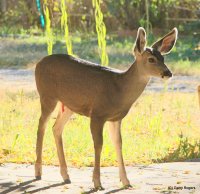 Last July, I wrote about two fawns that visited my back yard three days after they were born (see the post here). Mule Deer became regular visitors last winter. They are particularly pleased with the black sunflower seeds the birds miss.
The fawns just came again, and this time another pair of twins joined them. The photo shows one of them. I think the kid looks good for four months.
Barn Owl Box
Yesterday I finished setting up a nest box for the Barn Owls that live here. I’ve know the owls were here for about 10 years now. Last winter, wind blew down the best roosting tree, and the owls have lived in less protective trees. That’s when I decided to put up a nest box.
Barn Owls are unique in many ways. They tolerate humans, and in return for permission to sleep in barns and other buildings, they control the local mouse population. Wise farmers use Barn Owls, not mousetraps. Read the two earlier posts about the Coldwater Farm Barn Owls here, and the windstorm disaster here.
 The nest box is about 12 feet above the ground. My telescoping pipe plan would have put it at 16 feet, but the wind happened to be gusting to 30 MPH, and was creating too strong a sway. Don’t want the owls to get seasick (or the pole to bend). I bought the box from the Barn Owl Box company. The box is white, intended to be installed in full sun, but I chose a shady spot and decided to paint the shell flat green.
The box is visible from my back door. If I pay attention in the evenings, I hope to see owls coming and going now and then.
Other Coldwater Farm Wildlife News
 Quail are trying to make a permanent home here. They began stopping by three years ago, but the flock didn’t began sticking around until last winter.
The annual return of wild ducks to the ponds is going well. Mallards, Ring Necks, and American Wigeon so far. I started throwing out a little corn when I take this old dog down for his daily swim.
 A hawk has stayed around the house for two months now. This week he/she dropped onto the lawn and began eating grasshoppers. We have a good late supply this year. I guess they are easier to catch than the songbirds and gophers that the other hawks choose. The hawk is about 22 inches. If you recognize the species, please let me know.


 GR: The materialism that is dominating world governments is destroying the health of Earth ecosystems. I believe this is because Human limitations make it impossible for members of our species to see beyond our fears and appetites. A close inspection of all the political candidates for whom I can vote in the next election shows that they will all continue the same blind materialism. Of personal concern to me, none of them is interested in protecting natural landscapes and wildlife. Others are reaching the same conclusion. Why vote we ask when no group we can elect will improve our government. Even those who are not yet concerned about wild plants and animals are feeling the loss of the natural world, and they are realizing that the quality of their and their children’s lives is fading. It is gratifying and evokes a glimmer of hope to learn about responses such as the one described in this post.
 GarryRogers Nature Conservation