Comments on the State of the World

The blog, Collapse of Industrial Civilization, has been exploring critical topics for more than a decade. This post is concerned with accelerating disasters. Along with commentary and graphics, it includes a particularly revealing chart: “. . . the most current chart showing the upward trajectory of billion-dollar weather disasters for the US, from 1980 through 2024.” Click on the title in the box to see the post.

I thought this would make a good teaser quote:

“Peter Kalmus, a climate scientist who saw the writing on the wall and left his home in California after observing the increase in heatwaves and its effect on the local environment in recent years, had this to say a few days ago” (–xraymike79.):

“…no place is actually safe. These kinds of impacts of these floods and fires and heat waves and storms, I think of them sort of like popcorn happening around the whole planet. You can’t know exactly where any one of these events is going to happen, but they’re starting to come at a higher frequency, sort of like when the popcorn really starts to get going and they’re starting to pop harder. It drives me kind of bonkers when people say this, especially when climate scientists who should know better say like, this is the new normal, for example. It is not. We are on a rising escalator towards higher planetary temperatures and all of the more frequent and severe impacts that come with that, which is really, frankly, terrifying.

Why a referendum is needed on South Australian govt’s nuclear waste import plan « Antinuclear

GR.–People have the right to decide, but they must often fight for that right.

John Jasson.–Chapter 6 page 122 [Nuclear Fuel Chain Royal Commission Recommendations] states:  “Because of these shifts, a public vote on a proposal is not a reliable indicator of ongoing social consent: A vote for or against a proposal one day may not result in the same level of social consent one month later.”

“The two paragraphs that precede this unsubstantiated opinion as declared by the commission are in my view irrelevant because they relate to changes in public consent for matters of technological change that are easily reversible and have risk profiles that are minimal by comparison to a nuclear storage or transportation accident.

“For this reason I have no trust in this process as I believe this to be a blatant attempt to circumvent the people of SA having a true say in this matter. A referendum is the only acceptable way to achieve public consent on a matter that has such significant commercial, safety and social implications for the public of SA.”  Source: Why a referendum is needed on South Australian govt’s nuclear waste import plan « Antinuclear

Save

Seven climate records set so far in 2016 | Environment | The Guardian

GR.–When national emergencies arise, we expect our leaders to guide us to an effective response.  The global-warming disaster illustrated in this article is thundering down upon us, but our leaders offer little guidance or, worse, they lie to obfuscate the emergency.  I believe that this shows the venal weakness of our leaders and the lack of social intelligence of our people.

Adam Vaughan.–“From soaring temperatures in Alaska and India to Arctic sea ice melting and CO2 concentrations rising, this year is smashing records around the world”

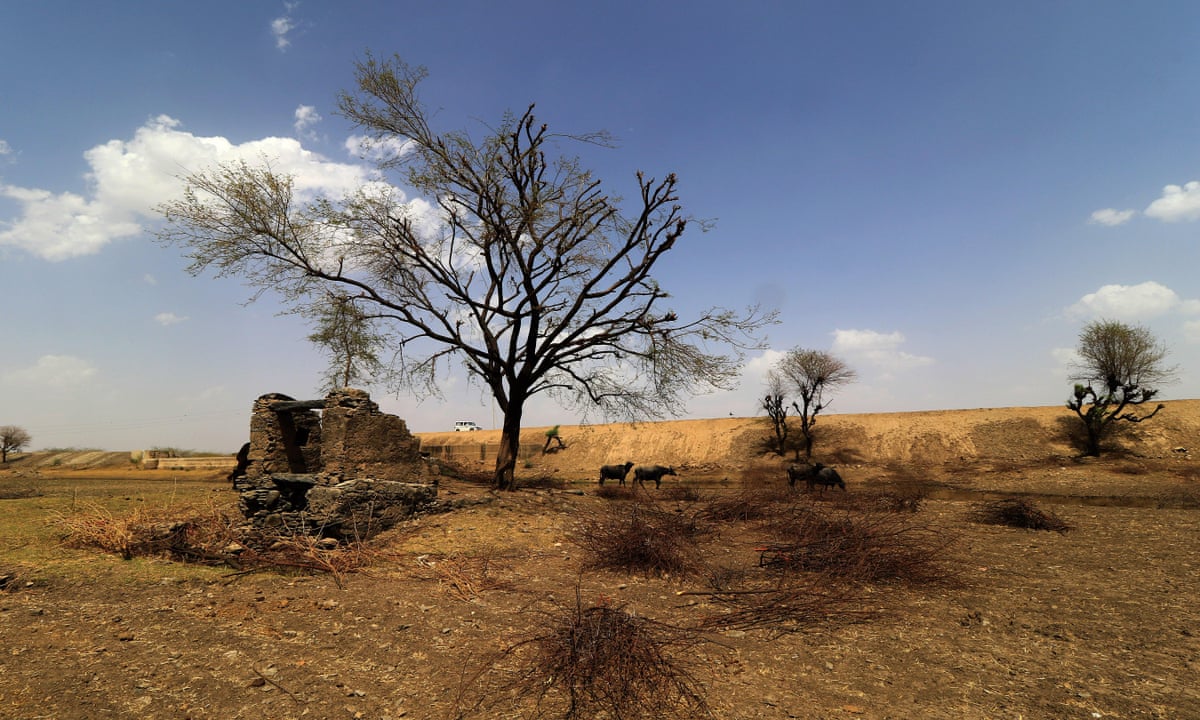
Scorched land on the outskirts of Jaipur, Rajasthan. The desert state recorded India’s hottest ever temperature of 51C on 19 May. Photograph: Alamy Stock Photo

“1) Arctic sea ice is melting at a rate that by September could see it beat the record low set in 2012. The maximum extent of sea ice in winter was at a record low, and the extent in May was the lowest for that month ever, by more than 500,000 sq km.

“2) Every month this year has been the hottest on record globally for that month. May, data published this week by Nasa revealed, was no exception. Nasa’s dataset, one of three main global surface temperature records, shows February recorded the highest anomaly against long term average temperatures.”  Continue reading:  Seven climate records set so far in 2016 | Environment | The Guardian

Save

Save

Petition: U. S. Congress, Fund the Land and Water Conservation Fund – Permanently!

The Land and Water Conservation Fund is one our nation’s most important conservation programs, protecting natural resources and providing recreation areas for all Americans. Since 1965, the LWCF has been one of the most effective conservation programs and has dramatically expanded the choice of close-to-home places for Americans to get outside and enjoy the outdoors. And it costs nothing to taxpayers, since it is funded by oil and gas revenue.

The LWCF expired for the first time in its 50 year history in September when the Congress failed to act in time to renew this vital initiative.

The Senate has approved permanent reauthorization, but now the bill faces opposition in the House of Representatives.We want Congress to permanently reauthorize this program at its full annual funding limit of $900 million a year.

Unfortunately, not all of our elected leaders feel as you and I do about conserving land, and we must pressure them to do the right thing. Take action today and send a message to your congressional representative, urging action to permanently and fully fund the LWCF.  Sign:  petition: Congress: Fund the Land and Water Conservation Fund – Permanently!

Save

Every Day is World Oceans Day for Us

   Oceans, covering two-thirds of Earth, are so vast and so deep that it’s easy to take their importance for granted. They provide us with oxygen, and they regulate our climate by removing carbon dioxide from the atmosphere — important functions for both humans and wildlife.

Unfortunately, the world’s oceans — home to whales, sea otters, ice-dependent seals, dolphins, manatees, seabirds, sea turtles, sharks and other marine life — are in a sea of trouble. The oceans are overworked; they cannot remove carbon dioxide from the atmosphere quickly enough to keep up with how much we create, which is causing ocean acidification. The Arctic Sea is warming at twice the rate than past years, which is reducing sea ice — a growing threat to our marine mammals. Just recently, scientists shared that over a third of the Great Barrier Reef is dead, a permanent fate for the species and a damaging one for species that depend on the reef for shelter and food.

The health of the Earth’s oceans are indicators of our planet’s overall health – when they’re in trouble, so are we. So, it’s important to keep our oceans healthy not just for marine life, but also for the future health of the entire planet.  Read more:  Every Day is World Oceans Day for Us

Save

Population matters for the world’s oceans – Population Matters

While oceans are in many respects the heart of our ecosystem, their sustainable existence is threatened by our actions.

The first World Oceans Day was celebrated in 1992 after the Canadian government proposed the idea at the Earth Summit in Rio de Janeiro. In 2008, the United Nations recognised the initiative officially.

“We have to ensure that oceans continue to meet our needs without compromising those of future generations. They regulate the planet’s climate and are a significant source of nutrition. Their surface provides essential passage for global trade, while their depths hold current and future solutions to humanity’s energy needs.”  More:  Population matters for the world’s oceans – Population Matters

Save

The Guardian view on the Great Barrier Reef: the crisis they prefer to downplay | Opinion | The Guardian

Many of the politicians fighting Australia’s election campaign talk about the economy and immigration but the world is listening for what they say about the impact of climate change.

If the rest of the world could vote in next month’s Australian election, there would almost certainly be one issue that would be raised to the top of the country’s political agenda: saving the Great Barrier Reef. Scientists say this year 93% of its reefs experienced some bleaching, and 22% of all of the reef’s coral was killed by unusually warm waters. Unheard of just three decades ago, large-scale bleaching has become a regular occurrence. Within 20 years the conditions that drove this year’s bleaching in Australia will occur every second year. A Guardian report illustrates in vivid detail the scale of the devastation unfolding beneath the surface. Over the past 34 years the average proportion of the Great Barrier Reef exposed to temperatures where bleaching or even death is likely has increased from about 11% a year to about 27% a year.

It is a constant struggle to motivate most people most of the time about climate change. The evidence accumulates slowly; despite being an emergency, it often . . . more:  The Guardian view on the Great Barrier Reef: the crisis they prefer to downplay | Opinion | The Guardian

Save

Florida harbor dredging threatens corals | Summit County Citizens Voice

GR:  This seems like the wrong time to be destroying coral.  Is the pursuit of economic progress driving Florida and U.S. Army Corps of Engineers mad?

Bob Berwyn:

Activists plan lawsuit to win more environmental protection

Staff Report:  Even with coral reefs around the world under the global warming gun, the U.S. Army Corps of Engineers is seeking approval for a controversial Florida dredging project that could smother parts of the only coastal barrier reef in the continental United States.

But a coalition of environmental and community groups have banded together to try and the the Corps to provide mandatory, common-sense protections for reefs near the Port Everglades dredging project near Fort Lauderdale. The project’s goal is to increase coastal access for larger ships.Critics of the project say similar dredging at PortMiami injured and killed Endangered Species Act-listed staghorn corals and buried alive more than 200 football fields of reef habitat. They claim the damage stemmed from the Corps’ failure to collect and use accurate, up-to-date information or adequately account for potential impacts to nearby reefs.  More:  Florida harbor dredging threatens corals | Summit County Citizens Voice

Save

Save

World Environment Day

Environment, Human Impact, & Collapse of Civilization

GR:  The term environment refers to human surroundings. We measure human impact on the environment by the level of pollution of the air, water, and land, and the losses of food, water, and the convenience resources, the fossil fuels, lumber, and concrete.  Human impacts are often quite striking as illustrated below.

Natures-Unraveling-Clear-Cut Here’s a link to more illustrations and discussions of our impacts.

As global warming progresses and weather extremes become stronger and more frequent, the massive human population’s overuse of other animal species and the soils and plants they need for survival will produce deforestation, extinction, and desertification. Consequent human starvation will prompt conflict, death, and mass emigration. As predicted 50 years ago, the end has begun. Like locusts, the humans have fed and now they are dying or moving on.

Sound too doomy and gloomy? Perhaps, but before we ignore the predictions and the current early symptoms of impending collapse, we should look at the earlier models and recent discussions (e.g., Diamond below).

It is always prudent to expect the best and plan for the worst.  Jared Diamond gives a helpful discussion of this in the final chapter of his book Collapse. At the end, Diamond discusses three reasons for hope—hope we can avoid collapse.

Diamond’s first reason for hope is that “. . . realistically, we are not beset by insoluble problems” (521). His second reason “. . . is the increasing diffusion of environmental thinking among the public around the world. Diamond then discusses the crucial choices environmental thinking forces us to make if we are to succeed and not fail. The first is “the courage to practice long-term thinking and to make courageous, anticipatory decisions at a time when problems have become perceptible but before they have reached crisis proportions” (522). The second choice “involves the courage to make painful decisions about values” (523). Treasured values–religious, cultural, and traditional views and practices–are great dangers when they prevent societies from changing to meet new challenges.

Diamond’s third reason for hope is the work of archaeologists and the modern global communications network that let us learn from the mistakes of past peoples and of distant peoples. “My hope in writing this book has been that enough people will choose to profit from that opportunity to make a difference” (Diamond, 2005: 526).

In the 10 years since Diamond published Collapse, there doesn’t seem to have been much progress on the reasons for hope. Yes, population growth, global warming, etc. are soluble problems, but the hour grows late, and the problems continue to grow. Likewise, we have global diffusion of information across the Internet, but governments, politicians, and dictators are succeeding at containing the actions prompted by increased awareness. Are we learning from the mistakes of the past and present? Sure, we are, but now time is of the essence as they say, and we are running out of it.

Diamond, Jared. 2005. Collapse:  How societies choose to fail or succeed. Viking, New York. 576 p.

You might want to read the later edition of Collapse and Diamond’s thoughts on events during the 10 years since first publication.
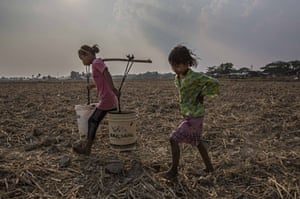
Here is a well-illustrated discussion of World Environment Day from the Guardian:  “More than a quarter of a billion people, half of them children, are suffering the impact of severe drought across three continents. Aid agencies are working to deliver emergency food parcels to prevent people starving, and to help build livelihood resilience to extreme weather events . . . .”  Source: World Environment Day: drought drives global rise in hunger – in pictures | Global development | The Guardian

Save

Save

Save

Save

Save