Australia: Of droughts and flooding rains

“MY COUNTRY”, a famed poem by Dorothea Mackellar, is known to generations of Australian schoolchildren. They will know by heart the stanza I love a sunburnt…

Source: www.economist.com

A report by the Commonwealth Scientific and Industrial Research Organisation (CSIRO) and the Bureau of Meteorology project that most parts of Australia will become hotter and dryer.  Soils will degrade, fires will increase, drought will continue, and floods will become more common.  Meanwhile, prime minister Abbot says it’s all normal, and coal burning should continue.

CSIRO, BOM research shows how climate change will affect Australia

GR:  The fires of our industry have changed our planet.  There is enough added carbon in the atmosphere to produce the changes CSIRO and BOM predict.  How much worse things get depends on when we stop adding carbon.

The following is by Harry Tucker:  “AUSTRALIA’s two biggest science and weather bodies, CSIRO and the Bureau of Meteorology have released new climate change data and information on how it will affect Australia.

“There is very high confidence that hot days will become more frequent and hotter,” CSIRO principal research scientist, Kevin Hennessy said.

“We also have very high confidence that sea levels will rise, oceans will become more acidic, and snow depths will decline.

“We expect that extreme rainfall events across the nation are likely to become more intense, even where annual-average rainfall is projected to decline.”

“The projections are the most comprehensive ever released for Australia, and renowned science expert Dr Karl Kruszelnicki says they’re only just the tip of the iceberg.”  Source: www.news.com.au.


An Australia Day post on Australian wildlife conservation

Great discussion of European settlement’s terrible impact on nature.

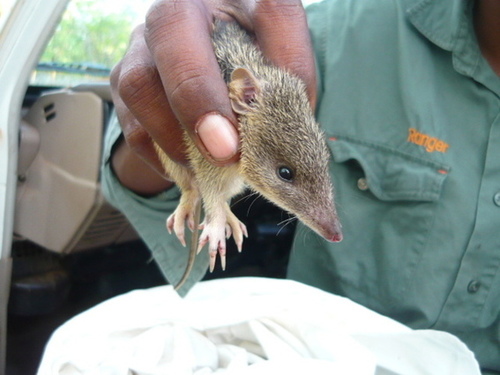
Quoll

The eastern quoll is now extinct on the Australian mainland and declining in Tasmania. If we cannot save an animal as cute and charismatic as this, what hope is there for the “ugly” and “boring” species?


Anna MacDonald's avatarWildlifeSNPits

Today, 26th January, is Australia Day. This is Australia’s national holiday, marking the arrival on this day in 1788 of the British First Fleet at Port Jackson in New South Wales. Of course one might wonder whether the anniversary of the proclamation of British sovereignty over eastern Australia is an appropriate date to celebrate Australian unity and culture. No one can deny that indigenous Australian communities have suffered – and are still suffering – extreme hardships following the establishment of British rule on this continent, and 26th January has other names: “Invasion Day”, “Survival Day”, “Day of Mourning”… This topic is not my field of expertise so I won’t expand further, but I encourage you to learn more about different perspectives here, here, herehereherehere and here.

What I do want to write about today is biodiversity and conservation in Australia, and the status of Australian wildlife in…

View original post 2,837 more words

Climate Model Shows Australia’s Rainfall Decline Due To Human-Caused Climate Change

Australian Drought Result of Anthropogenic Climate Disruption (ACD)

Source:  NOAA Research

“NOAA scientists have developed a new high-resolution climate model that shows southwestern Australia’s long-term decline in fall and winter rainfall is caused by increases in man-made greenhouse gas emissions and ozone depletion, according to research published today in Nature Geoscience.

Australian Drought ACD

Australian Drought ACD

“This new high-resolution climate model is able to simulate regional-scale precipitation with considerably improved accuracy compared to previous generation models,” said Tom Delworth, a research scientist at NOAA’s Geophysical Fluid Dynamics Laboratory in Princeton, N.J., who helped develop the new model and is co-author of the paper. “This model is a major step forward in our effort to improve the prediction of regional climate change, particularly involving water resources.”

“NOAA researchers conducted several climate simulations using this global climate model to study long-term changes in rainfall in various regions across the globe. One of the most striking signals of change emerged over Australia, where a long-term decline in fall and winter rainfall has been observed over parts of southern Australia. Simulating natural and human-caused climate drivers, scientists showed that the decline in rainfall is primarily a response to human-caused increases in greenhouse gases as well as a thinning of the ozone caused by human-caused aerosol emissions. Several natural causes were tested with the model, including volcano eruptions and changes in the sun’s radiation. But none of these natural climate drivers reproduced the long-term observed drying, indicating this trend is due to human activity.

“Southern Australia’s decline in rainfall began around 1970 and has increased over the last four decades. The model projects a continued decline in winter rainfall throughout the rest of the 21st century, with significant implications for regional water resources. The drying is most severe over southwest Australia where the model forecasts a 40 percent decline in average rainfall by the late 21st century.
“Predicting potential future changes in water resources, including drought, are an immense societal challenge,” said Delworth. “This new climate model will help us more accurately and quickly provide resource planners with environmental intelligence at the regional level. The study of Australian drought helps to validate this new model, and thus builds confidence in this model for ongoing studies of North American drought.”
The new paper, Regional rainfall decline in Australia attributed to anthropogenic greenhouse gases and ozone levels, is available online.”

To read a Research Highlight on the paper, please go to NOAA’s Geophysical Fluid Dynamics Laboratory website:

 

To save Australia’s mammals we need a change of heart

Twenty-nine Australian land mammals have become extinct over the last 200 years, and 56 are currently facing extinction. These losses and potential losses represent over a third of the 315 species present…

See on theconversation.com

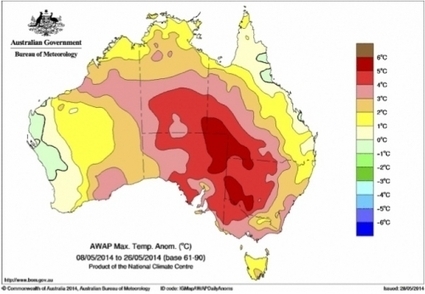
Global Warming Plays a Role in Australia’s Record Heat

The past 12 months have been the warmest in Australia’s recorded history, where average temperature has warmed by 1.6-degrees F since 1910.

Global warming has aided the string of record-breaking temperatures, according to Australia’s Bureau of Meteorology (BOM) and other scientists, and will continue to increase the odds that new records will be set in the future.

See on www.scientificamerican.com