Tag Archives: Botany

Plant Lives: A timely coincidence
 Plant Life: A Brief History. Frederick Essig. Oxford University Press, 2015 [https://global.oup.com/academic/product/plant-life-9780199362646?cc=gb〈=en&; http://ukcatalogue.oup.com/product/9780199362646.do]
A phenomenon I thought only applied to buses was that you wait for ages for one of them to arrive and then two turn up together. Well, a similar thing has happened recently in the world of plant biology book publishing. The two tomes are Armstrong’s How the Earth Turned Green: A brief 3.8-billion-year history of plants [http://www.press.uchicago.edu/ucp/books/book/chicago/H/bo16465693.html]* and the one I write about today, Essig’s Plant Life: A brief history (hereafter referred to as Plant Life). That’s not a problem, merely an observation. Hey, I like books about plants so I am definitely not complaining! But what also struck me about these two is how similar they are (but more on that later). Sourced through Scoop.it from: aobblog.com
GR: Biodiversity applies to plants as well as animals. In fact, if there were no plants there would be almost no animals. This is a great review of a book that will tell you all about plants.
Farmers Fields as Nature-conservation Areas
 Highly productive agriculture and the protection of biodiversity are hard to reconcile? A joint project involving BASF, farmers and agronomic experts reveals how modern farming can help to protect ecosystems.
Source: www.basf.com
GR: This story is misleading. Yes, farmers could do a better of protecting natural margins of their fields. They could also quit spreading artificial fertilizer and pesticides and pick up their hoes. Of course, they will argue they can’t do that and produce enough food for all the hungry people. The number of hungry people is growing. And this means that farms must grow and natural areas and wildlife must fade away.
Protect Native Plants and the Wildlife They Support
 HB2570 municipalities; vegetation requirements; prohibition (Mitchell) prohibits cities from requiring native plant salvage and also from requiring the planting of native vegetation.
There are many reasons this is a bad idea. Encouraging the salvage and planting of native plants can help save water and ensure more resiliency in the vegetation. Some non-native plants contribute to public health problems, such as severe allergies. Limiting these plants is an important goal of local communities. Further, it is critical that non-native invasive plants be limited as these can cause harm to neighbors’ private property and to our parks and wildlands, plus harm agriculture, wildlife, and more by spreading to create unnatural fire conditions and out competing native plants.
Please modify and send the message below and ask your representatives to oppose this ill-conceived bill to limit local communities’ ability to protect native plants. . . . Source: secure.sierraclub.org
GR: Ignoring the effects of a development would make it cheaper to destroy native habitats. Of course, developers want that. I doubt the savings would amount to much for individuals that use the developments, but the cost in natural vegetation and wildlife will be a lasting expense that we will all feel.
Leafsnap: An Electronic Field Guide
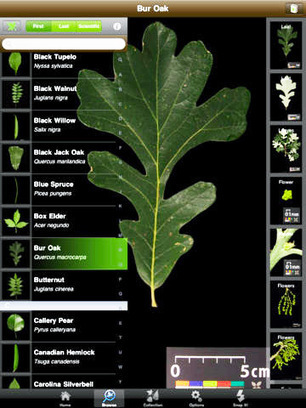
Leafsnap is the first in a series of electronic field guides being developed by researchers from Columbia University, the University of Maryland, and the Smithsonian Institution. This free mobile app uses visual recognition software to help identify tree species from photographs of their leaves.
See on aobblog.com
Chinese orchids are in trouble, here’s how to save them
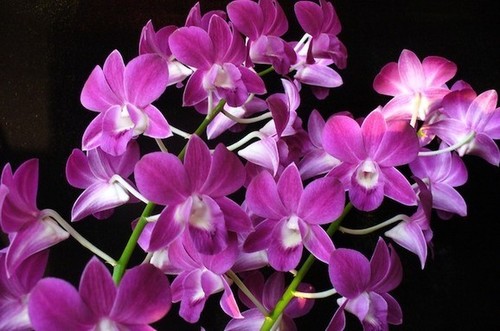
See on conservationmagazine.org
 GarryRogers Nature Conservation