Silent Earth Review

“Silent Earth” has received a five-star “must read🏆” review on Reedsy. Blending scientific depth and practical foresight, this book is both a wake-up call and a guide for navigating environmental collapse.

Synopsis

Silent Earth is a technical reference for civil engineers, land-use and urban planners, and city administrators. It covers a broad range of topics and should serve as a springboard for specialists wishing to learn more about adapting to climate change and biosphere decline.

As the Earth’s living systems deteriorate at an unprecedented rate, human societies face the urgent challenge of adapting to an increasingly unstable environment. Physical Geographer Garry Rogers offers a clear-eyed examination of our options, arguing that while complete restoration of the biosphere is no longer feasible, strategic adaptation remains possible. Drawing on extensive research, Rogers outlines practical approaches for communities to maintain essential functions as ecosystem services decline. While large-scale adaptation efforts face significant barriers, this groundbreaking work shows how planners and administrators can implement effective strategies to enhance resilience in a transforming world. Essential reading for navigating our environmental future. Ideal for policymakers, scholars, environmentalists, and engaged citizens, Silent Earth challenges readers to envision a future where, even amidst biosphere decline, adaptation and innovation can pave the way for survival.

Garry Rogers’ Silent Earth: Adaptations for Life in a Devastated Biosphere explores the escalating degradation of Earth’s biosphere, offering strategies for human adaptation. It points to the realistic inevitability of this need to adjust, as humanity is facing the consequences of irreversible damage already done. Rogers goes beyond the simple dialogue of climate change, expanding and examining the interconnected impact of the entire biosphere, from current impacts such loss of biodiversity to coral reef bleaching.

In Section IV, Rogers draws upon research to emphasize that as soon as 2030 we are on the brink, and that we urgently need to act not only to prevent further destruction, but also to prepare for survival:

The cumulative and synergistic effects of human impacts are pushing ecosystems closer to tipping points. Feedback loops and shifting ecosystem boundaries are accelerating environmental change, while these effects interact in complex ways, amplifying their individual impacts. As we approach 2030, addressing these interconnected challenges will require an integrated approach to conservation and climate action to mitigate the far-reaching impacts on biodiversity and ecosystem stability.

The strength of Silent Earth lies in Section V, which presents a blueprint for adaptation. Rogers proposes various strategies from water management to cultural and governance reforms. His emphasis on grassroots action and local resilience is both pragmatic and empowering, especially given his acknowledgment of the political and societal inertia that is likely to hinder adaptation on a wider scale.

Silent Earth is thoroughly researched, intellectually stimulating, and well-cited. Rogers excels in synthesizing vast amounts of ecological, social, and technological data into a cohesive narrative.

Silent Earth is a valuable resource for those interested in interdisciplinary approaches to global challenges. It’s an important and thought-provoking read for anyone seeking to understand and address the complex realities of ecological decline.

Reviewed by: Brittney Banning

Latest Posts

Mark Ruffalo Urges President Obama to Keep Fossil Fuels in the Ground in Gripping New Documentary | Alternet

Save

Australia as world’s nuclear waste dump: Should be a federal election issue

It is ridiculous to pretend that Australia As World’s Nuclear Waste Dump is “just a State issue” for South Australia.

What about the port for receiving the radioactive trash? – in what State? What about the rail and road transport of radioactive trash? Across which States?

What about Australia as the world’s laughing stock? No other country wants to be the global toxic trash can.

And of those countries that have nuclear power, not one of them has a completed and successfully operating nuclear waste facility for their own radioactive trash, let alone everybody else’s.

Source: Australia as world’s nuclear waste dump: should be a federal election issue – theme for June 16 « Antinuclear

Save

Air pollution now major contributor to stroke, global study finds | Science | The Guardian

GR:  Air pollution harms all species of plants and animals.  Fortunately, the most toxic concentrations are in human cities and homes where animal numbers are lower.

Science editor.–Scientists say finding is alarming, and shows that harm caused by air pollution to the lungs, heart and brain has been underestimated

Air pollution has become a major contributor to stroke for the first time, with unclean air now blamed for nearly one third of the years of healthy life lost to the condition worldwide.

In an unprecedented survey of global risk factors for stroke, air pollution in the form of fine particulate matter ranked seventh in terms of its impact on healthy lifespan, while household air pollution from burning solid fuels ranked eighth.

Source: Air pollution now major contributor to stroke, global study finds | Science | The Guardian

Save

How Austrailia’s Great Barrier Reef got polluted – from farms and fossil fuels to filthy propaganda | Graham Readfearn | Environment | The Guardian

GR:  This is the best discussion of the cause of coral death in Australia’s Great Barrier Reef I’ve seen–it’s people.

Coral bleaching at Loomis Reef, off Lizard Island, Great Barrier Reef, Australia. Photograph: Essential Median

Graham Readfearn:  In late November 2015, as corals across the northern section of the Great Barrier Reef started to bleach white, the game was finally up.

For years, Australians had been told the country’s jewel in the ocean’s crown was on the mend. Only months earlier the Coalition government had won a two-year fight to keep the reef off a United Nations list of world heritage sites in danger.

The stakes were high. International reputations and tourist dollars were at stake. The foreign minister, Julie Bishop, and the trade minister, Andrew Robb, had even attacked Barack Obama, who feared for the reef’s future.

The reef was not in danger, Bishop insisted. The president was misinformed, claimed Robb.

Conservative commentators hanging around News Corp media have said the dangers to the reef were overblown.

The mining industry cast the views of environmentalists as green propaganda, ignoring how for the most part, conservationists were echoing the findings of the government’s own scientists.

Now, about half the corals bleached in the once pristine northern section are dead or dying.  More– How the Great Barrier Reef got polluted – from farms and fossil fuels to filthy propaganda | Graham Readfearn | Environment | The Guardian

Save

To save the Great Barrier Reef ‘we need to start now, right now’ – video | Environment | The Guardian

GR:  The video leaves us with a grim outlook.  Human wastes running into the oceans coupled with global warming will soon destroy all the reefs.  Do enough people care to force our governments to act?  Probably not.  Do you see any answers?

and , theguardian.com:  Jon Brodie from James Cook University says to give the Great Barrier Reef even a fighting chance to survive, Australia needs to spend $1bn a year for the next 10 years to improve water quality. If we don’t do that now, he says, we might need to just give up on the reef. ‘Climate change is happening much more quickly and much more severely than most scientists predicted’•

The Great Barrier Reef: a catastrophe laid bare – special report.    Source: To save the Great Barrier Reef ‘we need to start now, right now’ – video | Environment | The Guardian

Save

Nigeria’s Massive Oil Cleanup Could Take Decades And A Billion Dollars | ThinkProgress

Fossil Fuel Pollution

Oil is seen on the creek water’s surface near an illegal oil refinery in Ogoniland, outside Port Harcourt, in Nigeria’s Delta region. A region of Nigeria’s oil-rich southern delta suffers widespread ecological damage as spilled oil seeps into its drinking water, destroys plants and remains in the ground for decades at a time.

Fossil fuels pollute the air, the land, and the sea.

What’s been described as the most wide-ranging and long-term oil clean-up plan in history was launched in Nigeria Thursday to restore hundreds of square miles of Delta swamps ravaged by nearly sixty years of oil extraction and spills.

The move to restore Ogoniland, located in southern Nigeria and home to more than 800,000 people, comes a year and a half after Shell agreed to an $84 million settlement with residents for two massive oil spills in 2008 and 2009. By then Nigeria had asked the United Nations Environmental Program (UNEP) to study the area. UNEP released a report in 2011 noting oil impacts on Ogoniland are ongoing, widespread, and severe. In turn, Nigeria, Africa’s largest oil producer, started a $1 billion restoration plan this week to clean up decades of spills by Shell and other companies, including the state-owned company.

Source: Nigeria’s Massive Oil Cleanup Could Take Decades And A Billion Dollars | ThinkProgress

Save

Rum Jungle still polluted 45 years after uranium mine was closed « Antinuclear

Australia’s Rum Jungle uranium mine in NT polluting environment 45 years after closure, ABC Radio The World Today By Sara Everingham Traditional owner Kathy Mills finds every visit to site of the old Rum Jungle uranium mine upsetting. AUDIO: Listen to Sara Everingham’s story on TWT(The World Today)

Source: Rum Jungle still polluted 45 years after uranium mine was closed « Antinuclear

Save

Best Protected Great Barrier Reef Corals Are Now Dead | Climate Central

GR:  Marine parks can’t protect coral from global warming.

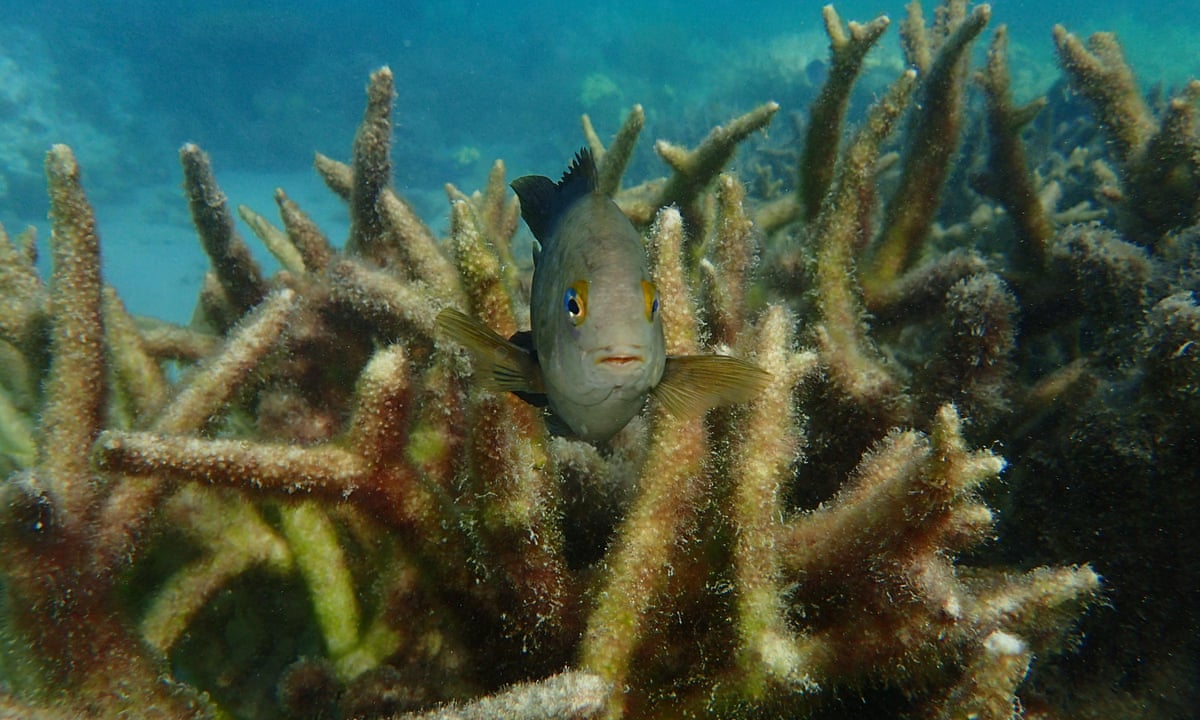
 :  The colorless coral corpses of north Queensland will soon be blanketed with mats of algae, and the hard skeletons will begin to crumble. It may take decades for the submerged wonders of what had recently been unspoiled reefs to resprout and recover from the wipeout, if they ever do.

Temperatures continue to rise worldwide. The amount of heat-trapping pollution released every year from fuel burning and deforestation has plateaued in recent years, while the amount of pollution in the atmosphere continues to pile up. Bleaching is caused primarily by warm waters, and the current worldwide bleaching is the third and worst on record, all since the late 1990s.

The extent of the coral wipeout was particularly remarkable because it occurred inside one of the world’s best protected natural areas. Fishing restrictions and other rules are in place to protect reefs that serve as nurseries for large fisheries and as drawing cards for a tourism-heavy economy.

“The coral animal is the keystone species on a coral reef — like the trees in a forest,” Kline said. “When the corals die you lose the three-dimensional structure that’s really important. A lot of these fish, their larval stages depend on hiding in among the corals to hide from predators.”

Kline said the Great Barrier Reef is inside what’s considered to be “one of the best managed and most successful” marine parks in the world.

Source: Best Protected Great Barrier Reef Corals Are Now Dead | Climate Central


Save