May Marks 8th Consecutive Record Hot Month in NASA’s Global Temperature Measure | robertscribbler

According to NASA, the world has just experienced another record hot month.

May of 2016 was the warmest May since record keeping began for NASA 136 years ago. It is now the 8th record hot month in a period that has now vastly exceeded all previous measures for global temperature tracking.

The month itself was 0.93 C above NASA’s 1951-1980 baseline measure. It’s the first month since October that readings fell below the 1 C anomaly mark. A range that before 2015 had never before been breached in the 136 year climate record and likely during all of the approximate 12,000 year period that marks the Holocene geological epoch.

It’s a reading that is fully 1.15 C above 1880s averages. A very warm measure in its own right but one that is thankfully somewhat removed from the 1.55 C monthly peak back during February of 2016. To this point, it’s worth noting that hitting 1.5 C above 1880s temps in the annual measure is the first major temperature break that scientists consider to be seriously threatening to human civilization and the life support systems of planet Earth. And we’re getting close to that mark now. However, considering the fact that El Nino is now transitioning toward La Nina, it appears that 2016 averages may peak closer to 1.2 C.

Continue reading: May Marks 8th Consecutive Record Hot Month in NASA’s Global Temperature Measure | robertscribbler

Save

Legal ivory sale drove dramatic increase in elephant poaching, study shows | Environment | The Guardian

Damian Carrington, Monday 13 June 2016:  Research shows the legal sale in 2008 catastrophically backfired – but two African nations want to repeat the stockpile sell-off.

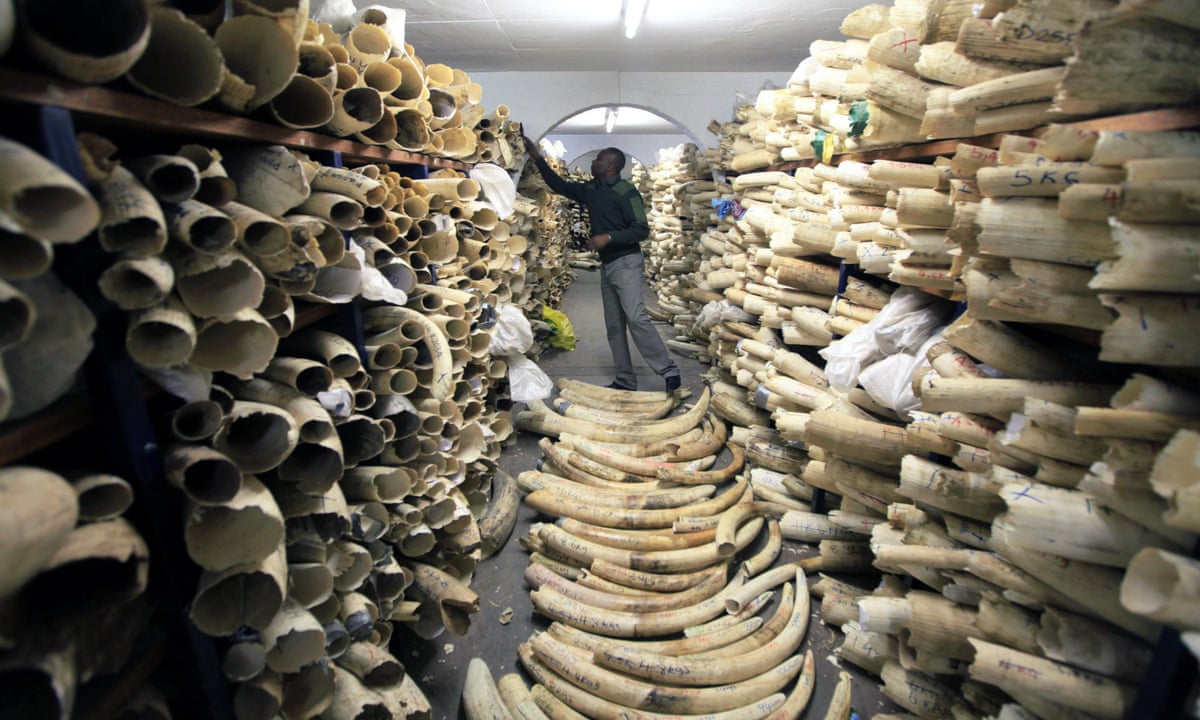
A huge legal sale of ivory intended to cut elephant poaching instead catastrophically backfired by dramatically increasing elephant deaths, according to new research.

The revelation comes just months before a decision on whether to permit another legal sale and against a backdrop of more African elephants being killed for ivory than are being born. In 2015 alone, 20,000 elephants were illegally killed.

The international trade in ivory was banned in 1989 but, in 2008, China and Japan were allowed to pay $15m for 107 tonnes of ivory stockpiled from elephants that died naturally in four African nations. The intention was to flood the market, crash prices and make poaching less profitable.

But instead, the legal sale was followed by “an abrupt, significant, permanent, robust and geographically widespread increase” in elephant poaching, concluded researchers Prof Solomon Hsiang at the University of California Berkeley and Nitin Sekar at Princeton University, whose work was published on Monday.  Continue Reading: Legal ivory sale drove dramatic increase in elephant poaching, study shows | Environment | The Guardian

Save

Alpine soils storing up to a third less carbon as summers warm – Carbon Brief

Robert McSweeney, 13.06.2016:  The top metre of the world’s soils contains three times as much carbon as the entire atmosphere. This means that losing carbon from the soil can quicken the pace of human-caused climate warming.

A new paper, published today in Nature Geoscience, finds this is already happening in the forests of the German Alps. Soils there are losing carbon as summer temperatures rise, the researchers say.

In the last three decades, soil carbon across the German Alps has decreased by an average of 14% – and by as much as 32% for certain types of soils.  Source: Alpine soils storing up to a third less carbon as summers warm – Carbon Brief

Save

Carbon dioxide levels in atmosphere forecast to shatter milestone | Environment | The Guardian

Arthur Neslen, Monday 13 June 2016:  Scientists warn that global warming target will be overshot within two decades, as annual concentrations of CO2 set to pass 400 parts per million in 2016

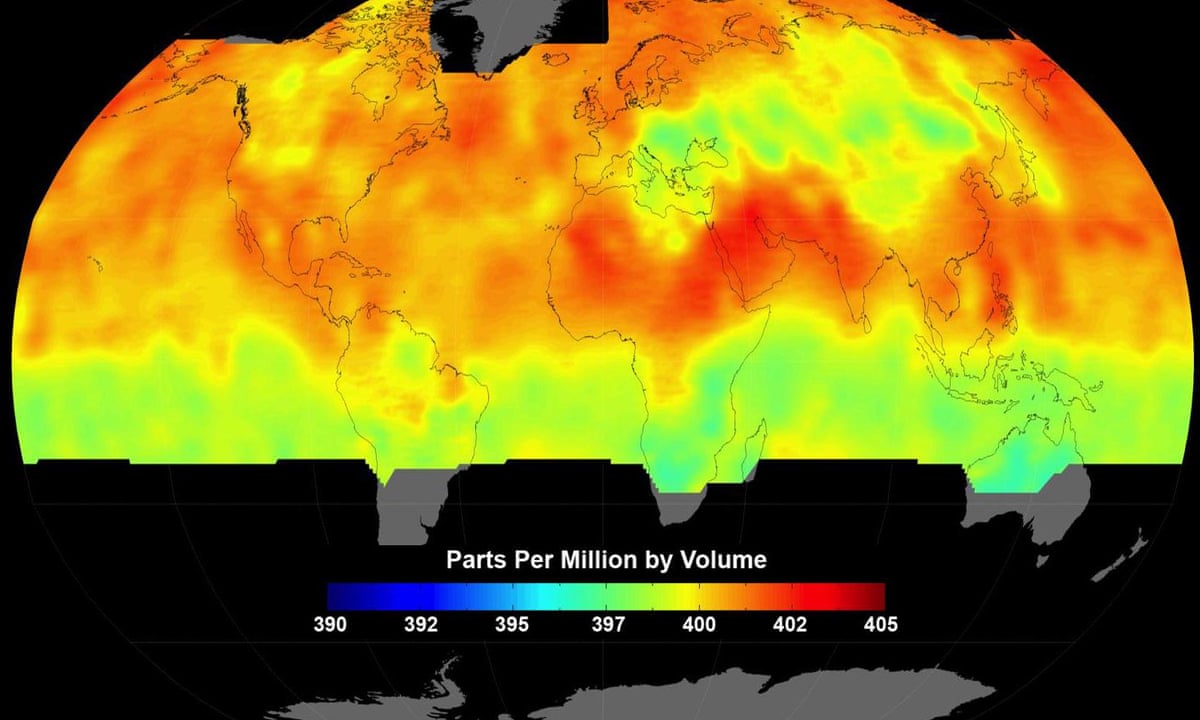
Atmospheric concentrations of CO2 will shatter the symbolic barrier of 400 parts per million (ppm) this year and will not fall below it our in our lifetimes, according to a new Met Office study.

Carbon dioxide measurements at the Mauna Loa observatory in Hawaii are forecast to soar by a record 3.1ppm this year – up from an annual average of 2.1ppm – due in large part to the cyclical El Niño weather event in the Pacific, the paper says.

The surge in CO2 levels will be larger than during the last big El Niño in 1997/98, because manmade emissions have increased by 25% since then, boosting the phenomenon’s strength.

Source: Carbon dioxide levels in atmosphere forecast to shatter milestone | Environment | The Guardian

Save

The eco guide to population growth [not] | Environment | The Guardian

GR:  The article below contains an argument for more people on the planet.  It uses one of the standard homocentric arguments to justify population growth:  A genus among the new people will solve all our problems.  Some of the article’s contents are so biased they are painful to read.  “The shelves are wrapped in certified zero-deforestation leather from Brazil . . . .” and “. . . I’m in love with Timothy Han’s new scent, which features fairly traded Brazilian cedarwood.”  Google “controlling population growth” for more arguments.  One thing you will learn is that controlling growth is extremely difficult.  And with the current economic benefits of more consumers and workers for wealthy investors, it is impossible.

Lucy Siegle, Sunday 12 June 2016.–“The regularity with which I’m contacted by population worriers – people who think it’s pointless discussing green energy, climate change and ethical pensions when the elephant in the room is actually the new human in the room – is impressive. They say that the planet needs fewer people. End of.

“The numbers are indeed eye catching. Today there are 7 billion humans alive (twice the number who were alive in 1965) – and each hour we add 10,000 more. By 2050, UN demographers predict, there will be at least 9 billion of us putting a strain on life-sustaining resources.

“Some experts suggest we’re at “peak farmland”, – meaning the predictions of cleric Thomas Malthus, who published his population theory in 1798, are coming to fruition. Malthus suggested that our global population would outpace food supplies until war, disease and famine arrived to halt the party.I prefer to be Pollyanna-ish about it: rather than fearing more people, let’s believe that the new ones will make a difference, fix the energy gap, work out how to develop sustainable protein sources and so on [emphasis by me].”  Continue reading:   The eco guide to population growth | Environment | The Guardian

Save

Save

Alaska is way, way hotter than normal right now ‹ Reader — WordPress.com

Alaska just can’t seem to shake the fever it has been running. This spring was easily the hottest the state has ever recorded and it contributed to a year-to-date temperature that is more than 10 degrees F (5.5 degrees C) above average, according to data released Wednesday by the National Oceanic and Atmospheric Administration.

Source: Alaska is way, way hotter than normal right now ‹ Reader — WordPress.com

Save

Three Certainties: Death, Taxes, and a Warming Planet | Climate Denial Crock of the Week

GR:  Lost habitat and wildlife are not even included in the costs.

Take what you want and pay for it, says God. – Spanish Proverb

Peter Sinclair.–As the damages from a changing climate mount up in areas from Texas to Miami Beach, citizens of Planet Earth will be faced with greater and greater damages from coastal flooding, extreme storms, and other signals of a warming planet.While a favorite climate denier talking point is to rail against sensible taxes on fossil fuels, its an illusion to think we are not already paying the costs – in damage to infrastructure, homes, agriculture, health, and economic activity. A sober view of what we face in the real world is unfashionable in the Trumpiverse, but some communities will go ahead and face it anyway.  Continue reading:  Three Certainties: Death, Taxes, and a Warming Planet | Climate Denial Crock of the Week

Save

robertscribbler | Scribbling for environmental, social and economic justice

GR:  Impacts of declining monsoon rainfall will extend beyond India. As mentioned in the comments on this post, emigration will grow to become a gigantic problem as India’s 1.4 billion residents respond to food shortages.  Decreasing life span and emigration will help with the country’s massive population problem, but not the way anyone would want.


“It has been observed that since 2001, places in northern India, especially in Rajasthan, are witnessing a rising temperature trend every year. The main reason is the excessive … emission of carbon dioxide.” — Laxman Singh Rathore, the director general of the India Meteorological Department.


The reduction in India’s monsoon rains is a big deal. It generates systemic drought, creates a prevalence for heatwaves, and locally amplifies the impacts of human-caused climate change. For three years now, the Indian monsoon has been delayed. India is experiencing its worst heatwaves ever recorded and water shortages across the country are growing dire. The monsoonal rains are coming, again late. And people across India — residents as well as weather and climate experts — are beginning to wonder if the endemic drought and heat stress will ever end.

Historically, there was only one climate condition known to bring about a delay in India’s Monsoon — El Nino. And last year, a strong El Nino is thought to have contributed both to the Monsoon’s late arrival and to a very severe drought that is now gripping the state. What the 2015 El Nino cannot also account for is the 2014 delay and weakening of monsoonal rains. And during 2016, as India’s monsoon has again been held back by 1-2 weeks, and El Nino is now but a memory, it’s beginning to become quite clear that there’s something else involved in the weakening of India’s annual rains.

Source: robertscribbler | Scribbling for environmental, social and economic justice

Save

Australia as world’s nuclear waste dump: Should be a federal election issue

It is ridiculous to pretend that Australia As World’s Nuclear Waste Dump is “just a State issue” for South Australia.

What about the port for receiving the radioactive trash? – in what State? What about the rail and road transport of radioactive trash? Across which States?

What about Australia as the world’s laughing stock? No other country wants to be the global toxic trash can.

And of those countries that have nuclear power, not one of them has a completed and successfully operating nuclear waste facility for their own radioactive trash, let alone everybody else’s.

Source: Australia as world’s nuclear waste dump: should be a federal election issue – theme for June 16 « Antinuclear

Save