#WildforLife – Backed by Stars, UN Campaign Seeks to Mobilize Millions to End Illegal Trade in Wildlife

GR.–Publicity campaigns work best when we design them to appeal to the correct audience.  Is the typical customer for poached animals and their body parts likely to respond to celebrity messages?  It seems unlikely that the poachers will.  Nevertheless, celebrities will draw attention to the issue, and though they might not evoke a response among the customers, they might create public attitudes that can indirectly influence customers.  And for the public, knowing a problem exists is a great step toward solution.

Ban Ki-moon, Gisele Bündchen, Yaya Touré and Ian Somerhalder among those aiming to spur action to protect endangered species

UN, Nairobi, Wednesday, 25 May 2016.–“The United Nations, backed by A-list celebrities from across the globe, today launched an unprecedented campaign against the illegal trade in wildlife, which is pushing species to the brink of extinction, robbing countries of their natural heritage and profiting international criminal networks.

“Each year, thousands of wild animals are illegally killed, often by organized criminal networks motivated by profit and greed,” said Secretary-General Ban Ki-moon. “I call on all Governments and people everywhere to support the new United Nations campaign, Wild for Life, which aims to mobilize the world to end this destructive trade. Preserving wildlife is crucial for the well-being of people and planet alike.”

“#WildforLife, launched today at the second United Nations Environment Assembly (UNEA-2) in Nairobi in front of environment ministers from every corner of the planet, aims to mobilize millions of people to make commitments and take action to end the illegal trade.”  Continue reading:  Backed by Stars, Unprecedented UN Campaign Seeks to Mobilize Millions to End Illegal Trade in Wildlife

Save

Together we can end wildlife crime | Environment | The Guardian

Paula Kahumbu: A global alliance to end wildlife crime is within reach. Let’s start talking about how it can be made to work

Source: Together we can end wildlife crime | Environment | The Guardian

Indonesian birds face extinction due to pet trade – study | Environment | The Guardian

Indonesia’s national bird, the Javan hawk-eagle, is among 13 species threatened by illegal trade, warns a wildlife watchdog

Source: Indonesian birds face extinction due to pet trade – study | Environment | The Guardian

4 Facts about Wildlife Trafficking in the United States

“Wildlife trafficking is a global concern. Wild animals from all over the world are captured or killed, then brought into this barbaric trade, the shipments sometimes traveling thousands of miles to reach a market where the demand for these animals, or what can be made from them, drives the whole process. The U.S. is a major hub for this trade. What enters this country, and from where, gives us a greater perspective on wildlife trafficking.

“We recently analyzed a decade of data, from 2005 to 2014, provided by the U.S. Fish and Wildlife Service’s Law Enforcement Management Information System (LEMIS). We looked at all wildlife imports from around the globe that were denied entry to the United States – whether they were seized by law enforcement, re-exported to where they came from, or abandoned by the sender. All this information is recorded for each shipment, but not often analyzed as a whole. So that’s exactly what we did, to get the biggest possible picture of what wildlife trafficking into the U.S. looks like.”  From: www.defendersblog.org

GR:  From the article:  “In total, our analysis discovered 5.5 million individual wildlife parts and products, more than 660,000 animals and more than 4.8 million pounds of meat, fins and caviar. Sadly these numbers only represent a fraction of the wildlife on the black market.”–Rosa Indenbaum, International Policy Analyst

Mexico’s Parrot Trade Exposed

“No photos!” she yells in Spanish. “Don’t take photos! Get out of here!” Arms flailing and menace in her eyes, the woman charges me from behind a pile of cages. I heard her husband say something about giving her a cuchillo—a knife.

I back away slowly.

We are in Xochimilco, a lively, outdoor market in Mexico City, where this woman is running a puesto, or stand for selling animals. She has stacks of animals in cages all around her, like walls of living creatures. In her cages are yellow-cheeked Amazons and orange-fronted parakeets—native Mexican parrots, caught in the wild. She doesn’t want me to photograph them because they are illegal.  From: www.defenders.org

GR:  More on the illegal parrot trade.


Mexico has big role in the illegal parrot trade

“Several species have seen their populations crash to the point of being critically endangered due to the enormous illegal extraction from the wild,” says Juan Carlos Cantu, Director of Defenders of Wildlife’s Mexico office. “If the trade is not stopped, several species will disappear from the wild in the next 10 to 20 years.”

Defenders of Wildlife documented this threat in a 2007 landmark study which found between 65,000 and 78,500 parrots are illegally trapped in the wild in Mexico every year.

While thousands of these parrots are smuggled across the border into the United States, the study uncovered that about 90 percent of illegally trapped Mexican parrots are actually destined for Mexico’s domestic market. This is a big shift from the 1980s, when smugglers illegally brought 150,000 Mexican parrots into the United States each year. With stronger laws and enforcement, that number has declined to about 9,400 parrots. At the same time, Mexico’s domestic market has expanded, with the majority of illegally caught Mexican parrots supplying domestic demand. The past 10 years has also seen an explosion in smuggling of exotic parrot species into Mexico. Currently, over 100,000 illegally enter Mexico from South and Central America annually.”  From:  news.mongabay.com

GR:  The number of parrots illegally captured each year is simply staggering.

Nature News Digests

GarryRogersNature News Digests:

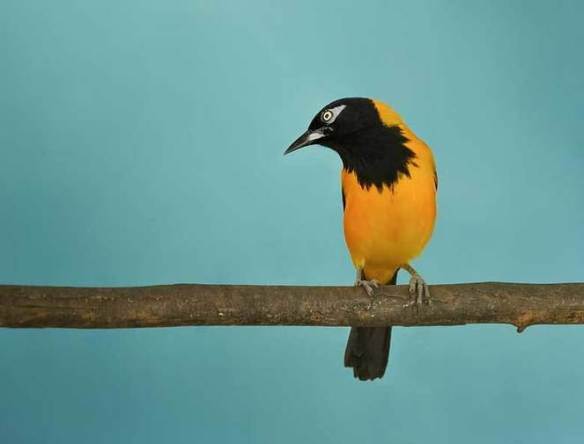
Trafficked tropical animals: the ghost exports of Venezuela

“Venezuela is losing at least 900,000 animals every year to the $320 million illegal wildlife trade.

“Among the birds sold to the pet trade are 50 species of New World parrot, parakeet and macaw endemic to Venezuela, along with American flamingoes and extremely rare red siskins.

“Patrolling the country’s porous 2,800-kilometer coastline and nearly 5,000 kilometer border with Colombia, Brazil and Guyana is a daunting task for law enforcers trying to stop clever wildlife traffickers.

“The hunters ransack the vulnerable nests of tropical birds in richly biodiverse but poorly patrolled Venezuelan rainforests. Wildlife merchants brazenly display young fledglings, monkeys and other animals, right next to main roads throughout the forest. Many captives will travel a difficult path — an exhausting, often fatal journey covering thousands of miles, cleverly hidden inside bags and luggage, passing through airports and seaports, bound for Europe and elsewhere. It is a lucrative, shadowy trade, involving at least 900,000 animals annually, earning more than 300 million dollars for the criminals plying it, from which the local rainforest hunter gleans barely a fistful of Bolivares.”  news.mongabay.com

GR:  We need to tell our children that animals have traits far more interesting than just their shapes and colors.  In their natural homes, they use many strategies and techniques to build nests, attract mates, find food, and evade predators.

Extinction Resources: Information, Opinion, Ideas, & Questions

Extinction Information Resources

PassengerPigeon

Passenger Pigeon

Stopping human-caused extinction of Earth’s plant and animal species is the greatest challenge of our time. This post provides access to the latest articles on extinction. The first item (Ceballos et al. 2015) is the latest detailed report on what we know and how we acquired the information.

 Ceballos, Gerardo, Paul R. Ehrlich, Anthony D. Barnosky, Andrés García, Robert M. Pringle, and Todd M. Palmer. 19 June 2015. Accelerated modern human–induced species losses: Entering the sixth mass extinction. Science Advances Vol. 1, no. 5 (e1400253, DOI: 10.1126/sciadv.1400253). Corresponding author. E-mail: gceballo@ecologia.unam.mx.

More than a thousand recent articles are linked to my blog (https://garryrogers.com/blog):

Causes of Extinction

My blog covers the things that people do to cause extinctions and reduce biodiversity. These deeds of ours are woven into individual and our collective habits and beliefs. Stopping them will alter our society and our culture. It will be difficult. Our population must be reduced, our food choices must change, and our resource harvest must decline. Nothing less will succeed. Search the blog using the following terms for recent reports:  Burning, Coal, Construction, Deforestation, Desertification, Energy, Farming, Fishing, Fracking, Grazing, Hunting, Invasive Species, Logging, Mining, Oil, Pesticides, Pet Trade, Pollution, Population, Roads, and Soil.

Climate change will become the major cause of extinction.  Here’s its search link on my blog:  Climate Change.

For more reading, my Internet newsletters include a wider variety of articles than my blog.