


Spring dew dries daffodils fade glistening eyes turn as flags open sweet scented invitations to summer–just kidding, I’m not much for sappy captions.
Tag Archives: Plants
Desert Habitat: Soil Microorganisms
By Garry Rogers
The Role of Soil Microorganisms in Desert Ecosystems
There would be no life on the land if there was no soil.
“When you thrust a shovel into the soil or tear off a piece of coral, you are, godlike, cutting through an entire world. You have crossed a hidden frontier known to very few. Immediately close at hand, around and beneath our feet, lies the least explored part of the planet’s surface. It is also the most vital place on Earth for human existence” (Wilson, 2010).
Biological Soil Crusts

Biological Soil Crust (Brown stipplescale) growing in a rocky area in the Great Basin Desert.
In sunny desert environments, various species of algae, cyanobacteria, microfungi, lichens, and bryophytes form thin crusts over the surface of the ground. The crusts protect the soil from erosion, enrich its composition, and enhance plant growth. The crusts are among the most important components of desert ecosystems.
Biological soil crusts (BSCs) are quite fragile. If they are damaged, soils lose moisture and nutrients and become susceptible to erosion and invasion by alien plants. BSCs are susceptible to considerable damage by livestock (e.g., Brotherson et al. 1983). Recovery of BSCs at some sites can occur within 20 years (Anderson et al. 1982), but most studies have concluded that longer periods are required (e.g., Jeffries and Klopatec 1987), and that full recovery can require centuries (Belnap 1993). Continue reading
Take Action to Save Habitat: #Conservation Lands
Habitat Concerns
 This post focuses on habitat conservation. The examples are in the U. S., but there are similar protection efforts in other countries. More are needed everywhere. A first step is to visit a protected area and learn first hand what is at stake.
The major threat to Earth’s plants and animals is direct habitat destruction by humans. Farming, logging, grazing, and construction of houses and roads are the leading types of destruction. Of course, habitat can be destroyed by volcanoes, meteorites, glacier expansion, earthquakes, etc., but none of these can compare to the size and extent of the human impacts.
 One approach to the problem is to protect some areas by limiting human access and use. National Parks, Wildlife Refuges, and Monuments are examples. U. S. Secretary of the Interior, Bruce Babbitt added a new strategy for protecting habitat. Opposition to new national parks and wilderness areas is so well established that those forms of protection are almost impossible to create. Babbitt combined existing regulations and formed policies that allowed for definition and protection of areas of special significance.
“The National Conservation Lands, established by Interior Secretary Bruce Babbitt in 2000, comprise 28 million acres of the most ecologically rich and culturally significant of lands managed by the Bureau of Land Management. They are found throughout the West, Alaska and even extend to the East Coast. They are our nation’s newest collection of protected public lands—standing in stature with our National Parks, National Forests and National Wildlife Refuges” (Conservation Lands Website).

Any form of protection is difficult to achieve. Hungry humans ignore such protections, and ambitious individuals see restrictions as threats to the accumulation of wealth and power. No effective steps are being taken to reverse human population growth, and in the U. S., continuous efforts are made by congressional representatives of ambitious individuals and corporations to remove the protections–to build hotels within national parks, to allow livestock grazing in wilderness areas, to increase motorized access, and to build trails through refuges. Many of these efforts succeed.
The U. S. National Conservation Lands include National Monuments, National Conservation Areas, Wilderness and Wilderness Study Areas, Wild and Scenic Rivers, National Scenic and Historic Trails, and more. The actual degree of protection is quite variable. Many of the units allow continuing livestock grazing and other destructive uses. For most, baseline conditions are poorly documented and there is no system in place to monitor changes. Invasive plants and animals, accelerated soil erosion, increasing air and water pollution, and spreading disease can go unnoticed for years. Ignored, such changes can destroy the habitat value of the Lands.
What to do
This summer, visit a reserved land unit. In the U. S., visit one or more of the sites on the map above. You can call the U. S. Bureau of Land Management office in your state or region for maps and site descriptions. Ask about ‘friends’ groups. You can probably join a hike or attend other programs led by local specialists. See for yourself what the Lands offer and what they need for better protection. Then write to political representatives calling for more and improved protection.
Contact Garry Rogers by email, or leave a comment after the email form.
Your message has been sent

Climate Change: Disaster Courtesy of US Congress
Congressional Climate Change Deniers
U. S. congressional representatives of major energy and development interests continue their long war on climate change. Their chief strategy, deny it, question it, deny its importance, etc.

Oil Refineries Create Serious Health Problems in Davis County Utah. Contribute to Climate Change.
The Salt Lake Tribune (March 19, 2013) reports that Republican Chris Stewart, brand new Congressman from Davis County, Utah, and chairman of the House environmental subcommittee,says, “”I’m not as convinced as a lot of people are that man-made climate change is the threat they think it is,” he told The Salt Lake Tribune. “I think it is probably not as immediate as some people do.”
For his 2012 political campaign, Stewart received more than $40,000 from donors associated with the oil and gas industry (Center for Responsive Politics, CRP). Republicans like Stewart aren’t the only ones to represent big oil. According to CRP, Democrats that voted in favor of oil company legislation have taken money too.
U. S. land and disaster management agencies prepare

Climate Change Will Increase the Intensity and Frequency of Forest Fires
In a December, 2012 report, the U. S. Forest Service describes what is coming as a result of climate change. According to the report, the main short-term effects on the national forests will come from the increased intensity and frequency of disturbances. Continue reading
Saving Wildlife: Species Checklists
Introduction: The Human Impact
The growing human population is wiping out Earth’s resources and many plant and animal species. Scientists are calling this the Earth’s sixth mass extinction event. They say that we are extinguishing species between 100 and 1,000 times faster than the average rate throughout Earth history.
We can’t seem to do anything about the human population boom, so we can’t stop species extinctions. We can sometimes intervene to save a species. We can return species to places they formerly occupied, and we can protect or restore damaged habitats. Of course, we have to know that species are declining before we can decide to intervene. The only way to know how most species are doing is to conduct repeated field surveys. On foot, clipboard in hand. Continue reading
Life on Mars?!
Learning about Mars

Mars Rover Curiosity
As Mars rover Curiosity gets closer to determining that life existed on Mars, people are getting excited. Some hope that we will find a few of the last surviving pockets of the planet’s microorganisms. Fascinating! Should we invest more in the space program? Oh, sorry; that was stupid. Everyone knows we have to save life on Earth first.
Reports from around the world are describing the progress of a great environmental catastrophe. Earth’s wild animals and plants are dying. Efforts by the world’s governments and conservation organizations have failed to stop the accelerating catastrophe. According to a January 2013 report by the AZ Game & Fish Department, more than half of the state’s native vertebrate species are imperiled. Sadly, the status of the great majority of smaller species is unknown. Continue reading
The Conflict Begins to Boil
On Feb. 13, 2013, for the first time in its 120-year history, the Sierra Club participated in civil disobedience to protest the Keystone XL Pipeline and the general lack of action on global warming.
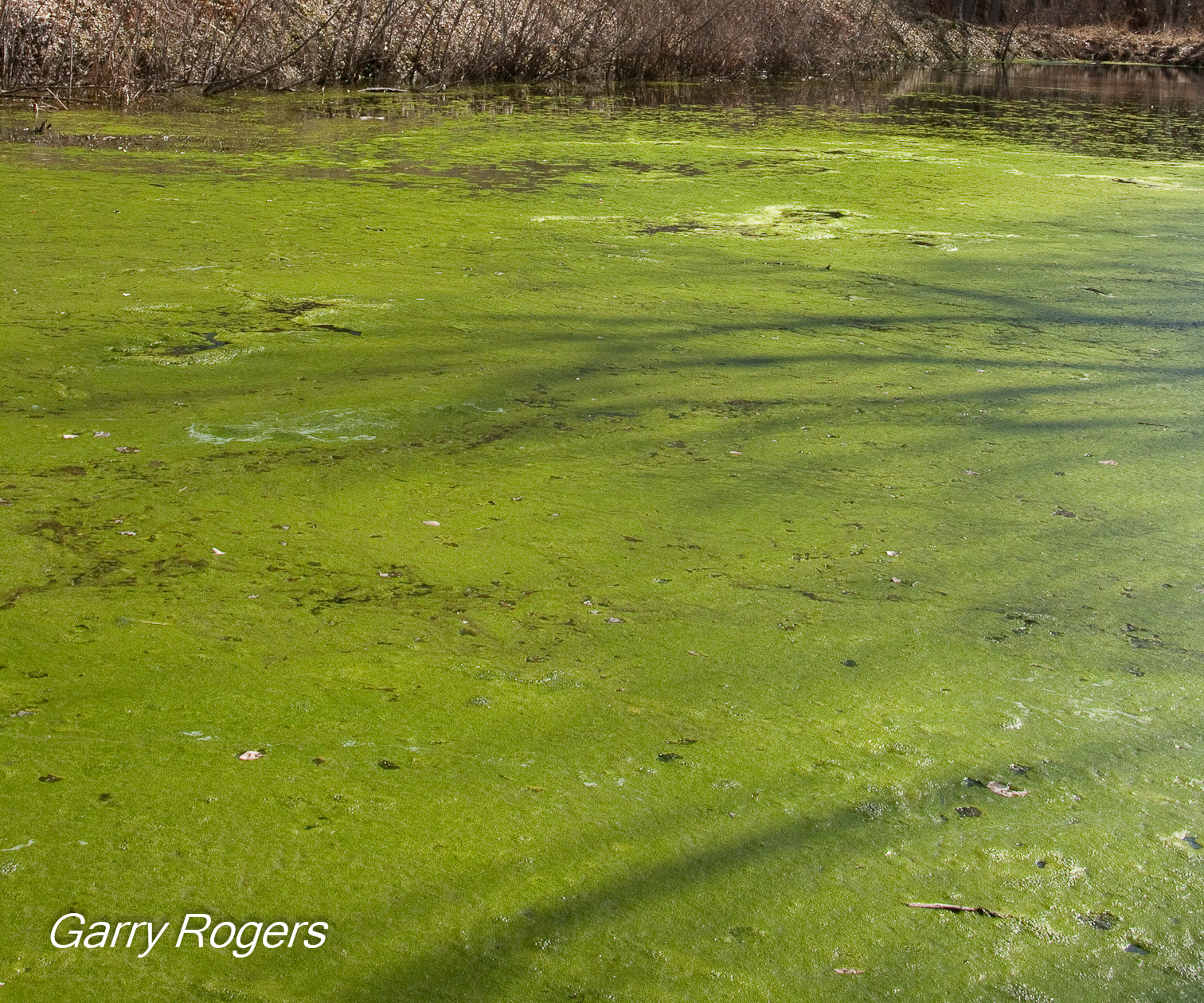
Fertilizer applied to a nearby farm has enriched natural water bodies to unsustainable levels. Algae blooms use up the oxygen and kill off fish and other wildlife. Come close and see the bubbling surface.
Global environmental conditions are deteriorating. Ignorance can no longer defend guilt: Dirty air and water have become familiar to all.
It is time to revise our institutions. We must find ways to curb the greed that continues a natural resource harvest that leaves no hope for the future.
 GarryRogers Nature Conservation