Invasive Species

For several years I’ve been observing, documenting and appreciating nature and the environment in Michigan. During those years, I’ve discovered some of the subjects I’ve photographed and written ab… Source: photonatureblog.com

GR:  After direct habitat destruction by building, invasive species are the most destructive force that humans have dispersed through Earth ecosystems.  Long before global warming has its day, invasive species will have eliminated many native habitats and species.

Invasive Tropical Fish Are Changing Ocean Ecosystems

Tropical fish are moving north as the global climate warms, in some cases with devastating impacts to ocean ecosystems.  Source: summitcountyvoice.com

GR:  Invasive species of the land, water, and air are causing greater immediate impacts on Earth ecosystems than global warming.  At present, human activities are spreading far more invasive species than global warming. This will change in the future, but for now, we can stoop many invasives with the well-known methods for inventorying, monitoring, and prevention.  Of course, the cost might be as astronomical as that of a warplane.

Westerners want to save the sage-grouse (and so do I) – Defenders of Wildlife Blog

In the West we still have a chance to conserve sage-grouse, the Sagebrush Sea and all its inhabitants.

“A new poll conducted by Tulchin Research for Defenders of Wildlife found that the majority of voters in western states want to see sage-grouse protected, even if that means listing the bird under the Endangered Species Act (ESA). Add to that one New Jerseyan. I didn’t know what a sage-grouse was before I began working for Defenders of Wildlife. Now I consider myself, like the majority of westerners, an advocate for their protection.

“Sage-grouse are a special bird. They have a long and storied history in our country and are an iconic ambassador of a quintessentially western landscape, the Sagebrush Sea. Today, greater sage-grouse range has been reduced by nearly half and populations have declined by up to 90 percent.”

Source: www.defendersblog.org

GR:  Beautiful birds.  In the western U. S., saving any part of nature is a struggle.  During the past century of human occupation, the sagebrush landscape has taken a severe beating.  Invasive plants and relentless livestock grazing have destroyed much of the original vegetation.  Saving the sage-grouse is a battle that, if it is won, will save some of the native plants and animals that create the magnetic charm of the sagebrush sea’s quiet solitude.

Invasive Plants Are Destroying North American Desert Ecosystems

Invasive species, like storm troopers leading the surging ruin of global warming, are overwhelming Earth’s ecosystems.

Introduction to Invasive Plants in Deserts

One or a few species of invasive plants can replace native plant communities across entire landscapes. Biodiversity and stability of vegetation, soils, and wildlife decline dramatically. Once the replacement is complete, it is difficult to restore the original species. In some instances, the replacement is so widespread there are not enough resources available to achieve restoration. The loss is permanent.

Invasive non-native species are a central management concern for all wild land managers because they “threaten biodiversity and other ecological functions and values” (Warner et al. 2003). This statement represents a consensus by the scientists and land managers concerned with natural ecosystems (e.g., Mau-Crimmins et al. 2005). Native vegetation is more diverse, resilient, and persistent than invasive plant vegetation; it provides food and cover for wildlife, absorbs precipitation, increases water storage, protects soil, reduces flooding and sedimentation, and helps maintain air and water quality. According to the Sonoran Institute: “Invasive species are the second most significant threat to biological diversity after direct habitat loss”.

Full post with references: garryrogers.com

Invasive Palm Threatens Java Rhino To Extinction

The last of Indonesia’s critically endangered Javan rhinoceroses have survived poachers, rapid deforestation and life in the shadow of one of the archipelago’s most active volcanoes. But an invasive plant is now posing a new threat to the world’s rarest species of rhino.

“Once the most common of the Asian rhinoceroses, the Javan rhino (Rhinoceros sondaicus) started its decline at least 3,000 years ago with the growth of human populations and increased hunting pressures. With its horn fetching $30,000 on the black market, poaching is considered the driver of much of its decline in modern times.

“As few as 58 Javan rhinos exist in the world today, and the species is quite possibly the rarest large mammal on earth. All are found in one small population in Ujung Kulon — a sprawling 1,200-square-kilometer (463-square-mile) national park on the westernmost tip of West Java and the island of Panaitan. In addition the rhinos, the park is home to dozens of other mammals, more than 270 species of birds and 57 rare plant species.

“But a single species of plant is threatening the park’s fragile ecosystem.

“The issue in Ujung Kulon is not deforestation — but an invasive species called the arenga palm,” said Elisabeth Purastuti, WWF’s Ujung Kulon leader.

“Once covered in old-growth forest, the cataclysmic eruption of nearby Krakatoa in 1883 wiped out much of Ujung Kulon’s primary forest cover, creating a patchy network of secondary forest where the rhino thrived.”

Source: havehest.wordpress.com

GR:  Conservation biologists have been saying that construction (total habitat elimination) and invasive species are the greatest threat to Earth ecosystems.  Though we now must place climate change in the number two spot, invasive species continue to be one of humanity’s greatest destructive achievements.  Read more:
How should “Flathead National Forest 2.0” look?

Montana’s Flathead Forest is one of the most biologically diverse areas of our country, but it needs some work to become more effective for conservation.

“In the northwestern corner of Montana just next to Glacier National Park sits the 2.4 million acre Flathead National Forest. It’s a part of the massive and biodiverse “Crown of the Continent” ecosystem, and is part of a broader collection of protected areas stretching all the way down to Yellowstone. It’s home to more than one thousand native plant species, 70 mammals, and 260 birds. It’s home to iconic American megafauna, like grizzly bears and grey wolves, along with mountain lions, wolverines, lynx, and fishers.

“Starting in the 1930s, concerned citizens and government officials have worked to protect this region, and while it remains mostly unaffected by development, it is starting to suffer the effects of climate change. As glaciers disappear from nearby Glacier National Park, the region will see warmer winters and summers, decreasing snowpack, earlier spring melts, reduced stream flows, and a longer, more severe wildfire season. The animals there will increasingly need more space to roam as their food sources and habitats change with the climate.”

Source: conservationmagazine.org

White-footed Mice Prefer Native Plants

White-footed mice (Peromyscus leucopus) prefer native fruits over invasive honeysuckle fruits

White-footed Mouse

Continue reading

For Arizona and New Mexico, Climate Change Produces Winter Fires

See on Scoop.itGarry Rogers Nature Conservation News (#EcoSciFi)

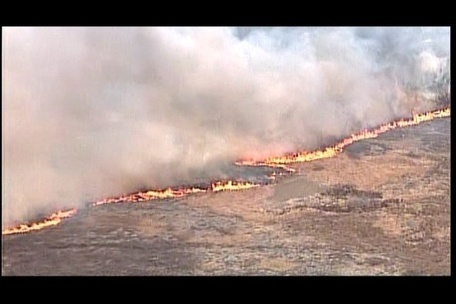
(500 acre wildfire burns near Isleta in New Mexico on February 19th. Image source: KOAT) It’s late winter in Arizona and New Mexico. Or at least that’s what the calendar says. During this time of y…

Garry Rogers insight:

Drought alone can increase fire frequency and size.  In AZ and NM, the continuing increase of fine fuel from alien weeds adds to the drought impact. 

See on robertscribbler.wordpress.com

Developing Grazing Systems

See on Scoop.itGarry Rogers Nature Conservation News (#EcoSciFi)

Restoring the Planet, one Native Plant at a Time! (by Conservation Seeding & Restoration INC)

Garry Rogers insight:

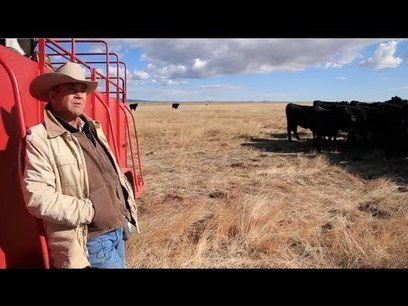
Of course, resource harvest by cows will reduce wildlife numbers and spread invasive weeds.

See on nativeplants.wordpress.com