Roads and Transmission Corridors Aid Plant Invasions

By Garry Rogers

Roads and Transmission Corridors

Any type of construction destroys vegetation and disturbs the surrounding area.  Roads and transmission corridors do even more.

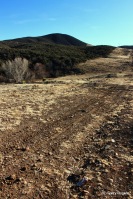
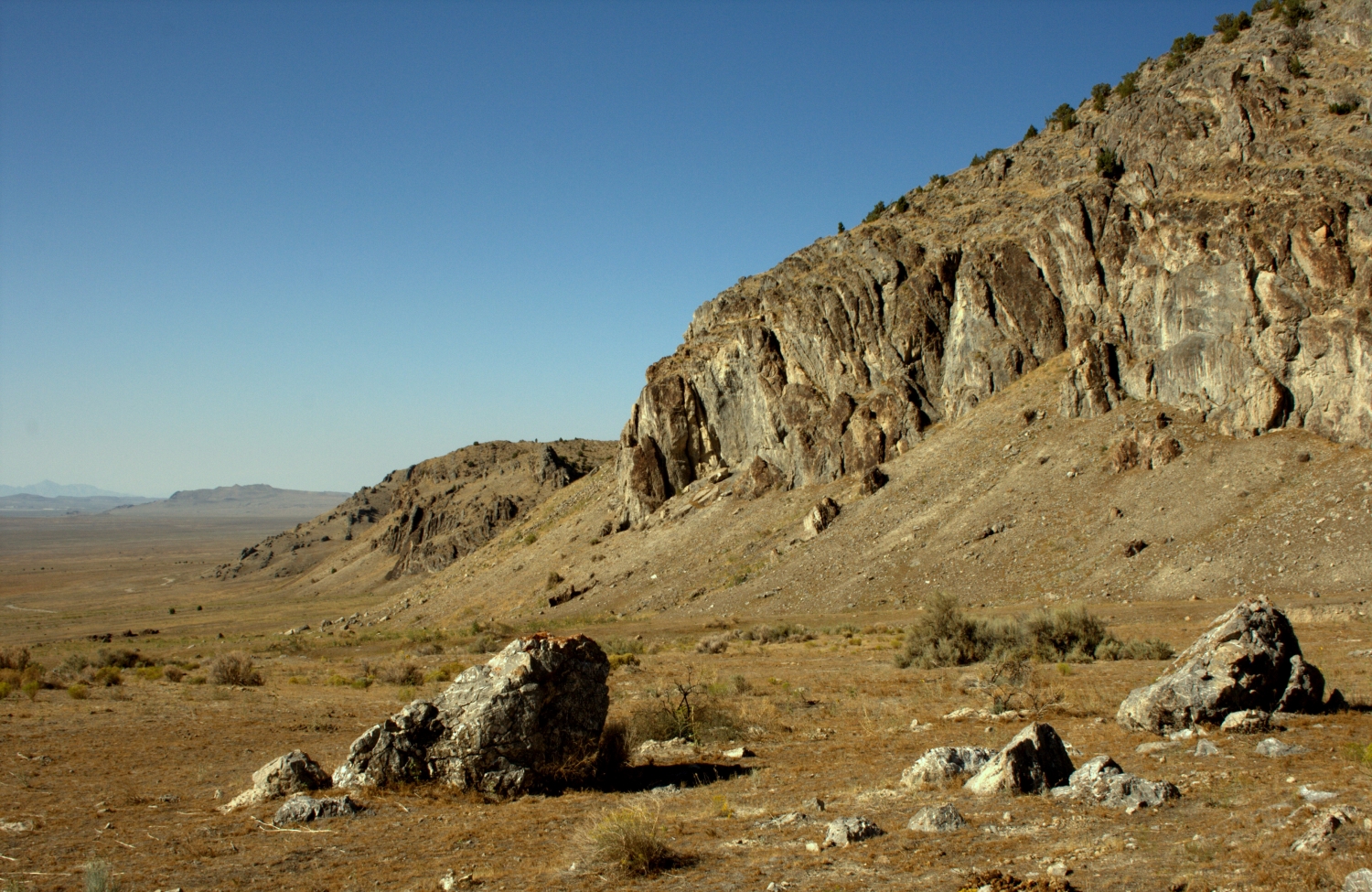
New Pipeline in Central Arizona.  Native chaparral removed, heavily grazed, constant traffic.

New Pipeline in Central Arizona. Native chaparral removed, heavily grazed, constant traffic.

Throughout human history roads and trails have been the principal routes for long-distance weed dispersal (Cousens and Mortimer 1995).  During the past century, power lines and pipelines have spread across the land.  Their construction removes vascular plants (Vasek et al. 1975a, 1975b), BSCs (Belnap 2001), and AMFs, and prepares the soil for colonizing weeds.  New lines often do not follow existing roads and corridors.  Instead, they take direct routes that allow weeds to disperse to areas they would not reach using their own dispersal mechanisms (e.g., Tyser and Worley 1992, Wein et al. 1992, Zink et al. 1995).

Weeds spread with surprising speed along roads and transmission corridors (Macfarlane 1997, Trombulak and Frissell 2000, Pauchard and Alaback 2004, Brisson et al. 2009, Mortensen et al. 2009).  The primary dispersal vectors are wind, inspection vehicles, livestock grazing, and recreation vehicles.  Continue reading

Outdoor Recreation Aids Invasive Plants

By Garry Rogers

Outdoor Recreation Aids Plant Invasions

Tracks on the Agua Fria River BanksOutdoor recreation does far more than simply transport invasive plants.  It disturbs soils and vegetation and takes the lives of animals.  Leopold commented on the most violent type of recreation:

“The disquieting thing is the trophy hunter who never grows up. … To enjoy he must invade, possess, appropriate.  Hence the wilderness that he cannot personally see has no value to him.  Hence the universal assumption that an unused hinterland is rendering no service to society” (Leopold 1949:  176). Continue reading

Does Livestock Grazing Cause Plant Invasions?

By Garry Rogers

Livestock and Plant Invasions

Using natural landscapes for any purpose requires caution to prevent plant invasions.  An essential task for nature conservation is explaining this to the public.

Cattle in the Sonoran Desert.  Heavily trampled soil without soil microorganisms that can absorb and store moisture, convert solar energy to nutrients, increase plant root efficiency, and protect the soil surface from erosion and invasive plants. Photo by George Wuerthner.

Cattle in the Sonoran Desert. Heavily trampled soil without soil microorganisms that can absorb and store moisture, convert solar energy to nutrients, increase plant root efficiency, and protect the soil surface from erosion and invasive plants. Photo by George Wuerthner.

Most investigations of plant invasions assign responsibility to Humans.  In our ignorance, we introduce potentially invasive plants from foreign ecosystems, and then we disturb native ecosystems and help the introduced plants get established and spread.  We have learned that diseases, predators, competitors, and supportive soil microorganisms control plant growth.  Move plants to new locations where their natural controls aren’t present and they sometimes explode across the landscape.  Continue reading

Disturbance and Invasive Plants

By Garry Rogers

Disturbance and Invasive Plants:  Introduction

Wild Horses and Weeds

Wild Horses on a Former Great Basin Shrubland Destroyed by Livestock Grazing, Invasive Plants, and Fire.

In the invasive plant literature, disturbance refers to an event that removes plants and alters the soil surface.  “Disturbance is believed to be the major factor favoring plant introductions” (Radosevich et al. 2007:  58).  Without disturbance, invasive plants would find no openings to become established and begin to spread and replace native species.

It is important to understand the nature and origin of disturbance that leads to plant invasions, because, as with global warming, it is often profitable to deny human responsibility for invasions so that a disturbance activity can continue. Continue reading

Desert Habitat: Soil Microorganisms

By Garry Rogers

The Role of Soil Microorganisms in Desert Ecosystems

There would be no life on the land if there was no soil.

“When you thrust a shovel into the soil or tear off a piece of coral, you are, godlike, cutting through an entire world. You have crossed a hidden frontier known to very few. Immediately close at hand, around and beneath our feet, lies the least explored part of the planet’s surface. It is also the most vital place on Earth for human existence” (Wilson, 2010).

Biological Soil Crusts

1-Gt Basin Lower Valleys-003

Biological Soil Crust (Brown stipplescale) growing in a rocky area in the Great Basin Desert.

In sunny desert environments, various species of algae, cyanobacteria, microfungi, lichens, and bryophytes form thin crusts over the surface of the ground.  The crusts protect the soil from erosion, enrich its composition, and enhance plant growth.  The crusts are among the most important components of desert ecosystems.

Biological soil crusts (BSCs) are quite fragile.  If they are damaged, soils lose moisture and nutrients and become susceptible to erosion and invasion by alien plants.  BSCs are susceptible to considerable damage by livestock (e.g., Brotherson et al. 1983). Recovery of BSCs at some sites can occur within 20 years (Anderson et al. 1982), but most studies have concluded that longer periods are required (e.g., Jeffries and Klopatec 1987), and that full recovery can require centuries (Belnap 1993). Continue reading

Invading species can extinguish native plants

Invasive Plants

Nature Conservation & Science Fiction: #EcoSciFi

Ecologists at the University of Toronto and the Swiss Federal Institute of Technology Zurich (ETH Zurich) have found that, given time, invading exotic plants will likely eliminate native plants growing in the wild despite recent reports to the…

Creating native enclaves might save a plant species from extinction, but the species’ decline over a large area will have tremendous negative effect on the species’ herbivore/detritivore and sheltering associates (GR).

See on phys.org

Forest Threats Include Global Warming, Weeds, and Fire

Forest Threats Include Warming Climate, Spreading Weeds, and Increasing Wildfire

Humans have spread weeds to new habitats across Earth.  Most weed species grow well in sunny habitats typical of desert regions.  The weeds increase the quantity and continuity of fuel and they recover quickly after a fire.  Thus, they allow accidental and lightening caused fires to grow larger and become more frequent.  Anyone who follows the effects of a desert fire for a few years will see that many native plants recover too slowly to persist under the new weed-accelerated fire regime (Rogers and Steele 1980).
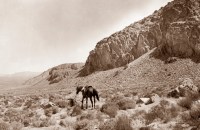
1901.  Cedar Mountains by G. K. GilbertThis pair of photographs from the Great Basin Desert illustrates what recurring fire can do in the desert.  (Click on the images for a larger view.)  The first photo was taken in 1901 by geologist G. K. Gilbert (USGS Photo Library).  It shows fairly even cover by the small native shrubs dominating the vegetation of the area.  In 1901 there was no travel in this area except by horseback or wagon.  Gilbert was fond of the horse, named her Sally, and included her in many of his documentary photos.

2008.  Cedar Mountains by Garry RogersThe second photo was taken in 2008 and shows that as far as the eye can see, most of the shrubs are gone.  They have been replaced by fire tolerant non-native weeds.  This area burns so frequently now that the U. S. Bureau of Land Management stewards of the land have begun burning the land themselves to help prevent surprise fires that disrupt traffic on the nearby interstate highway.

The second photo is presented below in color and larger size to give a clearer view of the extent of the barren weed/fire landscape.
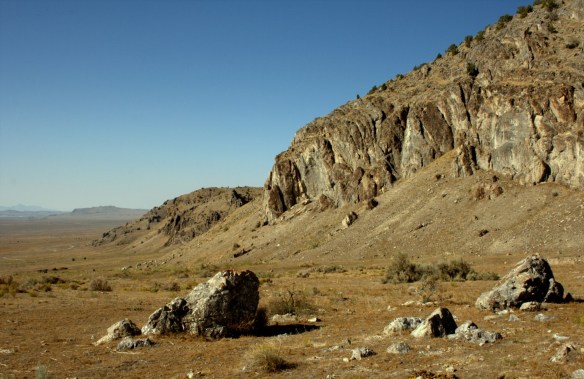
2008.  Cedar Mountains by Garry Rogers (color)

Forest threats include more than just warming climate.  Some climate models predict increased forest fire occurrence as climate warms (Smithwick et al. 2013:  2).  It is likely, however, that fire prone weeds will increase.  Invasive weeds do poorly in the shade of mature trees.  As domestic livestock, loggers, and drought continue to disturb forest soils and remove the shade cast by tall trees, weeds will increase.  As has happened in lower, drier habitats we may lose many native forest species.

References

Rogers, G. 1982.  Then and now:  A photographic history of vegetation change in the central Great Basin Desert.  University of Utah Press, Salt Lake City, UT.  152 p.

Rogers, G., and J. Steele.  1980.  Sonoran desert fire ecology.  Pages 15-19 in  Proceedings of the fire history workshop, USDA Forest Service GTR-RM81. 142 p.

Smithwick, E.A.H., et al.  2013.  Climate, fire and carbon:  Tipping points and landscape vulnerability in the greater Yellowstone ecosystem.  JFSP Project No. 09-3-01-47.

Go back

Your message has been sent

Warning
Warning
Warning
Warning

Warning.

Climate Change: Disaster Courtesy of US Congress

Congressional Climate Change Deniers

U. S. congressional representatives of major energy and development interests continue their long war on climate change. Their chief strategy, deny it, question it, deny its importance, etc.

Oil Refinery Smog

Oil Refineries Create Serious Health Problems in Davis County Utah. Contribute to Climate Change.

The Salt Lake Tribune (March 19, 2013) reports that Republican Chris Stewart, brand new Congressman from Davis County, Utah, and chairman of the House environmental subcommittee,says, “”I’m not as convinced as a lot of people are that man-made climate change is the threat they think it is,” he told The Salt Lake Tribune. “I think it is probably not as immediate as some people do.”

For his 2012 political campaign, Stewart received more than $40,000 from donors associated with the oil and gas industry (Center for Responsive Politics, CRP).  Republicans like Stewart aren’t the only ones to represent big oil.  According to CRP, Democrats that voted in favor of oil company legislation have taken money too.

U. S. land and disaster management agencies prepare

Climate Change Will Increase the Intensity and Frequency of Forest Fires

In a December, 2012 report, the U. S. Forest Service describes what is coming as a result of climate change.  According to the report, the main short-term effects on the national forests will come from the increased intensity and frequency of disturbances. Continue reading

Arizona Wildlife In Peril

Arizona Wildlife Status

There is general agreement that wildlife is declining worldwide.  Across the U. S., government agencies and private organizations have set aside millions of acres in parks, monuments, preserves, refuges, wilderness areas, and other protected areas.  The efforts have undoubtedly slowed the decline, but they have not stopped it.  The status of most small invertebrate species is unknown, but the AZ Game & Fish Department reports that 551 of the state’s 992 vertebrate species are imperiled.

Imperiled Arizona Wildlife

Continue reading