The Patterns of Bird Population Irruptions


“An irruption is the sudden change in the population density of an organism. In North American birds, irruptions often refer to the movement of northern-wintering species to the south in years of low food availability. You can recognize irruptive movement patterns at your feeders: some winters you may see a species at your feeders in great numbers, but in other winters they don’t show up at all.”

Explore FeederWatch data and tell us what you can find

Source: www.birds.cornell.edu

GR:  Here’s a volunteer citizen naturalist opportunity for everyone, but especially for those who love birds.

China’s New Great Wall Threatens One Quarter of World’s Shorebirds

GR:  Human disregard for other species is disgusting.

The following by Richard Conniff.

Every spring, tens of thousands of plump, russet-breasted shorebirds drop down onto the wetlands of China’s Bohai Bay, ravenous after traveling 3,000 miles from Australia.

This Yellow Sea stopover point is crucial for the birds, called red knots, to rest and refuel for the second leg of their journey, which will take them another 2,000 miles up to the Arctic tundra.

Unfortunately for the red knots, the intertidal flats of Bohai Bay are rapidly disappearing, cut off from the ocean by new sea walls and filled in with silt and rock, to create buildable land for development.  In a society now relentlessly focused on short-term profit that seems like a wonderful bargain, and the collateral loss of vast areas of shorebird habitat merely an incidental detail. As a result, China’s seawall mileage has more than tripled over the past two decades, and now covers 60 percent of the mainland coastline. This “new Great Wall” is already longer than the celebrated Great Wall of China, according to an article published Thursday in Science, and it’s just getting bigger every year—with catastrophic consequences for wildlife and people.

Source: strangebehaviors.wordpress.com

Winter Finch Forecast: Help Monitor Wild Bird Health

GR:  Here’s another great citizen naturalist opportunity.  Birds, like butterflies, are excellent indicators of ecosystem health. Join the Cornell Lab of Ornithology FeederWatch project beginning November 8, 2014, and make a contribution.

The following by Susan B. Whiting of the Vineyard Gazette

Every fall Ron Pittaway who is the Field Ornithologist for Ontario, Canada makes a winter finch forecast. One of the Vineyard birders always reminds me of same, this year it was Bob Shriber. Ron Pittaway’s forecast is based primarily on tree seed crop availability of spruces, birches and mountain-ashes. The general forecast predicts there will be a “mixed bag” of finch movements. For example purple finch and common redpolls will be seen on-Island as their foods of choice are less plentiful up north where these finches breed. The same is true of red crossbills. Ron Pittaway notes that although there are good spruce cone crops for the pine siskins, there will probably be some movement of these delicate finches into our area. So make sure that your feeders have not only sunflower seeds for the purple finches, but niger seed for the redpolls and siskins. Enjoy these finches they will probably be with us between now and April.

Source: vineyardgazette.com

Parrots Over Puerto Rico: An Illustrated Children’s Book Celebrating the Spirit of Conservation

GR:  Will the Puerto Rican parrot survive?  It is the only remaining native parrot in Puerto Rico.  Parrots of the region began disappearing in the 1700’s due to logging, farming, and pet collecting.  The species’ prospects have improved, but the World Conservation Union still lists it as critically endangered. In 2012, there were only 58–80 individuals in the wild and 300 individuals in captivity. Considering the numbers that persist, I wondered if conservation efforts over the past 40 years have done enough.

This blog post from Brain Pickings describes the species’ step back from the brink of extinction.

“Most children’s books are full of animals — as protagonists, as pets, as age-old standbys in fairy tales and alphabet primers alike. But, as Jon Mooallem poignantly observed in his bittersweet love letter to wildlife, by the time each generation of children grows up, countless species of animals that roamed Earth during their childhood have gone extinct — today, scientists estimate that one species ceases to exist every twenty minutes. Perhaps whatever chance we have of reversing this tragedy lies in translating our children’s inherent love of animal characters into a tangible grown-up love of animal species, the kind of love that protects them from growing extinct, preserves their natural habitat, and honors the complex dynamics of ecosystems.”

Source: www.brainpickings.org

The Great Sunflower Project

People all over the country are collecting data on pollinators in their yards, gardens, schools and parks. Together, we take counts of the number and types of pollinators visiting plants (especially sunflowers). We have been gathering information on pollinator service since 2008, and now have the largest single body of information about bee pollinator service in North America. Thanks to our thousands of observers, we can determine where pollinator service is strong or weak compared to averages.

Why It’s Important

Over the past few years, scientific studies have suggested that both honey bee and native bee populations are in trouble. What we don’t know is how this is affecting pollination of our gardens, crops and wild lands. In 2008, we started this project as a way to gather information about our urban, suburban and rural bee populations and to give you the tools to learn about what is happening with the pollinators in your yard.

How You Can Help

While we love to get data from our namesake species, Lemon Queen Sunflowers, you can participate by watching a plant and recording how many pollinators visit, or recording pollinators as you take your favorite hike!

Seeds can be purchased at your local store or through Renee’s Garden who will donate 25% of her proceeds if you use the coupon code FR225A. Do join us!

We would love to have you; let’s help our most important pollinators together!

Source: www.greatsunflower.org

GR:  Here’s a splendid opportunity to contribute to nature conservation.  Choose a location and make a checklist of the butterflies, bumblebees, and hummingbirds you see.  Report your results to the Great Sunflower Project.  Now you’re working.

Read more about the practical value of checklists.

Speak up for California’s Tricolored Blackbirds – Audubon California

Ask the Fish and Game Commission to protect our Tricolored Blackbirds

Responding to an alarming drop in the rare bird’s numbers, the California Fish and Game Commission this Wednesday will consider an emergency listing of the Tricolored Blackbird under the California Endangered Species Act. A statewide survey completed this summer shows a 44 percent decline in Tricolored Blackbirds since 2011. Audubon California is in favor of an emergency listing, but is also committed to continuing our partnerships with the agricultural industry.

Source: secure.audubon.org

350 New Bird Species; More Than 25% Threatened

From Birdlife
One tenth of bird species flying under the conservation radar
More than 350 newly recognised bird species have been assessed by BirdLife International for the first time on behalf of The IUCN Red List of Threatened Species™.

Source: naturalhistorywanderings.com

GR:  Perhaps the real surprise is that more aren’t threatened.  In my home state, wildlife biologists consider more than half of the 451 native species vulnerable or imperiled, many critically imperiled.


Birds Migrate Earlier Because of Climate Change

Godwit Migration

Godwit Migration

The following from: Tamarra Kemsley, Nature World News

Researchers from the University of East Anglia found evidence that climate change is causing earlier bird migration.

“We have known that birds are migrating earlier and earlier each year — particularly those that migrate over shorter distances. But the reason has puzzled bird experts for years,” Jenny Gill from the School of Biological Sciences said.

“The researchers looked at the Icelandic black-tailed godwits, which have advanced their migration by two weeks over the past two decades. The changes, the scientists discovered, had little to do with individual birds, which migrated like clockwork, arriving at the same place at the same time year after year.”

“The obvious answer would be that individual birds are simply migrating earlier each year. But our tracking of individual birds shows that this is not the case,” Gill said.

“Knowing the exact ages of the birds, the researchers were able to track the shifts in arrival times back to when they were born, finding that those that hatched in the late 1990s arrived in May while younger birds appeared in April.  The discovery also helps to explain why shifts in migration for those traveling long distances are not the same species-wide.”

“Climate change is likely to be driving this change because godwits nest earlier in warmer years,” Gill said, “and birds that hatch earlier will have more time to gain the body condition needed for migration and to find good places to spend the winter, which can help them to return early to Iceland when they come back to breed.”

“Many long-distance migrants arrive so late on the breeding grounds that they have little opportunity to respond to warming conditions by nesting earlier,” she explained.

Gill concluded that studies like this are vital, “because many long-distance migrant bird populations are currently declining very rapidly, and identifying how climate change is affecting these populations is a key part of understanding the causes of these declines.”

Dwindling Bird Numbers Linked to Pesticides-Dutch Study

Beyond Pesticides:  “In addition to earlier research on the direct impacts of pesticides on pollinators and other beneficials, a recent study published by Dutch scientists establishes an additional indirect link between neonicotinoid use and insect-eating birds. The report, which came out on Wednesday, provides evidence that neonicotinoids, a class of systemic pesticides, are indirectly hurting larger creatures by reducing insect prey populations such as mosquitoes and beetles.

“Researchers found that in certain areas of the Netherlands where water is contaminated with high concentrations of imidacloprid, a commonly used neonicotinoid, bird populations tend to decline by an average of 3.5 percent every year. Further analysis found that this spatial pattern of decline appeared only after the introduction of imidacloprid to the Netherlands in the mid-1990s, even after correcting for land-use changes that have been known to affect bird populations in farmland.

“To our surprise we did find a very strong effect on birds”, said lead author of the study, Caspar Hallmann, a Ph.D. student from Radboud University in the Netherlands, to Reuters. In fact, according to the study, which was published in the journal Nature, nine of 15 bird species studied only eat insects and all feed insects to their young. Mr. Hallmann added, “We cannot say this is proof (that the pesticide causes the decline in bird numbers) but we cannot explain the…decline of birds by any other factors.” The study also looked into other possible causes like pollution.”

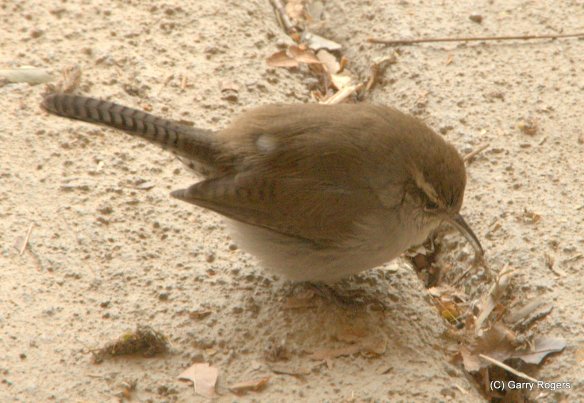
GR:  Photos are of birds at risk at Coldwater Farm.

“Bayer CropScience issued a speedy response expressing disagreement with the study findings. The company writes that the study did not “demonstrate that there is a causal link between the use of neonicotinoids and the development of bird populations in Europe.” The company went on to say that neonicotinoids “have gone through an extensive risk assessment which has shown that they are safe to the environment when used responsibly according to the label instructions.” The company, along with Syngenta, has been accused of forestalling attempts to ban neonicotinoids via the proposal of bee health plans that call for more research, implementing agricultural best management practices, and planting new habitat. These solutions fail to address the real problem that their products are highly toxic to bees.

“The recent report titled “Worldwide Integrated Assessment (WIA),” undertaken by the Task Force on Systemic Pesticides, indicates otherwise. Twenty-nine scientists representing multiple disciplines analyzed over 800 peer-reviewed publications on the impacts of systemic pesticides. The report emphasizes that neonicotinoids and their metabolites are persistent and harmful, even at very low levels, and that the chemicals have far-reaching impacts on entire ecosystems, from direct exposure to persistence in soil and water. Bees, butterflies, worms, and other pollinators and non-target organisms are also put at risk. Scientists concluded that even when neonicotinoids were used according to guidelines on their labels, the chemicals’ levels in the environment still frequently exceeded the lowest levels known to be harmful to a wide range of species.

“The European Union (E.U.) began implementation of a two-year moratorium in April on neonicotinoids used on flowering crops stemming from scientific evidence that the chemicals are harmful to bees. The pesticides can still be used legally in the E.U. on non-flowering crops, such as barley and wheat, the scientists said. Germany’s Bayer and Switzerland’s Syngenta, the two main producers of the pesticides, have contested the moratorium. They suspect that “colony collapse disorder,” which has resulted in the large drop in bee populations in Europe, Asia, the Americas, and the Middle East, are due to a virus spread by a parasitic mite. Opposition to neonicotinoid use remains strong, however. Syngenta recently withdrew its emergency application to allow the use of neonicotinoids on United Kingdom oilseed rape crops (known as canola in the U.S.) in face of public outcry. According to Reuters, over 200,000 people protested against the request, with around 35,000 more writing to environment secretary Owen Paterson.

“The Dutch study recommends that future legislation consider and take into account the wider impact of pesticides on wildlife. Dave Goulson, Ph.D., of Sussex University, writes in a commentary in Nature that the study was “the first to provide direct evidence that the widespread depletion of insect populations by neonicotinoids has knock-on effects” on larger animals. Dr. Goulson has done work on the far-reaching effects neonicotinoids have on biodiversity and ecosystem health; a review of his from last year found that not only are neonicotinoids the most widely used insecticides in the world, but they persist and accumulate in soil, are prone to leaching into waterways, commonly exceed the LC50 (the concentration which kills 50% of individuals) for beneficial organisms, and the consumption of small numbers of treated seeds presents a direct risk of mortality in birds and mammals.

“Sound familiar? The link between pesticide use and birds is not a new one. Rachel Carson’s book, Silent Spring, chronicled the profligate use of pesticides and their effects on the environment and on birds in particular. While Carson wrote specifically about DDT, an organochlorine pesticide, the message is similar – neonicotinoid pesticides effects have been shown to have widespread consequences on beneficial insects, the environment, and birds.

“Read more about how neonicotinoids affect non-target organisms, or Pierre Mineau’s, Ph.D., in-depth presentation with the American Bird Conservancy on the impact of insecticides on birds. You can also visit our BEE Protective page to learn more about how honey bees and other pollinators are going through rapid population declines, and what you can do to help. Beyond Pesticides has joined with beekeepers and thousands of people and organizations to urge EPA to join the EU in restricting neonicotinoid pesticides.”

Source: Reuters (Alister Doyle), and Beyond Pesticides

All unattributed positions and opinions in this piece are those of Beyond Pesticides