Inventory of Moths

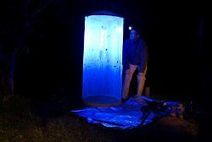
Biodiversity in the Andes: Teaming up international colleagues, an entomologist of Jena University identifies nearly 2,000 geometrid moth species in the South-American Andes The rain forests in the mountains of the tropical Andes are amongst the… From: www.innovations-report.com

GR:  Yes!  We need more work like this.  And we need repeated surveys to show when species are having trouble.
Biologists estimate that only about 10% of all moth species have been identified.  Nighttime pollinators as sensitive to pesticides as their daytime counterparts, the butterflies, these innocent creatures could be going extinct faster than we are finding them.  We, the only species capable of caring for the others, might never know how many moths there were before the current mass extinction.

Global Climate Emergency declared by Scientists at Columbia University Earth Institute

Global Climate Emergency

Climate-change projections published by scientists at the Columbia University Earth Institute have shifted from warnings to emergency alarms.  The scientists are ringing GarryRogersthe emergency bell because of the coming loss of human health and lives.  However, the real disaster lies with natural ecosystems. Earth’s webs of life constructed of interacting plants and animals will suffer far greater and more important loses than will human civilization.  For one thing, humans can emigrate (if their neighbors let them) from landscapes becoming uninhabitable.  Plants and most animals cannot.  (If you want a refresher course on climate change, this is an excellent review:  Global Warming Basics.)

In addition to the U. S. Southwest:

The tropics and the Middle East in summer are in danger of becoming practically uninhabitable by the end of the century if business-as-usual fossil fuel emissions continue, because wet bulb temperature could approach the level at which the human body is unable to cool itself under even well-ventilated outdoor conditions.[3] James Hansen and Makiko Sato

The ecosystems of the tropics are the most diverse and complex.  Desertification there is an incomprehensible tragedy for the Earth.

I excerpted the following from:

Regional Climate Change and National Responsibilities

“Discussion:  We conclude that continued business-as-usual fossil fuel emissions will begin to make low latitudes inhospitable.  If accompanied by multi-meter sea level rise,[11] resulting forced migration and economic disruption could be devastating.

The overall message that climate science delivers to society, policymakers, and the public alike is this: we have a global emergency. . . . We argue that country-by-country goals, the approach of the 21st Conference of the Parties[13] cannot lead to rapid phasedown of fossil fuel emissions, as long as fossil fuels are allowed to be the cheapest energy.  It will be necessary to include a carbon fee that allows the external costs of fossil fuels to be incorporated in their price.  Border duties on products from countries without a carbon fee, would lead to most nations adopting a carbon fee.”–James Hansen and Makiko Sato.

Fossil Fuel CO2 Emissions

(a) Updates of Figure 5 in Hansen and Sato (2001) “Trends of measured climate forcing agents” (also in PDF) and (b)same quantities as in (a) but in linear scale (also in PDF.) [Last modified: 2015/08/07]

Updates of Figure 16 in Hansen (2003), “Can we defuse the global warming time bomb?” [Figure also in PDF. Last modified: 2015/08/08]

[Figure also in PDF. Last modified: 2015/08/08]Data source: Boden, T.A., G. Marland, and R.J. Andres. 2015. Global, Regional, and National Fossil-Fuel CO2 Emissions. Carbon Dioxide Information Analysis Center, Oak Ridge National Laboratory, U.S. Department of Energy, Oak Ridge, Tenn., U.S.A. doi 10.3334/CDIAC/00001_V2015. Digital data are available at CDIAC web pages and used for 1751-2011. BP Statistical Review of World Energy 2015 data are used for extensions to 2014.

See More Figures.

GR:  For a broader discussion of the emergency, go to http://robertscribbler.com.

Invasive Species and the Bighorn Sheep Die-off in Montana Mountains, Nevada

Invasive Species

GarryRogersGR: Human-introduced animals, plants, and disease organisms have destroyed many species and ecosystems. This aspect of the human impact on nature became a global disaster in the 1500’s as we began crossing the oceans. In the lands we reached, we rampaged about with no thought of the seeds stuck to our boots or the diseases carried by our livestock. Then we developed nature. We cut the soil and filled it with pipes and wires and then we entombed its microorganism ecosystem with pavement. We damned streams, dried up springs, cut the forests, stripped the land with cattle and sheep, and we poisoned the water and air. Now comes our grand slam: We’ve added sufficient greenhouse gasses to the atmosphere to give our climate warmer temperatures, droughts, fires, and stronger storms.

How do we react to all that we’ve done? In the current time of competition between oil producers, for example, the temptation to burn more of the cheaper gasoline doesn’t horrify us, no, we call the lower prices a consumer blessing. Fuels Supplied

And so, in all that we do, our species appears to be striving for maximum destruction of earth ecosystems. Here are a few essays I wrote about how this works with invasive plants.

The following article is by Ken Cole on the Wildlife News website (February 19, 2016).

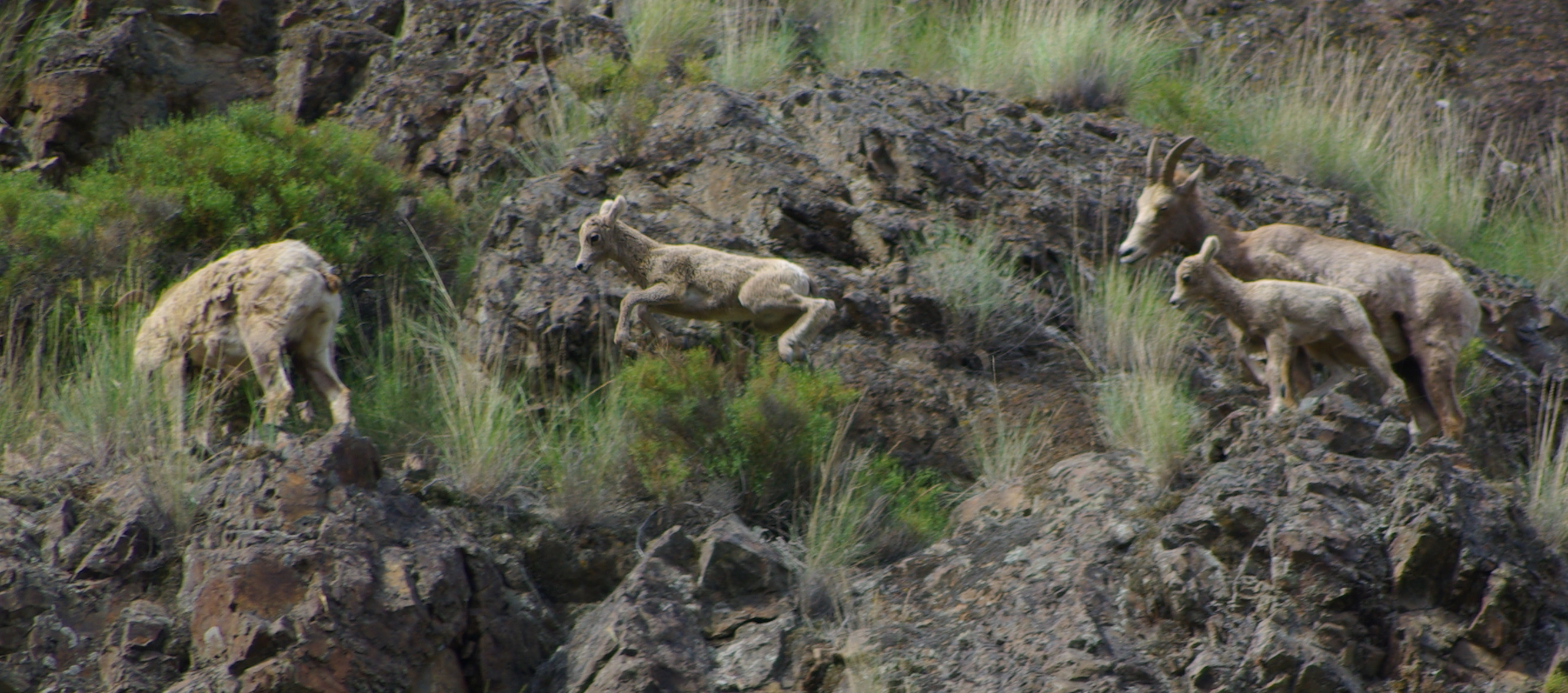
Bighorn sheep by Ken Cole

Bighorn sheep photo copyright by Ken Cole

“On Sunday and Monday, February 14-15, 2016, USDA Wildlife Services took to the skies and shot the remaining 24 bighorn sheep in the Montana Mountains of northwest Nevada at the request of Nevada Department of Wildlife.

“While the exact source of the disease outbreak is not known, it is not surprising that the bighorn sheep in this area are suffering this fate because there are two domestic sheep grazing allotments – the Bilk Creek allotment and the Wilder-Quinn allotment – in the middle of this area and BLM ignored the disease threat that they pose to bighorn sheep.

“In 2012 the BLM began the permit renewal process for one of the allotments – the Bilk Creek allotment – and Western Watersheds Project submitted comments notifying them of our concern about the risk that domestic sheep posed to bighorn sheep in this area. It is well know that domestic sheep are carriers of pathogens that result in deadly pneumonia to bighorn sheep and that even just one nose-to-nose contact between these related species can result in a disease outbreak that commonly kills up to 90% of a herd and kills the offspring of the remaining animals for up to a decade.

“In 2013 the BLM issued the Final Environmental Assessment that dismissed those concerns . . . . ”  Read more at:  http://www.thewildlifenews.com/2016/02/19/bighorn-sheep-die-off-in-montana-mountains-nevada-is-it-any-wonder.

Mali’s Desert Elephants Face Extinction in 3 Years

“DAKAR, Jan 28 (Reuters) – Mali’s elephants, one of just two remaining desert herds in the world, will be gone in three years unless the government does more to protect them, a conservation group said on Thursday.

“Poachers have taken advantage of the chaos from a growing Islamist insurgency and other unrest in the lawless north to step up ivory trafficking – a trade that the United Nations says funds militants.

“Sixteen elephants have been killed so far this month, adding to more than 80 slaughtered in 2015, said Susan Canney, director of Mali Elephant Project for the WILD Foundation.”  www.scientificamerican.com

GR:  These great animals indicate the consequences of our lack of concern for other species.  Instead of protecting our fellow creatures, we eat up their habitats and harvest their body parts.

Eye on the Ball– #ClimateChange, #Biodiversity, #NatureConservation, & #SarahPalin

Nature Conservation

GarryRogersThe excellent article introduced below is about nature conservation from the human viewpoint.  The argument is that the current mass extinction of wild plants and animals has harmful consequences for the future of the human species.  It most certainly has, but the author’s desire to inform his audience misses its target because it gives a biased view of the problem. The article does not consider the rights of other species. This “homocentric” view of nature assumes that disappearance of other creatures is only important if it endangers humans.

Aldo Leopold and other conservationists realized that this viewpoint is unsustainable. Unless we accept the equality of all Earth’s species, including our own, our conservation efforts will always fail.  With its runaway enthusiasm for untested proposals, our species will take chances with the lives of other species. Experiments aimed only at benefiting our species, experiments that do not respect the rights of other species, experiments that will sometimes have unforeseen consequences, will gradually nibble away at nature until our ecosystems collapse and wash into the sea (carrying us with it).

Unless we begin to respect the rights of all species, we will exert constant damage on the Earth and ourselves.


Our real Sarah Palin nightmare: We debate sideshows and phony problems — while this very real threat looms undiscussed

Former Alaska Gov. Sarah Palin, right, endorses Republican presidential candidate Donald Trump during a rally at the Iowa State University, Tuesday, Jan. 19, 2016, in Ames, Iowa. (AP Photo/Mary Altaffer)

Former Alaska Gov. Sarah Palin, right, endorses Republican presidential candidate Donald Trump during a rally at the Iowa State University, Tuesday, Jan. 19, 2016, in Ames, Iowa. (AP Photo/Mary Altaffer)

“It’s an amazing fact that the contemporary world is marked by a growing number of problems that are genuinely global in scope. Some of these problems even have existential implications for the survival of human civilization — yet instead we spend too much time discussing smaller threats, including North Korea, ISIS, Oregon militias and even Sarah Palin. One such problem is anthropogenic climate change — a catastrophe whose effects are anticipated to be “severe,” “pervasive” and “irreversible.”

“But climate change isn’t the only problem of this sort. In fact, for many who spend their lives studying environmental issues, it can be frustrating to see climate change — a highly contentious issue among non-experts, despite a scientific consensus about its reality and causes — dominate the public discussion. The fact is that biodiversity loss constitutes an equally worrisome (albeit related) threat to the future of humanity.

“Consider some cold hard facts. According to the 3rd Global Biodiversity Report (GBO-3), the total population of vertebrates — a broad category that includes mammals, birds, reptiles, sharks, rays and amphibians — living within the tropics declined by a shocking 59% from 1970 to 2006. Take a moment to let this sink in. In only 36 years, more than half of the vertebrate population between the Tropic of Capricorn and the Tropic of Cancer disappeared.”— Read More: , Salon.

Links:

Population

Conservation

 

Loss of Biodiversity and Extinctions — Global Issues

The loss of biodiversity is increasing. There is massive extinction from human activity. www.globalissues.org

GR:  Here’s another good source of information.

Cranky Parrots? Weird Island Animals Described in Long-Lost Report

“Although Pretorius’ letter touches on the various ungulates — including cattle, goats, pigs and deer — that the Dutch brought to Mauritius, the most enlightening portions of the text describe the island’s indigenous life.

“For instance, based on other reports, Hume had previously argued that the island’s raven parrot, which became extinct in 1675, had a blackish-brown body with a blue head and possibly a red beak. But based on Pretorius’ descriptions and a re-examination of other accounts, Hume now thinks the bird was brightly colored and predominantly red. [6 Strange Species Discovered in Museums]

“Pretorius’ account also suggests the raven parrot was behaviorally flightless (it couldn’t fly well, despite having the biology to do so) and that this flaw likely led to the creature’s demise. The bird was tough and aggressive — or “very bad tempered,” as Pretorius described it — and able to fend off introduced predators such as black rats and crab-eating macaques, but only for so long, Hume said.

“The parrot’s obstinate attitude also prevented it from being transported elsewhere. “When captive, it refuses to eat,” Pretorius wrote. “It would prefer to die rather than to live in captivity.”  www.livescience.com

GR: Bad tempered and refusing to eat in captivity, the Raven Parrot sounds like an admirable bird, but it was soon erased from the Earth by humans and the invasive species they brought to the island.

Congo giraffes near to extinction | The Times

The last giraffes in the Democratic Republic of Congo are teetering on the brink of extinction, conservationists have warned, with only 38 animals left. . . .   From: www.thetimes.co.uk

GR:  There aren’t any words to describe this sad loss.  Here’s a National Geographic story that provides more information on giraffes.

Holistically-managed, grass-fed cows can save the planet! Neat video about how mimicking nature with grazing animals can not only reverse desertification, but also global warming.

“Holistically-managed, grass-fed cows can save the planet! Neat video about how mimicking nature with grazing animals can not only reverse desertification, but also global warming. Grass-fed . . . ”

From: gardenchic.xyz

GR:  This is nonsense. We know that rotating livestock between two pastures gives each pasture time to recover during its rest period.  The idea was a sparkling innovation when the Romans applied it two thousand years ago. In fact, it was still in use in 1940 when my Range Management textbook was published. However, the idea was never sustainable.  The human population has continued to grow and we now have so many cattle that they are eating up the food needed by wildlife.  I don’t believe any us will claim that extinction of native wildlife is the way to “save the planet.”

“Garden Chic” doesn’t provide a link to the video, but I think it’s probably the phony old Ted Talk that got it’s author a lot of undeserved attention when he used the term “holistic.”  It is truly just BS.