Forest Threats Include Warming Climate, Spreading Weeds, and Increasing Wildfire
Humans have spread weeds to new habitats across Earth. Most weed species grow well in sunny habitats typical of desert regions. The weeds increase the quantity and continuity of fuel and they recover quickly after a fire. Thus, they allow accidental and lightening caused fires to grow larger and become more frequent. Anyone who follows the effects of a desert fire for a few years will see that many native plants recover too slowly to persist under the new weed-accelerated fire regime (Rogers and Steele 1980).
 This pair of photographs from the Great Basin Desert illustrates what recurring fire can do in the desert. (Click on the images for a larger view.) The first photo was taken in 1901 by geologist G. K. Gilbert (USGS Photo Library). It shows fairly even cover by the small native shrubs dominating the vegetation of the area. In 1901 there was no travel in this area except by horseback or wagon. Gilbert was fond of the horse, named her Sally, and included her in many of his documentary photos.
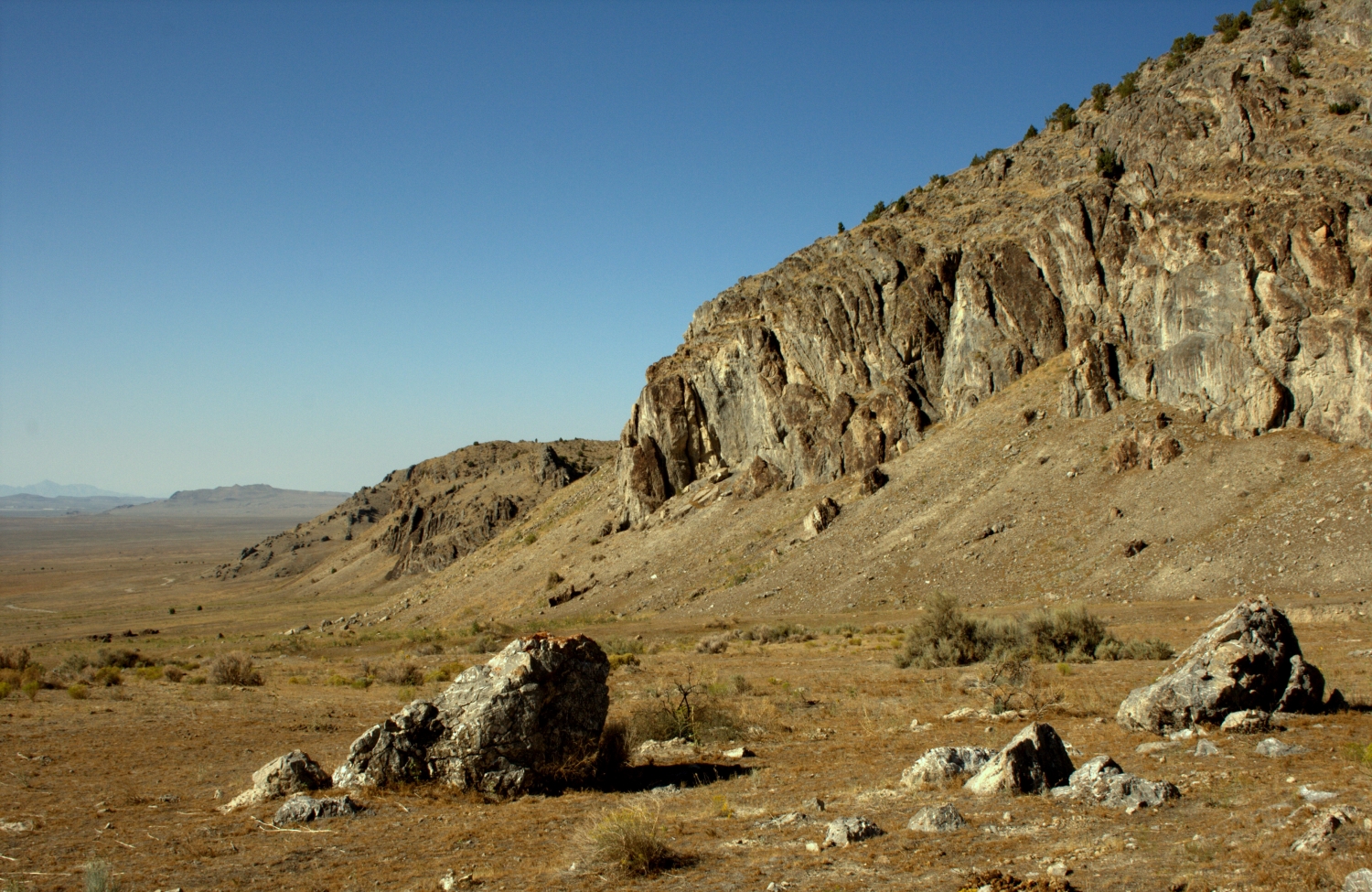
 The second photo was taken in 2008 and shows that as far as the eye can see, most of the shrubs are gone. They have been replaced by fire tolerant non-native weeds. This area burns so frequently now that the U. S. Bureau of Land Management stewards of the land have begun burning the land themselves to help prevent surprise fires that disrupt traffic on the nearby interstate highway.
The second photo is presented below in color and larger size to give a clearer view of the extent of the barren weed/fire landscape.
Forest threats include more than just warming climate. Some climate models predict increased forest fire occurrence as climate warms (Smithwick et al. 2013: 2). It is likely, however, that fire prone weeds will increase. Invasive weeds do poorly in the shade of mature trees. As domestic livestock, loggers, and drought continue to disturb forest soils and remove the shade cast by tall trees, weeds will increase. As has happened in lower, drier habitats we may lose many native forest species.
References
Rogers, G. 1982. Then and now: A photographic history of vegetation change in the central Great Basin Desert. University of Utah Press, Salt Lake City, UT. 152 p.
Rogers, G., and J. Steele. 1980. Sonoran desert fire ecology. Pages 15-19 in Proceedings of the fire history workshop, USDA Forest Service GTR-RM81. 142 p.
Smithwick, E.A.H., et al. 2013. Climate, fire and carbon: Tipping points and landscape vulnerability in the greater Yellowstone ecosystem. JFSP Project No. 09-3-01-47.
Your message has been sent


 GarryRogers Nature Conservation