Rapid version of assessment tool provides easier way to monitor wetland quality

A modified or ‘rapid’ version of an existing wetland assessment tool can accurately assess the quality of wetlands, according to researchers. Using the rapid version of the tool, known as the Floristic Quality Assessment Index, can save time and improve upon wetland monitoring strategies. www.sciencedaily.com

GR:  This article gives citizen naturalists tools for assessing the health of their neighboring wetlands.

Theory of ‘smart’ plants may explain the evolution of global ecosystems

“It’s easy to think of plants as passive features of their environments, doing as the land prescribes, serving as a backdrop to the bustling animal kingdom.

“But what if the ecosystems of the world take their various forms because plant “decisions” make them that way? A new theory presented by Princeton University researchers in the journal Nature Plants suggests that in some cases that may be exactly what happens. In one of the first global theories of land-biome evolution, the researchers write that plants may actively behave in ways that not only benefit themselves but also determine the productivity and composition of their environs.

“Our theory explains biomes based on the new idea that we must consider plants to be smart and strategic,” said senior author Lars Hedin, a Princeton professor of ecology and evolutionary biology and department chair. “This is a global theory that explains why biomes differ in nutrient conditions and in their abilities to respond to disturbances and to absorb carbon dioxide from the atmosphere.”  From: phys.org

GR:  This article by reputable scientists and published by a reputable journal troubles me. Thinking back to J.P. Grime’s book “Plant Strategies and Vegetation,” I wonder if the authors simply overlooked relevant literature when the proposed and then interpreted their research.  Adding more life-history variations to Grime’s work would be preferable to striking out on an independent course to rediscover Grime’s ideas. This interpretive remark by one of the authors is especially troubling:   “Tropical nitrogen-fixing plants are smart enough to know when to use costly nitrogen fixation to compete with neighboring plants, and when to turn it off, as if they are sentient beings,” Hedin said.

Frederick E. Clements had edged toward the idea that vegetation behaved as an organism as it matured. I believe H. A. Gleason demolished this idea quite well in his 1926 paper:  “The Individualistic Concept of the Plant Association” (Bulletin of the Torrey Botanical Club).


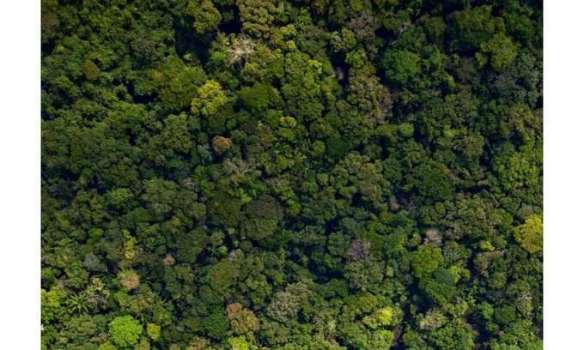
Scientists say deforestation may threaten a staggering half of Amazon tree species with extinction

“Tropical tree species could be in much bigger trouble than scientists had thought: A new study, which involved collaboration from dozens of researchers, suggests that at least 36 percent and up to 57 percent of all Amazon tree species are likely at risk of extinction, depending on future deforestation rates. If true, this information would raise the number of threatened plant species on Earth by about 22 percent.

“The research, which was published Friday in the journal Science Advances, combined spatial distribution models of the Amazon with both historical and projected data on deforestation to determine the conservation status of more than 15,000 Amazonian tree species, about two-thirds of which the authors considered rare species. The researchers used listing criteria from the International Union for Conservation of Nature (IUCN), which maintains a “red list” of threatened species on Earth, to decide which species should be considered in danger of extinction.”  From: www.washingtonpost.com

GR:  With the expected growth of our population and demand for meat and other products from forest soils, the threatened extinctions discussed in this article seem virtually inevitable.

Nature News Digests

GarryRogersNature News Digests:

Plant Lives: A timely coincidence

Plant Life: A Brief History. Frederick Essig. Oxford University Press, 2015 [https://global.oup.com/academic/product/plant-life-9780199362646?cc=gb〈=en&; http://ukcatalogue.oup.com/product/9780199362646.do]

A phenomenon I thought only applied to buses was that you wait for ages for one of them to arrive and then two turn up together. Well, a similar thing has happened recently in the world of plant biology book publishing. The two tomes are Armstrong’s How the Earth Turned Green: A brief 3.8-billion-year history of plants [http://www.press.uchicago.edu/ucp/books/book/chicago/H/bo16465693.html]* and the one I write about today, Essig’s Plant Life: A brief history (hereafter referred to as Plant Life). That’s not a problem, merely an observation. Hey, I like books about plants so I am definitely not complaining! But what also struck me about these two is how similar they are (but more on that later).  Sourced through Scoop.it from: aobblog.com

GR:  Biodiversity applies to plants as well as animals.  In fact, if there were no plants there would be almost no animals.  This is a great review of a book that will tell you all about plants.

Protect Native Plants and the Wildlife They Support

HB2570 municipalities; vegetation requirements; prohibition (Mitchell) prohibits cities from requiring native plant salvage and also from requiring the planting of native vegetation.

There are many reasons this is a bad idea. Encouraging the salvage and planting of native plants can help save water and ensure more resiliency in the vegetation. Some non-native plants contribute to public health problems, such as severe allergies. Limiting these plants is an important goal of local communities. Further, it is critical that non-native invasive plants be limited as these can cause harm to neighbors’ private property and to our parks and wildlands, plus harm agriculture, wildlife, and more by spreading to create unnatural fire conditions and out competing native plants.

Please modify and send the message below and ask your representatives to oppose this ill-conceived bill to limit local communities’ ability to protect native plants. . . . Source: secure.sierraclub.org

GR:  Ignoring the effects of a development would make it cheaper to destroy native habitats. Of course, developers want that.  I doubt the savings would amount to much for individuals that use the developments, but the cost in natural vegetation and wildlife will be a lasting expense that we will all feel.

The potential for assisted migration of Alberta’s native plants

“It’s the Goldilocks principle. All species, including plants, animals and fungi, are uniquely adapted to a specific combination of climate and environmental conditions that they need to grow, reproduce and thrive – things need to be “just right.  If the environment changes, species have two choices: they can either stay where they are and adapt to the new conditions, or they can move to more suitable places.

“Plants, being rooted to the earth, have a limited ability to respond to environmental change. It can take a long time to adapt to new conditions, so it’s difficult for plants to respond quickly to relatively rapid changes that happen around them, like those projected in some climate models. Plants can’t pick up and move either; they can only send forth their seeds in hopes of finding the Goldilocks conditions perfect for growth and reproduction. For many plant species, this dispersal will likely not happen far enough or fast enough to keep pace with projected changes in climate, which means they are at risk of being left behind. This is especially true in today’s increasingly fragmented landscapes” (Source: www.natureconservancy.ca).

GR:  I think we need a national commitment to learn how to help plants migrate to new locations. Both the value and the variability of microclimate, soil, topography, and biological interaction are limiting factors for plants. Along a route over a mountain or across a valley, the abundance of each species will change along with the changing factors. Repeat the measurements next year and there will be differences. Storms, invasive species, human activity, and even evolution can alter conditions. We will need an army of observers at work for years to succeed. If we were wiser, we would be studying nature instead of fighting wars and bailing out big banks.  We must applaud Alberta Biodiversity Monitoring Institute’s efforts. Perhaps they can save a few species.

South Africa: R1 Million Boost to Help Sanparks Counter Poaching

Anti Poaching Support

Kruger National Park

“Skukuza — An amount of R1 million has been added to the South African National Parks’ (SANParks) war on rhino poaching.

“Unitrans Volkswagen divisional chief executive Kevin Gillmer recently handed a R1 051 720 cheque to SANParks Honorary Rangers national executive committee deputy chairman, Louis Lemmer, in Skukuza.

“Unlike many fundraising initiatives, the SANParks Honorary Rangers utilise 100% of all money raised for counter poaching to help our rangers. We do not use donor money to fund our activities,” said Lemmer.

“Lemmer said the donation would go a long way in safe-keeping the endangered rhino population within national parks.

“As we are the South African National Parks’ preferred channel for counter-poaching support in our national parks, and as our parks are home to the majority of the world’s rhino population, this donation is important in the fight to save our rhinos,” he said.

“SANParks chief executive David Mabunda said the ongoing scourge of rhino poaching in South Africa is an area of concern to government and ordinary people in villages and cities, including corporate South Africa.

“It is therefore with great humility and a sense of pride that SANParks accepts the generosity presented by Unitrans Volkswagen. This is proof that together we can do more to win the fight against rhino poaching,” said Mabunda.

“He said rhino poaching is a crime that is undoubtedly fuelled by a thriving black market trade in rhino horn.

“Mabunda said since January this year, a total of 166 rhinos have been poached, with 111 of them in the Kruger National Park.

“It is worrying that we are still losing such a high number of rhinos throughout the country. However, the most encouraging area in this whole saga is the increasing number of arrests, which stood at 343 for the country by end last year, of which 133 were made in the Kruger National Park,” he added.

“South Africa is home to approximately 20 000 white and black rhinoceros, of which 10 000 are found in the Kruger National Park.

“This represents over 80% of the world’s total rhino population.

“Unitrans Volkswagen’s Unite against Poaching initiative has contributed R6 781 250 million to the SANParks’ counter poaching effort over the past three years, in partnership with the SANParks Honorary Rangers.”

SAnews.gov.za
Garry Rogers Nature Conservation News

What is the Nature Conservation News?

VultureMy online Scoop.It newspaper, Garry Rogers Nature Conservation News began operating last September.  It presents news stories called scoops.  My scoops are mostly concerned with animals and their interactions with humans.  I sometimes scoop interesting items about writing, and I scoop the rare items of science fiction news that involve stories and books with a nature conservation theme.  This post is a request for your help with scoop suggestions.  (Visit the news). Continue reading