Arizona Grasshoppers and other Singing Insects

By Garry Rogers

Arizona Grasshoppers and other Singing Insects

Grasshoppers, Crickets, and Katydids are familiar to everyone, but there are few records of distribution and conservation status.  This report includes a partial checklist for Arizona grasshoppers.  Grasshoppers are members of the Orthoptera, one of the most familiar insect orders.  Orthoptera includes two suborders: Caelifera (grasshoppers and relatives) and Ensifera (crickets, katydids, and gryllacridoids).

KatydidThe katydid in the photo is probably Greater Angle-wing Katydid (Microcentrum Rhombifolium).  It is common in central Arizona where I live.  According to the BugGuide website, the similar California Angle-wing (Microcentrum californicum) also occurs in central Arizona.  The two are distinguished chiefly by their songs.

Most singing insects are herbivores.  Their occasional population explosions can reduce farm profits, and have led to emphasis on eradication.  Protection deserves more consideration.  Orthoptera are all important biomass recyclers, and all serve as essential sources of food for other animals.  Use of insects for human food is growing in popularity.  As the human population continues to swell, the proportion experiencing the culinary delights of bug dinning will grow.  We have to wait to see if grasshopper ranches arrive before textured soy protein replaces sirloin.

Orthoptera suffer from habitat loss just as other species groups do.  Farms, roads, and buildings are concentrated in valleys near lakes and streams.  The selective destruction of natural habitats in these more productive areas alters the size and composition of insect populations.  These changes reduce ecosystem diversity, stability, and productivity.  The references listed in the Singing Insects of North America website and in the list below are a good place to start to learn more about the ecological importance of these insects.

Grasshoppers

Many of the 400 grasshopper species known to occur in the western U. S. may be present in Arizona, but in the time available to prepare this report I could only verify 59 species from the USDA fact sheets (USDA and Pfadt 2002) and 35 from the Arizona Game and Fish Department (AZGFD–October 2013) website.  The list is almost certainly incomplete, and it probably contains outdated names.

I compiled the list from the range maps on the website of the U. S. Department of Agriculture (USDA), and the October 10 species list by AZGFD.  The USDA fact sheets include maps, photographs, and the natural history of each species.  The Bug Guide provides additional information.
Continue reading

Endangered Species No. 58 – The Zanzibar Red Colobus Monkey

Endangered Species

See on Scoop.itNature Conservation & Science Fiction: #EcoSciFi

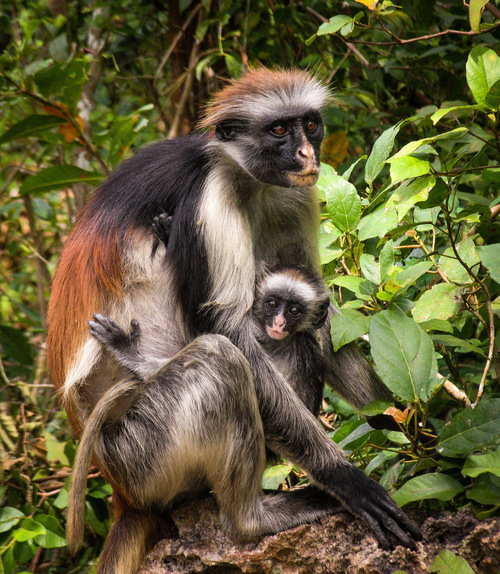
Description Visualise someone leaping upwards fifty feet into the air carrying a twenty-five pound weight.  That is the equivalent of a female Zanzibar red colobus monkey travelling upwards with he…

See on mungaiandthegoaconstrictor.me

Endangered Species No. 50 – The Javan Leopard

The Javan Leopard

Unaware of the thousands of tiny species we impact, humans are also careless of those living at our scales of size and age.

Mungai and the Goa Constrictor's avatarMungai and the Goa Constrictor

Description
The Javan leopard inhabits one of the most densely populated and richly bio-diverse islands in Indonesia.  Given the amount of attention by visiting biologists and conservationists over time, it is surprising there is so little information available about this and other island species.

Most of scant data written has come from those observed in captivity or those captured in the wild and returned with radio collars, or caught on camera traps.  They are said to be extremely elusive, though someone has clearly been finding them.  If only to export to various zoos.

Driven back deep into the forests by man, having been deprived of more than ninety per cent of its original habitat  (and with that its prey base),  the Javan leopard has been forced to turn to domestic livestock for food supplies.  The irony of this situation seems to be lost on the local population as conflict between…

View original post 458 more words

Robert C. Stebbins Dies

Robert C. Stebbins Dies at 98

Robert StebbinsBest known for A Field Guide to Western Reptiles and Amphibians, a book I find indispensable, Robert Stebbins was a renown specialist who believed that direct observation of nature out-of-doors was as important as laboratory research. He was also concerned for the welfare of his subjects.  He recognized that amphibian and reptile decline was a symptom of rampant human population growth.

Interest in wildlife preservation cannot be separated from concern with efforts to limit human population growth (Robert C. Stebbins, 1966:  21).

Read more about Stebbins here.

Stebbins, Robert C.  1966.  A Field Guide to Western Reptiles and Amphibians.  Houghton Mifflin Company, Boston, 279 p.

Arizona Fish Endangered

Arizona Fish Extinctions

Noel M. Burkhead of the U. S. Geological Survey, recently performed an analysis of the extinction rate for North American fish (Burkhead 2012).  Burkhead used the fossil record to determine that throughout geological history, one fish species went extinct about every three million years.  During the past century, 57 fish became extinct, making the modern rate almost 900 times as fast as the historical rate.  Extinctions may have been abrupt in Earth’s past, but probably none were as abrupt as the current event.

The growing probability of extinction of Arizona’s native fish is easy to explain.  The exploding human population has caused widespread degradation and elimination of water habitats.  We have dammed and diverted streams, depleted the groundwater that created springs, and dumped wastes in or near stream channels.  We have introduced exotic species such as carp, bass, and trout that compete with natives, and we have damaged or destroyed the protective vegetation of the watersheds.  We call it progress when we replace natural habitats with houses and roads.   And we ignore the impact on watersheds by introduced fire-prone alien weeds, forest removal, and livestock grazing.

Gila Trout –

About 50 years ago, two Arizona scientists, Robert Miller and Charles Lowe, analyzed the status of Arizona fish.  They reported that elimination of habitats and introduction of exotic species was threatening many species and might soon extinguish the native gila trout (Salmo gilae), humpback chub (Gila cypha), Colorado squawfish (Ptychocheilus lucius), Little Colorado spinedace (Lepidomeda vittata, restricted to Arizona), desert pupfish (Cyprinodon macularius), and Gila topminnow (Poeciliopsis occidentalis) (Miller and Lowe 1964:  133). Continue reading

Arizona Damselflies and Dragonflies Status Update

Arizona Damselflies & Dragonflies (Odonata)

1-IMG_3695Damselflies and Dragonflies belong to the order Odonata (“toothed ones”).  They are carnivorous predators whose earliest fossils occur in Pennsylvanian sediments deposited about 325 million years ago.  Evolution chanced upon an efficient form for these creatures; only small changes have occurred for the last 200 million years.  Compare that to mammal predators, most of which have persisted less than 50 million years.

Damselflies and Dragonflies are easy to distinguish because they hold their wings differently when perched.  Damselflies  perch with their wings together above their back.  Dragonflies perch with their wings extended (both photographs). Continue reading

Birds of Arizona–Update

Birds

Great Horned Owl chicks

Great Horned Owl chicks

Wild birds are seen more often than the members of any other vertebrate wildlife group.  Birds include more species than the other groups, they occur in more habitats than most of the others, and they are more active during daylight hours, and during winter when other groups hide or sleep.  Add the visibility of their colors, distinction of their songs, and variations of their flight patterns, and you will understand why bird checklists are more common than checklists for other species.

The U. S. Geological Survey, Northern Prairie Wildlife Research Center website (website link in References) provides 29 bird checklists for small areas around Arizona.  The lists include seasonal occurrence and other information.  The WildBirds website owned by Thayer Birding Software provides online field guides with songs and video.  The Arizona Bird Committee (ABC) provides printable state and county checklists.  The links are in the Arizona Bird Reference list below.

Numbers of Birds

World:  10,000
*North America:  1025
*Arizona birds:  548
Arizona birds at risk of extinction:  264
*Approximately 10% are introduced or of uncertain status

Arizona Bird Conservation

Naturalists sometimes think of birds as useful indicators of general environmental conditions; the ‘canary in the coal mine’ idea.  In 2011, the Audubon Society reported that the annual Christmas Bird Count records showed that many species were declining.  For example, over the past 50 years, sightings of Loggerhead Shrikes, a common species throughout Arizona, declined by 72 percent.  Our canary has begun to sway. Continue reading

Jack is Back! #amphibians

Jack, a One-Eyed Rocky Mountain Toad

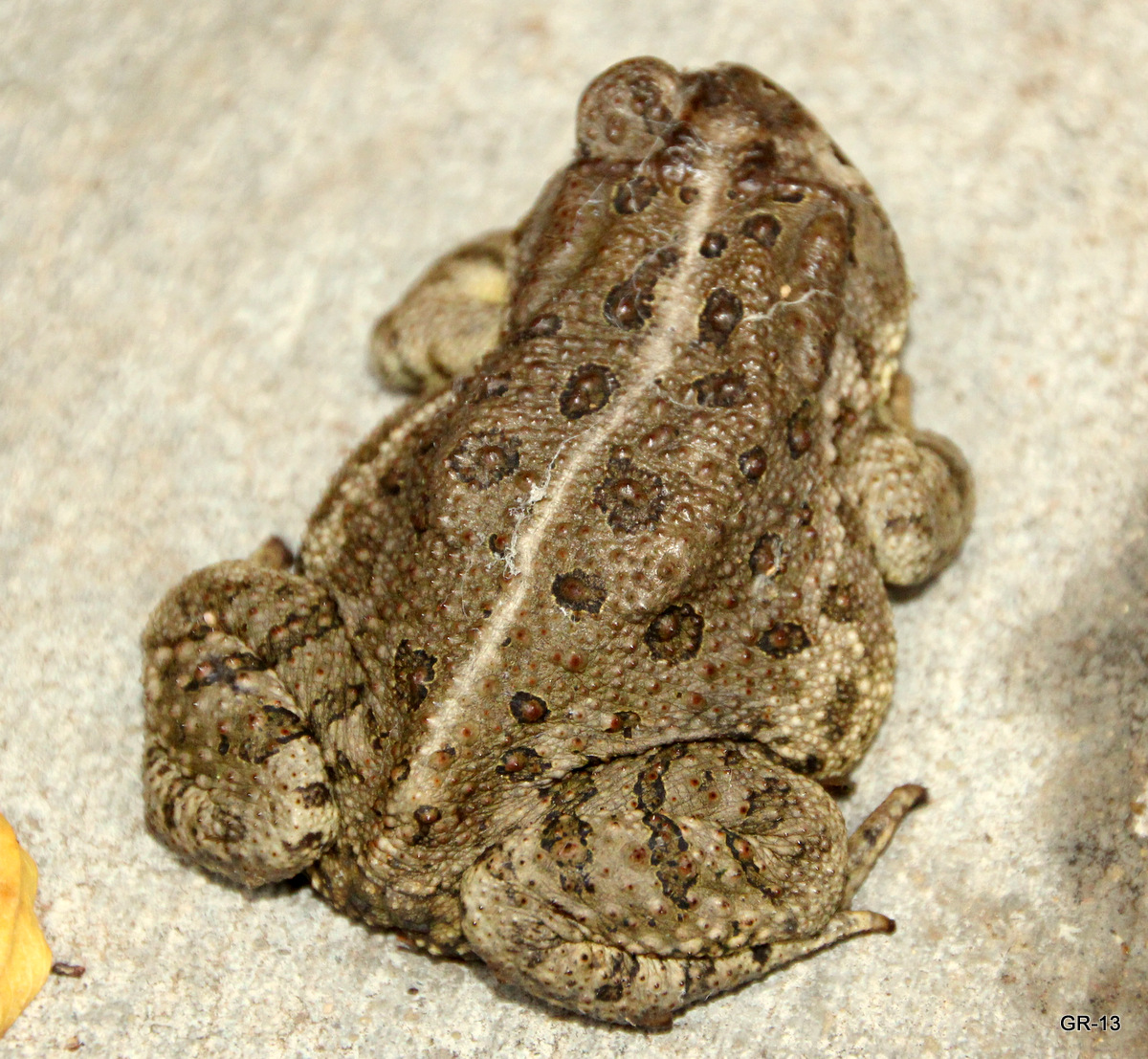
A few months ago, I blogged about the human devastation of the world’s amphibians.  In that post, I mentioned a one-eyed Rocky Mountain toad that for several years had appeared at my back door at the start of the summer monsoon.  I am pleased to report that Jack, the name I gave the toad, is back.  Toads are generally long lived, from a few years to near 40 years.  I haven’t found longevity stats for Jack’s subspecies, but he is at least four years old.

Before Roly Polie Feast

One-Eyed Rocky Mountain Toad Before Roly Polies

After Roly Polie Feast

One-Eyed Rocky Mountain Toad After Roly Polie Feast

When I first spotted Jack yesterday, the poor creature was shriveled and its back was contorted.  But after an hour-long roly polie feast, he plumped up and looked perfectly normal (except for the missing eye).  Click the photos for larger views.

Or Is It Jill?

Jack wasn’t around this afternoon.  He probably went down to the pond to try to socialize a bit.  As I type this, however, and look at Jack’s pale throat, I wonder if the name should be Jill.  Have to check that throat after the pond tour.  During mating season, throats of the males are darker than the females.

I am glad Jack and the other toads are here.  They help control the annual monsoon earwig and mosquito explosion.  Our local toads, wrens, and thrushes provide ground support for our aerial defenders, the dragonflies, hummingbirds, swallows, whippoorwills, and bats.  Though we have big swampy ponds near (200 feet) the house, the few mosquitoes that survive the fish, dragonfly larvae, other aquatic predators, rarely penetrate our aerial defenses, and if they do reach the house, they meet the toads.  If they pass the toads, they encounter the spiders.  Every doorway, window, and room has carefully monitored spider webs.

July 1, 2014.  Jill hasn’t appeared yet.

Colorado River Toad.

Back to the Arizona amphibian update.

Take Action to Save Habitat: #Conservation Lands

Habitat Concerns

Replacing habitat with houses.This post focuses on habitat conservation.  The examples are in the U. S., but there are similar protection efforts in other countries.  More are needed everywhere.  A first step is to visit a protected area and learn first hand what is at stake.

The major threat to Earth’s plants and animals is direct habitat destruction by humans.  Farming, logging, grazing, and construction of houses and roads are the leading types of destruction.  Of course, habitat can be destroyed by volcanoes, meteorites, glacier expansion, earthquakes, etc., but none of these can compare to the size and extent of the human impacts.

San Juan LighthouseOne approach to the problem is to protect some areas by limiting human access and use.  National Parks, Wildlife Refuges, and Monuments are examples.  U. S. Secretary of the Interior, Bruce Babbitt added a new strategy for protecting habitat.  Opposition to new national parks and wilderness areas is so well established that those forms of protection are almost impossible to create.  Babbitt combined existing regulations and formed policies that allowed for definition and protection of areas of special significance.

“The National Conservation Lands, established by Interior Secretary Bruce Babbitt in 2000, comprise 28 million acres of the most ecologically rich and culturally significant of lands managed by the Bureau of Land Management. They are found throughout the West, Alaska and even extend to the East Coast. They are our nation’s newest collection of protected public lands—standing in stature with our National Parks, National Forests and National Wildlife Refuges”  (Conservation Lands Website).

Conservation Lands

Any form of protection is difficult to achieve.  Hungry humans ignore such protections, and ambitious individuals see restrictions as threats to the accumulation of wealth and power.  No effective steps are being taken to reverse human population growth, and in the U. S., continuous efforts are made by congressional representatives of ambitious individuals and corporations to remove the protections–to build hotels within national parks, to allow livestock grazing in wilderness areas, to increase motorized access, and to build trails through refuges.  Many of these efforts succeed.

The U. S. National Conservation Lands include National Monuments, National Conservation Areas, Wilderness and Wilderness Study Areas, Wild and Scenic Rivers, National Scenic and Historic Trails, and more.  The actual degree of protection is quite variable.  Many of the units allow continuing livestock grazing and other destructive uses.  For most, baseline conditions are poorly documented and there is no system in place to monitor changes.  Invasive plants and animals, accelerated soil erosion, increasing air and water pollution, and spreading disease can go unnoticed for years.  Ignored, such changes can destroy the habitat value of the Lands.

What to do

This summer, visit a reserved land unit.  In the U. S., visit one or more of the sites on the map above.  You can call the U. S. Bureau of Land Management office in your state or region for maps and site descriptions.  Ask about ‘friends’ groups.  You can probably join a hike or attend other programs led by local specialists.  See for yourself what the Lands offer and what they need for better protection.  Then write to political representatives calling for more and improved protection.

Contact Garry Rogers by email, or leave a comment after the email form.

Go back

Your message has been sent

Warning
Warning
Warning
Warning

Warning.