Psychological Reality Equals Orphaned Bear cubs

Featured Image -- 10557Killing bears to reduce a risk for humans is a horrible plan in this time of nature’s crisis; a crisis we have produced. Use well-known common sense to avoid the risk while working to maintain a healthy ecosystem that must include bears.

Exposing the Big Game's avatarExposing the Big Game

http://www.bornfreeusa.org/weblog_canada.php> Born Free USA Canadian Blog by Barry Kent MacKay

_____

< http://feedproxy.google.com/~r/CanadianProjects/~3/_iD7TaMHBg4/weblog_canada.php?utm_source=feedburner&utm_medium=email> Psychological Reality Equals Orphaned Bear Cubs

Posted: 27 Nov 2015 07:22 AM PST

Bear Cub <http://www.bornfreeusa.org/images/blogs/canadianblog/bear_cub_sm.jpg> © John Buie

In animal protection work, rule number one to successful resolution of any animal abuse issue is this: be right! Be correct and accurate in what you say and back it up as well as you can with objective, science-based documentation. Pay due attention to, and address, the rationales given for the abuse, whatever they are, and separate fact from fiction from speculation from what one might wish. But, always remember that facts are not enough; being right is a necessary foundation (but not enough to win the day).

As I alluded to <http://www.bornfreeusa.org/weblog_canada.php?p=5215&more=1> last week, that is just not enough. And, no issue better illustrates this frustration than the Ontario spring bear…

View original post 920 more words

Commentary by Wildlife Defence League: Government Stoops to New Low in BC Wolf Cull

Source Wildlife Defence League November 19, 2015Government Stoops to New Low in BC Wolf Cull  Commentary by Wildlife Defence League Shocking new information has revealed that Liberal gove…  wolvesofdouglascountywisconsin.com

GR:  Sorry to say this is not shocking; it’s just another example of government acting against nature in favor of financial interests.

Beavers important source of dead wood in boreal forests

“Researchers at the University of Helsinki, Finland, compared dead wood quantities and types in southern Finland. The shore forests of beaver sites had significantly larger quantities of dead wood compared to non-beaver sites. Beavers use wood for nutrition and as the building material for their nests and dams. This wood resource is used up by the beavers’ actions within a few years, forcing the beavers to change location. This creates several dead wood hotspots in the area, benefitting a large number of species.”  More at: phys.org

GR:  Beavers are important in all forests. In forested areas I’ve studied, beaver dams were especially important flood control structures.

How You Can Help Protect Arizona Wildlife

Support Arizona Wildlife

AZGFD i_support_wildlife_sticker_miniEach year, more than 100,000 people apply for a license to kill one or more of Arizona’s wild animals.  The Arizona Game and Fish Department (AZGFD) encourages wildlife killing because roughly one quarter of the Department’s budget comes from hunting license sales. The Department also supports killing to reduce conflicts with the harvesters, the farmers, ranchers, and others that complain about wildlife (click to read more about cattle).

At the same time it encourages killing wild animals, AZGFD works to protect wild animals.  Though this sounds crazy, it is a common practice for governments to sell some of their wildlife species for funds to use to protect other species. Of course, we all know that, as of today, protection has failed and more than half of all vertebrates on the Earth has disappeared since 1970.

I find it difficult to believe that there are more people in Arizona that want to kill animals than people that want to protect them.  There are many programs that aim to protect wildlife. There is even one by AZGFD called “I Support Wildlife.”  Here’s what the Department says about the program.

“I Support Wildlife™ bridges the widening gap between wildlife facing new threats and a sharp increase in the cost of conservation. A one-year membership lets you explore Arizona’s unique natural heritage while taking action to preserve it for the future.”

Arizona Wildlife Problems

“Arizona is home to more than 800 wildlife species, from Gambel’s quail to bighorn sheep. But their natural habitats — which stretch across 50 million acres of public land — are increasingly at risk. A rapidly changing world presents a host of threats to wildlife: Expanding cities, competing uses for open space and increasing demands for a limited water supply all play a role in this.”

“It is the job of the Arizona Game and Fish Department to protect, restore and preserve these species and the places where they live. But no Arizona tax dollars go to support this mission. Instead, the sales of hunting and fishing licenses are the primary source of funding. However, these funds are not keeping pace with the cost of wildlife management, leaving our native animals vulnerable at a critical time.”

You may have noticed that cattle grazing isn’t mentioned directly.  That doesn’t mean that AZGFD is unaware of the enormous impact of ranching.  It’s just that our political system leaves the Department powerless to protest.

AZGFD I Support with costSupport AZGFD

Having financial support from those of us wanting to protect, not kill, the animals will help AZGFD with inventories and analysis of more species.  It’s possible that our donations will be used to promote more hunting license sales, but I don’t believe that.  Anyway, let’s give it a try.  Click the I-Support-Wildlife image, sign up, pay your $25, and let’s see if AZGFD’s promotion of hunting licenses declines and its protection programs and reports on wildlife conditions increase.

Go back

Your message has been sent

Warning
Warning
Warning
Warning

Warning.

Nevada: It’s Time to End Wildlife Killing Contests–Petition

“These contests, involve rewarding people of all ages with cash and other prizes for killing the biggest and most animals being targeted.
“These events might seem like a rarity and not many people would participate in, but over 200 such events have taken place across the nation over the past few years, while several have been held targeting coyotes in Nevada.
“The goal is to go out and kill as many coyotes as possible and have a party afterwards.
“This week, November 2015, wildlife advocates will be urging the Nevada Board of Wildlife Commissioners to stand up for wildlife being targeted by these barbaric events by voting to make them a thing of the past.
“If you’re not a Nevada resident, the organizations leading this effort are also asking people to send letters to the commissioners urging them to vote to ban to end these contests forever.”  From: exposingthebiggame.wordpress.com

” . . ., everything’s back to normal today, but If this killing of animals by the hundreds is ‘normal,’ why are we so shocked when humans go after each other?”

Rat poison killed the mountain lion known as P-34

“Encounters between rats and mountain lions generally have predictable outcomes. The prey dies so that the predator can live. But as civilization continues t…”From: exposingthebiggame.wordpress.com

GR:  Poisons that businesses and homeowners place outdoors kill dogs, cats, and numerous wildlife species.  The domestic pets are collateral damage in humanity’s war on wildlife.  Most people do not wish to coexist with wildlife; instead, they attempt to eradicate all life in their vicinity.  Perhaps this is because we do not know or understand the needs of other species, and we choose the simpler option of eradication over investigation.

Last Act for Africa’s Vanishing Lions

Good suggestions for taking action.

Richard Conniff's avatarstrange behaviors

Walking dead. (Photo: Patrick Bentley/www.patrickbentley.com, by permission) Walking dead. (Photo in Zambia: Patrick Bentley/www.patrickbentley.com, by permission)

The lion, long regarded as the king of wild African landscapes, is now rapidly vanishing from much of the continent.

Where perhaps 200,000 of them roamed across Africa in the mid-twentieth century—and an estimated 500,000 in pre-colonial times—only about 20,000 now remain.

Half of those are likely to disappear over the next two decades, according to a report out today in the Proceedings of the National Academy of Sciences (PNAS).

They are being crowded out by habitat loss, depletion of their prey base by bushmeat hunters, and retaliatory or preemptive killings to protect livestock and people—all symptoms of a sub-Saharan human population on track to grow to four billion people by the end of the century.

Poorly regulated sport hunting also contributes to the problem, according to the report.

Weirdly, this catastrophic decline of one of the most celebrated species on…

View original post 1,066 more words

Nature News Digests

GarryRogersNature News Digests:

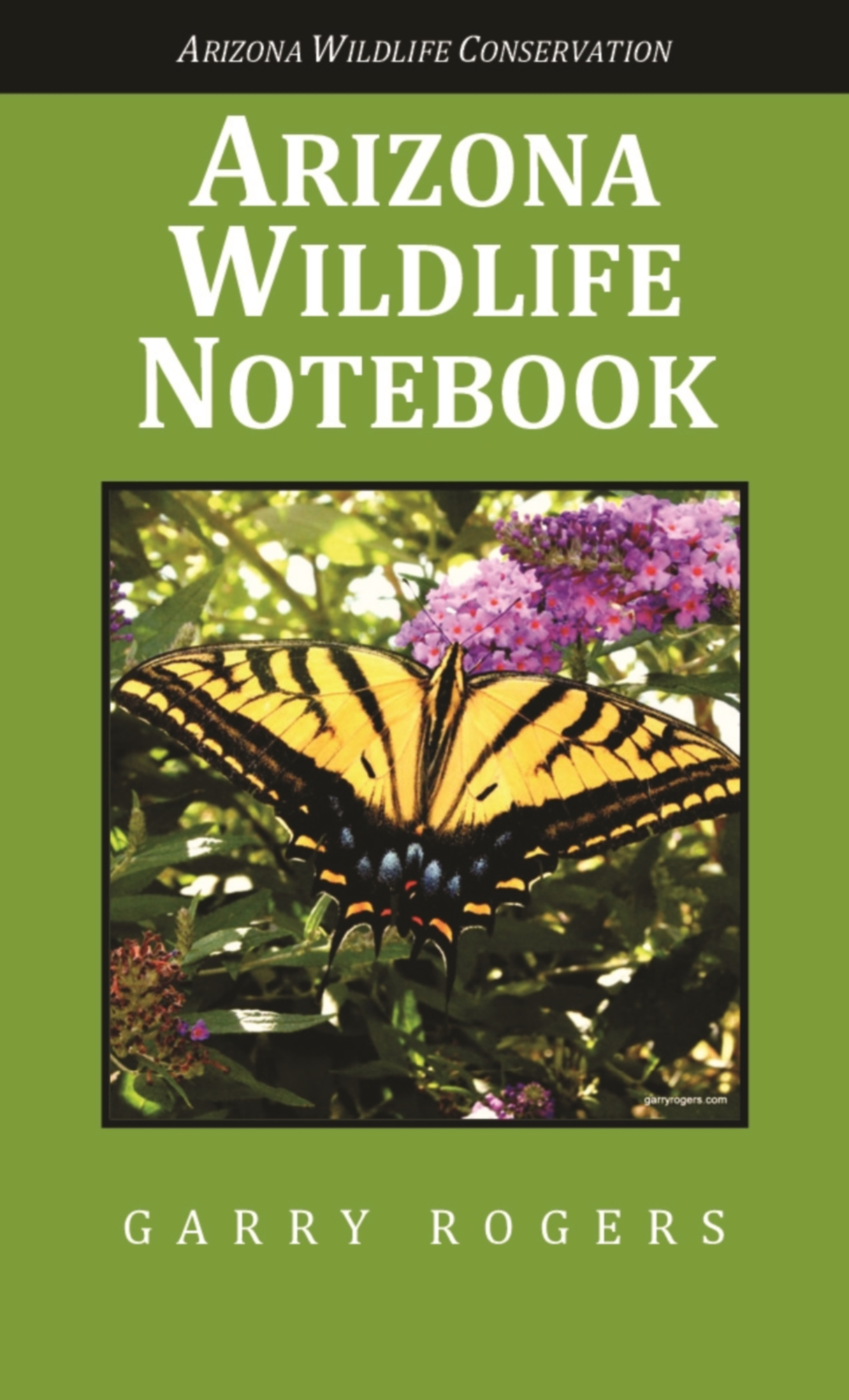
Arizona Wildlife Notebook Revised – #Wildlife, #Arizona, #Conservation

Arizona Wildlife Notebook

A new edition of the “Arizona Wildlife Notebook” is available.

In the year, 2015, lethal heat waves and storms made it clear that humanity was changing the Earth.  Anyone who paid attention to the news knew that Earth’s animals and plants were disappearing.

Animal Declines

This figure from the review by the World Wildlife Fund (2014) shows that, from 1970 to 2010, Earth’s animals declined by 52%.

I have come to believe that nature conservation is the great challenge of our time. Human beings are imposing a mass extinction that will eliminate almost all animals on Earth. We may not be able to stop this, but I believe that the Notebook will be useful for anyone who hasn’t given up and wishes to work to protect Earth’s creatures.

Arizona Species Conservation Status

For this edition of the Notebook, I added more information on conservation.  The table below shows group status for species that AZGFD specialists consider critically imperiled (S1), imperiled (S2), and vulnerable (S3).  It also shows group status according to the Endangered Species Act (ESA) for Threatened (LT) and Endangered (LE) species.  I didn’t include butterflies, moths, damselflies, and dragonflies in this table because the status of most species in those groups is unknown.

Many species that the AZGFD says are critically imperiled are not given national recognition and protection by the U. S. Endangered Species Act (ESA).  It seems that only after species are mostly gone that protection becomes available.  Thus, the ESA achieves very little overall protection from biodiversity loss.

ARIZONA WILDLIFE CONSERVATION STATUS

Species Group

Total  minus

Exotic & Extinct

AZGFD

S1+S2+S3

ESA

LT+LE

Amphibians

31

18 (58%)

2

Birds

451

260 (58%)

9

Fish

40

40 (100%)

13

Lizards

67

27 (40%)

0

Mammals

189

64 (34%)

15

Snakes

76

35 (46%)

1

Turtles

10

6 (67%)

2

TOTAL

864

450 (52%)

42

The third column shows how many species AZGFD considers at risk.  For instance, all native Arizona fish species are at risk, and about one-third of native Arizona mammals are at risk.  Being “at risk” usually means that numbers are dropping.  The principal causes are construction of buildings and roads, and invasive plants and animals.

Click–Arizona Wildlife Notebook–for a free copy of the 168-page book formatted as a PDF “fillable form.” If you like the book, tell others. Write a review for Amazon: http://mybook.to/AZWildlifeNotebook , or Goodreads: http://bit.ly/1Mkgmei.  If you would like to review a printed copy of the book, send a note using the form below.  Thank you.

Now that you’ve downloaded the book, you have a conversation-starter for tonight’s warm-up party for World Animal Day!

Go back

Your message has been sent

Warning
Warning
Warning
Warning

Warning.