Silent Earth Review

“Silent Earth” has received a five-star “must read🏆” review on Reedsy. Blending scientific depth and practical foresight, this book is both a wake-up call and a guide for navigating environmental collapse.

Synopsis

Silent Earth is a technical reference for civil engineers, land-use and urban planners, and city administrators. It covers a broad range of topics and should serve as a springboard for specialists wishing to learn more about adapting to climate change and biosphere decline.

As the Earth’s living systems deteriorate at an unprecedented rate, human societies face the urgent challenge of adapting to an increasingly unstable environment. Physical Geographer Garry Rogers offers a clear-eyed examination of our options, arguing that while complete restoration of the biosphere is no longer feasible, strategic adaptation remains possible. Drawing on extensive research, Rogers outlines practical approaches for communities to maintain essential functions as ecosystem services decline. While large-scale adaptation efforts face significant barriers, this groundbreaking work shows how planners and administrators can implement effective strategies to enhance resilience in a transforming world. Essential reading for navigating our environmental future. Ideal for policymakers, scholars, environmentalists, and engaged citizens, Silent Earth challenges readers to envision a future where, even amidst biosphere decline, adaptation and innovation can pave the way for survival.

Garry Rogers’ Silent Earth: Adaptations for Life in a Devastated Biosphere explores the escalating degradation of Earth’s biosphere, offering strategies for human adaptation. It points to the realistic inevitability of this need to adjust, as humanity is facing the consequences of irreversible damage already done. Rogers goes beyond the simple dialogue of climate change, expanding and examining the interconnected impact of the entire biosphere, from current impacts such loss of biodiversity to coral reef bleaching.

In Section IV, Rogers draws upon research to emphasize that as soon as 2030 we are on the brink, and that we urgently need to act not only to prevent further destruction, but also to prepare for survival:

The cumulative and synergistic effects of human impacts are pushing ecosystems closer to tipping points. Feedback loops and shifting ecosystem boundaries are accelerating environmental change, while these effects interact in complex ways, amplifying their individual impacts. As we approach 2030, addressing these interconnected challenges will require an integrated approach to conservation and climate action to mitigate the far-reaching impacts on biodiversity and ecosystem stability.

The strength of Silent Earth lies in Section V, which presents a blueprint for adaptation. Rogers proposes various strategies from water management to cultural and governance reforms. His emphasis on grassroots action and local resilience is both pragmatic and empowering, especially given his acknowledgment of the political and societal inertia that is likely to hinder adaptation on a wider scale.

Silent Earth is thoroughly researched, intellectually stimulating, and well-cited. Rogers excels in synthesizing vast amounts of ecological, social, and technological data into a cohesive narrative.

Silent Earth is a valuable resource for those interested in interdisciplinary approaches to global challenges. It’s an important and thought-provoking read for anyone seeking to understand and address the complex realities of ecological decline.

Reviewed by: Brittney Banning

Latest Posts

Chile’s Salmon Industry Using Record Levels of Antibiotics to Combat Bacterial Outbreak

GR.–The first superbug resistant to all our antibiotics was reported last month.  I haven’t heard if the thing has begun to spread.  Just as pesticide resistant weeds and insects require steady increases in pesticide applications, so antibiotic resistance requires more and more investment in antibiotic research.  Now, we are behind on antibiotic development.

The antibiotic issue is just one of the growing problems with the large factory farms needed to feed our growing population.  As with the “leave it in the ground” call for fossil fuels, we need a “leave it in the pants” call for population control.

Lorraine Chow.–“The Chilean salmon industry’s rampant use of antibiotics is once again under the microscope after a new report revealed that salmon producers are using record levels of the drugs to treat stocks suffering from salmonid rickettsial septicemia (SRS).

“Following a Chile Appeals Court order, the National Fisheries and Aquaculture Service (Sernapesca) revealed that the country’s salmon producers used 557 tonnes of antibiotics in 2015, with consumption rate per tonne of salmon reaching its highest point in the last nine years at 660 grams per tonne. The previous high was 640 grams per tonne in 2007. Usage was as low as 310 grams per tonne in 2010, Undercurrent News noted. The newest figures were compiled from 46 companies that operate in both freshwater and sea water.

“SRS, or piscirickettsiosis, causes lesions, hemorrhaging and swollen kidneys and spleens in the salmon, and can ultimately lead to death. Chilean farmers have used ever-increasing amounts of antibiotics to try and keep their stocks healthy.

“However, concerns over drug-resistant superbugs are driving away American consumers and retailers who seek antibiotic-free products. Last year, Costco spurned the South American country’s farmed salmon, opting instead for farmed salmon from Norway, whose farmers use far less antibiotics.”  Continue reading:  Chile’s Salmon Industry Using Record Levels of Antibiotics to Combat Bacterial Outbreak

Save

The Dalai Lama Offers Wisdom on Migration

Dalai Lama

The Dalai Lama is the most popular world leader, according to a Harris poll, with a 78 percent favorable opinion.

GR.–In the narrow context of the migration problem, the Dalai Lama doesn’t mention the need for climate and population control.  If global warming-caused drought continues in the Middle East, migrants cannot return, for there, Earth’s carrying capacity can no longer feed them.  The situation should send a tingle of fear up our spine as it is the harbinger of the collapse of the current human civilization and close of the Anthropocene.

By John Vinson.–“In a world where genuine moral wisdom is rare, the recent words of the Dalai Lama on migration are refreshing indeed. The spiritual leader of Tibet began by affirming the importance of compassion. “When we look at the face of each refugee,” he said, “we feel their suffering, and a human being who has a better situation in life has the responsibility to help them.” But then he thoughtfully added that other considerations must balance compassion to uphold the greatest moral good.

“Specifically, the Buddhist monk warned that the numbers of migrants moving into Europe are too many for the charity of European countries to sustain, and that those countries have the right to preserve themselves. He observed that “[T]here are too many [migrants] at the moment… Europe, Germany in particular, cannot become an Arab country. Germany is Germany.” He went on to say “[F]rom a moral point of view too, I think that the refugees should only to be admitted temporarily. The goal should be that they return and help rebuild their countries.”  Continue reading:  The Dalai Lama Offers Wisdom on Migration | Californians For Population Stabilization

Save

Too Flawed — “Too Few and Too Many: The Looming Population Crisis”

Joe Bish, Population Media Center:  “The following blog post, authored by the president of the World Policy Institute at Loyola Marymount University, Michael A. Genovese, is a curious mishmash. While recognizing the malign pressure a woefully over-sized human population is putting on the Earth system, Mr. Genovese is also stuck, unimaginatively, on the “aging population fear” treadmill at the national level.

“As such, adopting the mantra of “Too Many, Too Few”, Mr. Genovese predictably hatches plans for remedial migration to sustain the unsustainable economies of the western nations. As for the rapidly growing undeveloped nations of the world, he offers a one sentence endorsement of “increasing access to and education on birth control”. All in all, the essay can probably be categorized as well-intended, but I am guessing you will agree the final product is disappointing. (The author also seems to mis-characterize the TFR’s of India and the Philippines.)

“NOTE: When it comes to disappointing population related content, many of you may have seen the outrageously daft publication from The Guardian on Sunday, June 12, titled “The Eco Guide to Population Growth.” I decided that anymore than two sentences covering this spectacle would be a waste of time, but if you want to see how mass media can obfuscate and mislead on crucial issues, click here.”  [GR:  The link is for my post on the “Eco Guide.”  The article below covers the “aging workforce” justification for increasing population.  My post covered another of the homocentric justifications:  A growing population is more likely to pop out a genius who will solve all our problems.]

Continue reading: Too Flawed — “Too Few and Too Many: The Looming Population Crisis”

The eco guide to population growth [not] | Environment | The Guardian

GR:  The article below contains an argument for more people on the planet.  It uses one of the standard homocentric arguments to justify population growth:  A genus among the new people will solve all our problems.  Some of the article’s contents are so biased they are painful to read.  “The shelves are wrapped in certified zero-deforestation leather from Brazil . . . .” and “. . . I’m in love with Timothy Han’s new scent, which features fairly traded Brazilian cedarwood.”  Google “controlling population growth” for more arguments.  One thing you will learn is that controlling growth is extremely difficult.  And with the current economic benefits of more consumers and workers for wealthy investors, it is impossible.

Lucy Siegle, Sunday 12 June 2016.–“The regularity with which I’m contacted by population worriers – people who think it’s pointless discussing green energy, climate change and ethical pensions when the elephant in the room is actually the new human in the room – is impressive. They say that the planet needs fewer people. End of.

“The numbers are indeed eye catching. Today there are 7 billion humans alive (twice the number who were alive in 1965) – and each hour we add 10,000 more. By 2050, UN demographers predict, there will be at least 9 billion of us putting a strain on life-sustaining resources.

“Some experts suggest we’re at “peak farmland”, – meaning the predictions of cleric Thomas Malthus, who published his population theory in 1798, are coming to fruition. Malthus suggested that our global population would outpace food supplies until war, disease and famine arrived to halt the party.I prefer to be Pollyanna-ish about it: rather than fearing more people, let’s believe that the new ones will make a difference, fix the energy gap, work out how to develop sustainable protein sources and so on [emphasis by me].”  Continue reading:   The eco guide to population growth | Environment | The Guardian

Save

Save

Meanwhile, In India: Family Planning Beyond Sterilization

Population Control in India

GR:  Beginning in the 1950’s, India has had the most proactive population control program in the world.  From quotas, and often-forced sterilization to meet them, to paid sterilization, the country has tried–and failed to control population growth.  The article below discusses some of the reasons and some of the alternative approaches.  What’s missing is a global program similar to the one taking shape for climate change.  Instead of planning a massive increase in coal-fired energy production, it would be much better if India would invent and lead a world-wide movement to reduce the human population.

Joe Bish, Population Media Center.–If India is going to avoid a population time bomb, experts say, it has to move away from sterilization as the preferred form of contraception. 

As an introduction to her essay below, author Christine Chung writes: “Despite half a century of efforts to reduce population growth, India faces challenges in delivering a family-planning program that goes beyond female sterilization to help couples delay and space out their children.”

The essay may best be read in the context of a recent report issued by the Population Foundation of India (PFI), which demonstrated that the country is on track to fail in the commitments it made towards the Family Planning 2020 initiative. PFI found that the central government needs to pony up another $2.3 billion USD (Rs 15,800 crore) over the next 4 years to have a realistic shot at meeting their goals around contraceptive prevalence. Even more bothersome on the financing front, it seems India has gone the “devolution” route, wherein the central government has, to some extent, passed responsibility for family planning programs to the state governments. If so, it is worth remembering that such a scheme was major contributor to Indonesia’s family planning program stalling out in the past decade.  Continue:  Meanwhile, In India: Family Planning Beyond Sterilization

Save

Save

How Will Egypt Rein In Its Explosive Population Growth?

By Joe Bish, Population Media Center

“No matter how many economic projects we launch, the population growth will consume that development.”

Egypt’s Central Agency for Public Mobilization and Statistics (CAPMAS) recently announced that, according to their calculations, the population growth rate in that northern African country is currently 2.4% per year. If accurate, this measure dwarfs the growth rate associated with the U.N.’s high variant assumption for the years 2015 to 2020 — which is “just” 2.06%. As you know, a 2.4% growth rate means the population doubling time works out to 29 years.

Shockingly, according to CAPMAS, the 2.4% rate has to be considered progress — marking a decrease from 2.55% in 2014.Precision of the numbers aside, what has happened in Egypt is that the national family planning program was driven into a ditch in the wake of 2011’s political instability. As the article below points out, this dereliction has created a systemic, long-lasting challenge: Egypt’s population pyramid now has an enormous bulge at its base. Hania Sholkamy, an associate professor at the American University in Cairo’s Social Research Center, is wise to suggest that the country must heavily invest in this young cohort with good-quality education, health services, and sexual and reproductive health curriculum. In this way, they will be predisposed to “contribute positively to family planning strategies” when they reach reproductive age. The question is, will anybody listen to Ms. Sholkamy’s advice?

Egypt’s Population Pyramid, 2016 How will Egypt rein in its explosive population growth?Egypt’s population is growing at a rate five times higher than that of developed countries, and twice as high as developing countries, according to the state-run Central Agency for Public Mobilization and Statistics (CAPMAS).

Cairo, Egypt

Read More: How Will Egypt Rein In Its Explosive Population Growth?Save

In Bangladesh, Around 1 Million Unwanted Births Per Year

Joe Bish, Population Media Center:  The following article was published in the Daily Star newspaper of Bangladesh, and reports out on a new analysis of the 2014 Demographic and Health Survey (DHS) for that country. The analysis was performed by the Bangladesh Health Ministry. If you would like to directly access the 2014 DHS, simply click here (PDF).

The headline is that the Ministry has calculated nearly 1 million of the roughly 3 million births that take place every year in Bangladesh can be accurately described as unwanted. “Here unwanted birth means either the parents didn’t want the child in that time or never,” said Karar Zunaid Ahsan, senior monitoring and evaluation adviser at the Ministry.

This troubling statistic is followed by several more: the country’s fertility decline has been stalled since 2011 at 2.3; the countrywide unwanted fertility rate is 0.7 children per woman, with regional variations; and, only 25% of Bangladesh’s public facilities purportedly offering family planning services are ready to actually provide them. It is worth noting that the fertility rate of 2.3 coincides with the U.N.’s high variant population projection for the country. That would mean, if these trends continue, that Bangladesh will cross the 200 million population mark by 2033 — not in 2050, as indicated in the article. Setting aside for a moment social and economic ramifications, what will happen to the remaining 100 Sundarbans’ forest tigers in this human population growth scenario? Country sees 10 lakh unwanted births a year.

Source: In Bangladesh, Around 1 Million Unwanted Births Per Year

Save

World Environment Day

Environment, Human Impact, & Collapse of Civilization

GR:  The term environment refers to human surroundings. We measure human impact on the environment by the level of pollution of the air, water, and land, and the losses of food, water, and the convenience resources, the fossil fuels, lumber, and concrete.  Human impacts are often quite striking as illustrated below.

Natures-Unraveling-Clear-Cut Here’s a link to more illustrations and discussions of our impacts.

As global warming progresses and weather extremes become stronger and more frequent, the massive human population’s overuse of other animal species and the soils and plants they need for survival will produce deforestation, extinction, and desertification. Consequent human starvation will prompt conflict, death, and mass emigration. As predicted 50 years ago, the end has begun. Like locusts, the humans have fed and now they are dying or moving on.

Sound too doomy and gloomy? Perhaps, but before we ignore the predictions and the current early symptoms of impending collapse, we should look at the earlier models and recent discussions (e.g., Diamond below).

It is always prudent to expect the best and plan for the worst.  Jared Diamond gives a helpful discussion of this in the final chapter of his book Collapse. At the end, Diamond discusses three reasons for hope—hope we can avoid collapse.

Diamond’s first reason for hope is that “. . . realistically, we are not beset by insoluble problems” (521). His second reason “. . . is the increasing diffusion of environmental thinking among the public around the world. Diamond then discusses the crucial choices environmental thinking forces us to make if we are to succeed and not fail. The first is “the courage to practice long-term thinking and to make courageous, anticipatory decisions at a time when problems have become perceptible but before they have reached crisis proportions” (522). The second choice “involves the courage to make painful decisions about values” (523). Treasured values–religious, cultural, and traditional views and practices–are great dangers when they prevent societies from changing to meet new challenges.

Diamond’s third reason for hope is the work of archaeologists and the modern global communications network that let us learn from the mistakes of past peoples and of distant peoples. “My hope in writing this book has been that enough people will choose to profit from that opportunity to make a difference” (Diamond, 2005: 526).

In the 10 years since Diamond published Collapse, there doesn’t seem to have been much progress on the reasons for hope. Yes, population growth, global warming, etc. are soluble problems, but the hour grows late, and the problems continue to grow. Likewise, we have global diffusion of information across the Internet, but governments, politicians, and dictators are succeeding at containing the actions prompted by increased awareness. Are we learning from the mistakes of the past and present? Sure, we are, but now time is of the essence as they say, and we are running out of it.

Diamond, Jared. 2005. Collapse:  How societies choose to fail or succeed. Viking, New York. 576 p.

You might want to read the later edition of Collapse and Diamond’s thoughts on events during the 10 years since first publication.

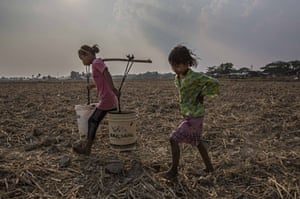
Here is a well-illustrated discussion of World Environment Day from the Guardian:  “More than a quarter of a billion people, half of them children, are suffering the impact of severe drought across three continents. Aid agencies are working to deliver emergency food parcels to prevent people starving, and to help build livelihood resilience to extreme weather events . . . .”  Source: World Environment Day: drought drives global rise in hunger – in pictures | Global development | The Guardian

Save

Save

Save

Save

Save