#WildforLife – Backed by Stars, UN Campaign Seeks to Mobilize Millions to End Illegal Trade in Wildlife

GR.–Publicity campaigns work best when we design them to appeal to the correct audience.  Is the typical customer for poached animals and their body parts likely to respond to celebrity messages?  It seems unlikely that the poachers will.  Nevertheless, celebrities will draw attention to the issue, and though they might not evoke a response among the customers, they might create public attitudes that can indirectly influence customers.  And for the public, knowing a problem exists is a great step toward solution.

Ban Ki-moon, Gisele Bündchen, Yaya Touré and Ian Somerhalder among those aiming to spur action to protect endangered species

UN, Nairobi, Wednesday, 25 May 2016.–“The United Nations, backed by A-list celebrities from across the globe, today launched an unprecedented campaign against the illegal trade in wildlife, which is pushing species to the brink of extinction, robbing countries of their natural heritage and profiting international criminal networks.

“Each year, thousands of wild animals are illegally killed, often by organized criminal networks motivated by profit and greed,” said Secretary-General Ban Ki-moon. “I call on all Governments and people everywhere to support the new United Nations campaign, Wild for Life, which aims to mobilize the world to end this destructive trade. Preserving wildlife is crucial for the well-being of people and planet alike.”

“#WildforLife, launched today at the second United Nations Environment Assembly (UNEA-2) in Nairobi in front of environment ministers from every corner of the planet, aims to mobilize millions of people to make commitments and take action to end the illegal trade.”  Continue reading:  Backed by Stars, Unprecedented UN Campaign Seeks to Mobilize Millions to End Illegal Trade in Wildlife

Save

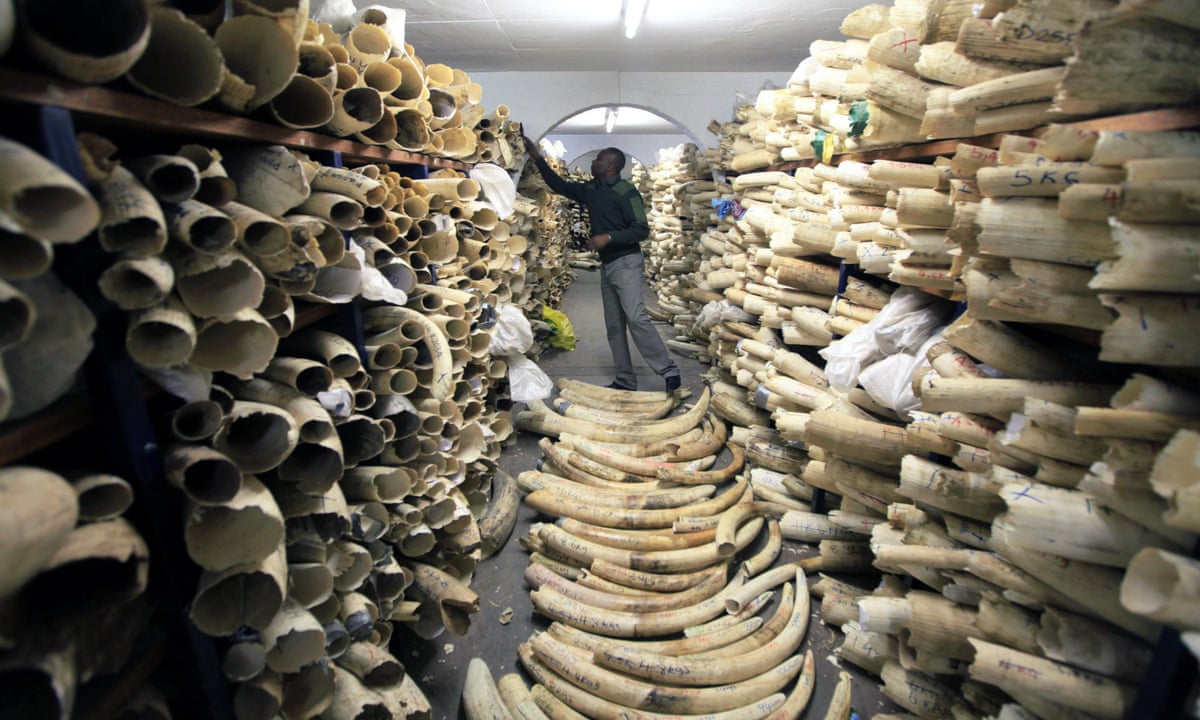
Legal ivory sale drove dramatic increase in elephant poaching, study shows | Environment | The Guardian

Damian Carrington, Monday 13 June 2016:  Research shows the legal sale in 2008 catastrophically backfired – but two African nations want to repeat the stockpile sell-off.

A huge legal sale of ivory intended to cut elephant poaching instead catastrophically backfired by dramatically increasing elephant deaths, according to new research.

The revelation comes just months before a decision on whether to permit another legal sale and against a backdrop of more African elephants being killed for ivory than are being born. In 2015 alone, 20,000 elephants were illegally killed.

The international trade in ivory was banned in 1989 but, in 2008, China and Japan were allowed to pay $15m for 107 tonnes of ivory stockpiled from elephants that died naturally in four African nations. The intention was to flood the market, crash prices and make poaching less profitable.

But instead, the legal sale was followed by “an abrupt, significant, permanent, robust and geographically widespread increase” in elephant poaching, concluded researchers Prof Solomon Hsiang at the University of California Berkeley and Nitin Sekar at Princeton University, whose work was published on Monday.  Continue Reading: Legal ivory sale drove dramatic increase in elephant poaching, study shows | Environment | The Guardian

Save

The Great Barrier Reef and the subtle power of ‘psychological distance’

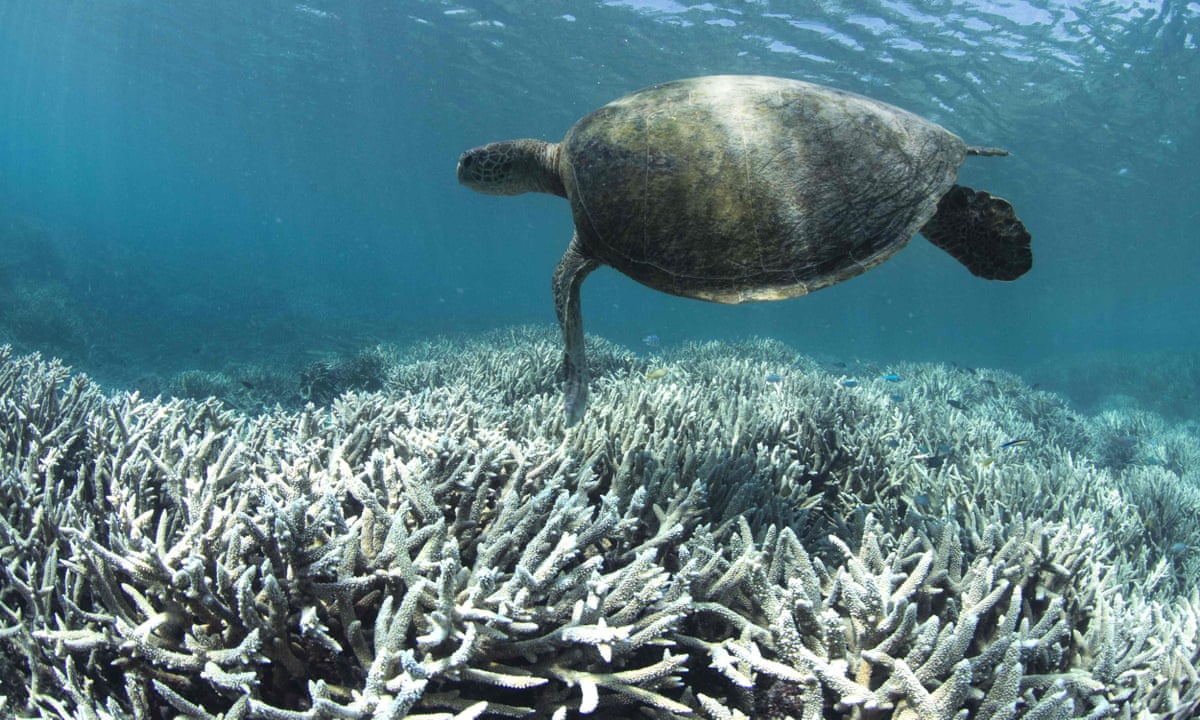
This photo released on 20 April, 2016 by XL Catlin Seaview Survey shows a turtle swimming over bleached coral at Heron Island on the Great Barrier Reef. Photograph: STR/AFP/Getty Images

Don HIne.–If the federal government wants Australians to ignore the Great Barrier Reef as it dies beside us, it has done a masterful job by scrubbing all mentions of the reef from the latest UN climate change report.

The government’s actions have been described as Soviet in style and intent but the political thuggery pales compared to the activation of a subtler and more powerful effect known as psychological distance.

Psychological distance is a construct that measures the “distance” of an event or object in terms of geography, time, cultural similarity and factual certainty. If something is nearby, likely to occur soon, involves people like you, and the facts are certain, that “something” is considered psychologically close. The closer it is, the more likely you are to perceive it as concrete and be willing and able to act on it.  Continue:  The Great Barrier Reef and the subtle power of ‘psychological distance’ | Don Hine | Australia news | The Guardian

Save

How Austrailia’s Great Barrier Reef got polluted – from farms and fossil fuels to filthy propaganda | Graham Readfearn | Environment | The Guardian

GR:  This is the best discussion of the cause of coral death in Australia’s Great Barrier Reef I’ve seen–it’s people.

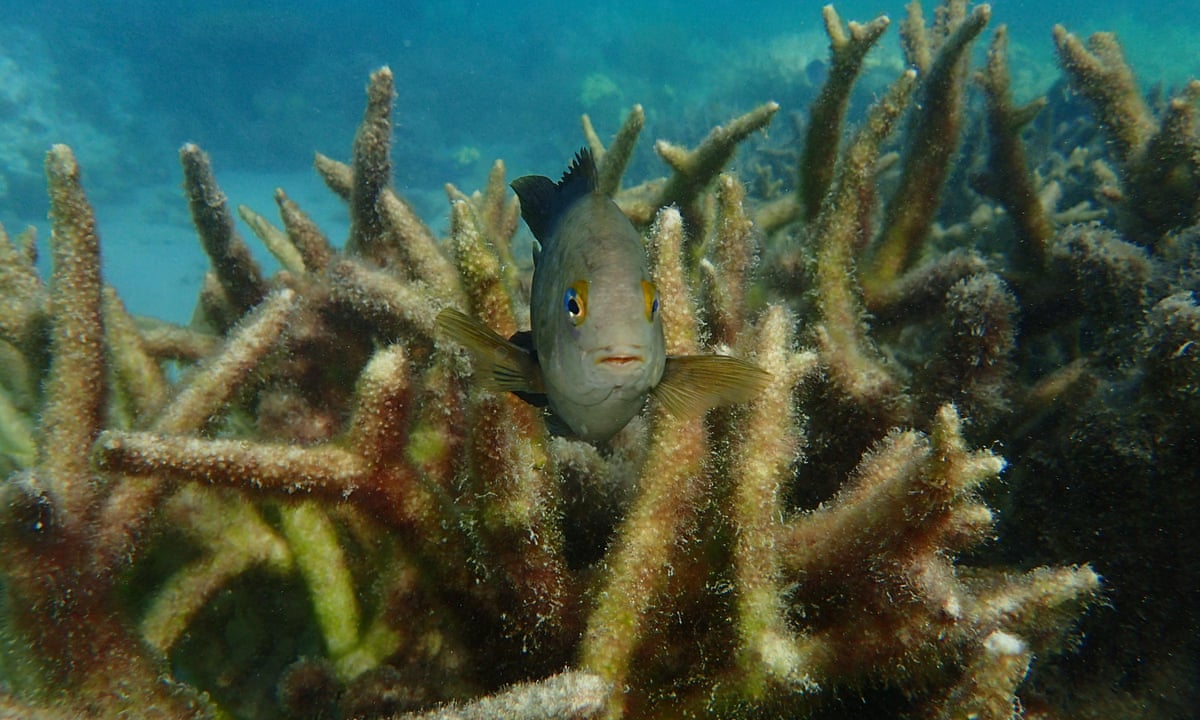
Coral bleaching at Loomis Reef, off Lizard Island, Great Barrier Reef, Australia. Photograph: Essential Median

Graham Readfearn:  In late November 2015, as corals across the northern section of the Great Barrier Reef started to bleach white, the game was finally up.

For years, Australians had been told the country’s jewel in the ocean’s crown was on the mend. Only months earlier the Coalition government had won a two-year fight to keep the reef off a United Nations list of world heritage sites in danger.

The stakes were high. International reputations and tourist dollars were at stake. The foreign minister, Julie Bishop, and the trade minister, Andrew Robb, had even attacked Barack Obama, who feared for the reef’s future.

The reef was not in danger, Bishop insisted. The president was misinformed, claimed Robb.

Conservative commentators hanging around News Corp media have said the dangers to the reef were overblown.

The mining industry cast the views of environmentalists as green propaganda, ignoring how for the most part, conservationists were echoing the findings of the government’s own scientists.

Now, about half the corals bleached in the once pristine northern section are dead or dying.  More– How the Great Barrier Reef got polluted – from farms and fossil fuels to filthy propaganda | Graham Readfearn | Environment | The Guardian

Save

To save the Great Barrier Reef ‘we need to start now, right now’ – video | Environment | The Guardian

GR:  The video leaves us with a grim outlook.  Human wastes running into the oceans coupled with global warming will soon destroy all the reefs.  Do enough people care to force our governments to act?  Probably not.  Do you see any answers?

and , theguardian.com:  Jon Brodie from James Cook University says to give the Great Barrier Reef even a fighting chance to survive, Australia needs to spend $1bn a year for the next 10 years to improve water quality. If we don’t do that now, he says, we might need to just give up on the reef. ‘Climate change is happening much more quickly and much more severely than most scientists predicted’•

The Great Barrier Reef: a catastrophe laid bare – special report.    Source: To save the Great Barrier Reef ‘we need to start now, right now’ – video | Environment | The Guardian

Save

Predator Control in Alaska Wildlife Refuges

Pat Lavin:  The state of Alaska is pursuing aggressive predator control measures on our national wildlife refuges, targeting bears, wolves and other wildlife on land that was meant for their conservation.

Alaska is a state unlike any other, home to diverse landscapes from the tundra of the high arctic to temperate rainforests in the south. Polar bears, wolves, and brown bears live here. In many parts of the state, these carnivores live in pristine habitat as they have for thousands of years, hunting their natural prey, including moose, caribou, deer, salmon and more.  More:  Predator Control in Alaska Wildlife Refuges

Save

Save

In Bangladesh, Around 1 Million Unwanted Births Per Year

Joe Bish, Population Media Center:  The following article was published in the Daily Star newspaper of Bangladesh, and reports out on a new analysis of the 2014 Demographic and Health Survey (DHS) for that country. The analysis was performed by the Bangladesh Health Ministry. If you would like to directly access the 2014 DHS, simply click here (PDF).

The headline is that the Ministry has calculated nearly 1 million of the roughly 3 million births that take place every year in Bangladesh can be accurately described as unwanted. “Here unwanted birth means either the parents didn’t want the child in that time or never,” said Karar Zunaid Ahsan, senior monitoring and evaluation adviser at the Ministry.

This troubling statistic is followed by several more: the country’s fertility decline has been stalled since 2011 at 2.3; the countrywide unwanted fertility rate is 0.7 children per woman, with regional variations; and, only 25% of Bangladesh’s public facilities purportedly offering family planning services are ready to actually provide them. It is worth noting that the fertility rate of 2.3 coincides with the U.N.’s high variant population projection for the country. That would mean, if these trends continue, that Bangladesh will cross the 200 million population mark by 2033 — not in 2050, as indicated in the article. Setting aside for a moment social and economic ramifications, what will happen to the remaining 100 Sundarbans’ forest tigers in this human population growth scenario? Country sees 10 lakh unwanted births a year.

Source: In Bangladesh, Around 1 Million Unwanted Births Per Year

Save

Rescued whale sharks released back into the ocean – in pictures | Environment | The Guardian

Two whale sharks destined for an ocean theme park in China were rescued after an 18-month investigation by Wildlife Conservation Society, covered by investigative photojournalist Paul Hilton. The operation, supported by Indonesia’s marine police, revealed where the protected species were being illegally caught and kept in sea pens by a major supplier of large marine megafauna to the international wildlife tradePaul HiltonMonday 6 June 2016 06.29 EDT.  More:   Rescued whale sharks released back into the ocean – in pictures | Environment | The Guardian

Save

Experts Prepare to Welcome Black-footed Ferrets Back to Wyoming

Not terribly long ago, the black-footed ferret vanished from the wild. Today, experts are making plans to return this endangered species to the same site where humans once thought we had seen the very last of this iconic prairie creature.

On the early morning of November 2, 1985 I watched a pickup truck crest the ridge of a dusty Wyoming two-track ranch road and disappear over the horizon. Inside it was what I thought at the time might be the last black-footed ferret ever to live in the wild. I was dead tired, having been up for the past week trying to catch that ferret, spending nights of driving laps around prairie dog colonies – the habitat and food source of black-footed ferrets – peering out to the end of the beam of a strong spotlight to find her. It was the end of a tumultuous fall, one that had been filled with bitter accusations and petty politics, and I was really too worn down to be much more than philosophical about her departure. There was no fanfare, no media presence—nothing that would have marked the day as remarkable. Even though it might have been the day that a species went extinct in the wild.  More:  Experts Prepare to Welcome Black-footed Ferrets Back to Wyoming

Save

Save