Florida Panther Good News #Endangered

Florida Panther Released Survives and Gives Birth

Florida Panther Kitten

Praise is due to Florida Fish and Wildlife Conservation Commission.  An orphaned Florida Panther, raised in captivity and taught how to survive by humans, is released, survives, and now has a kitten.

This much concentrated effort is very expensive.  As human numbers grow without restraint and natural environments dwindle, more such efforts will be required.


Go back

Your message has been sent

Warning
Warning
Warning
Warning

Warning.

Earthjustice.org–An Important Wolverine Supporter

Earthjustice Works to Protect Wolverine, other Wildlife, and Places

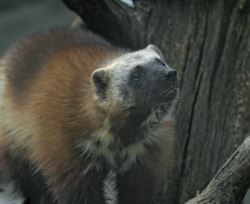
Wolverine by AYImages.

A member of the Earthjustice team, Tim Preso, the managing attorney of Earthjustice’s Northern Rockies office, has been advocating for Wolverine since the Bush administration.

“The presence of the wolverine tells us that the landscape is productive not only for the wolverine but for lots of other creatures that also require that kind of landscape: the fish, smaller mammals and, ultimately, us.”  Earthjustice Managing Attorney Tim Preso
[contact_form]Contact me[/contact_form]

Wolverine “Threatened” Listing Proposed

Wolverine Support

You can add your comment on the proposal to list the North American population of Wolverine in the contiguous United States in the Federal Register.

America's Iconic predator

Wolverine in Hall of North American Mammals


Wolverine Numbers Drop to 300 in U. S.

Wolverine Letter Campaign by Center for Biological Diversity

Wolverine population down to 300 in U. S.

Wolverine Down to 300 in U. S.

Join me in another effort to support Wolverine.  The Center for Biological Diversity is hosting a letter-writing campaign.  The letters being sent to the U. S. Fish and Wildlife Service calls for recognition of Endangered Species Act protection and critical habitat designation for the 300 remaining Wolverine in the U. S.

The letter points out that Wolverine have been recognized as candidates for protection for almost 30 years.  That’s too long.  Join the letter-writing campaign now.

Wolverine Need Your Help

Help the Wolverine

Wolverine

Wolverine

Join the Sierra Club campaign to help the Wolverine survive.

Bat Future Uncertain as Numbers Decline

Benefits of Bats

Bats in Austin TX

Bat Watching at Congress St Bridge–Austin TX

Bats are encouraged to reside in many places because they eat insects and pollinate plants.  Austin, Texas, for instance, is proud of its large bat population, and refers to itself as Bat City.  I am anxious to see more bats near my home because they eat mosquitoes, my personal nemesis.  Little Brown Bats can eat 1,000 mosquitoes per hour.

GBH proividing scale for my bat house.A bat house built in my back yard in 2004 remained vacant until 2011.  The house has room for 600 bats, but only 11 moved in.  The number did not increase in 2012—still waiting to see what happens in 2013.  The house is near three large stock ponds.  Dragonflies, hummingbirds, flycatchers, and swallows find plenty of insects to eat during the day, so it seems reasonable to expect the house will eventually be home to more than 11 bats.

Human Impacts

The only entities that gain from bat extinction are insecticide producers.

Continue reading

Climate Change: Disaster Courtesy of US Congress

Congressional Climate Change Deniers

U. S. congressional representatives of major energy and development interests continue their long war on climate change. Their chief strategy, deny it, question it, deny its importance, etc.

Oil Refinery Smog

Oil Refineries Create Serious Health Problems in Davis County Utah. Contribute to Climate Change.

The Salt Lake Tribune (March 19, 2013) reports that Republican Chris Stewart, brand new Congressman from Davis County, Utah, and chairman of the House environmental subcommittee,says, “”I’m not as convinced as a lot of people are that man-made climate change is the threat they think it is,” he told The Salt Lake Tribune. “I think it is probably not as immediate as some people do.”

For his 2012 political campaign, Stewart received more than $40,000 from donors associated with the oil and gas industry (Center for Responsive Politics, CRP).  Republicans like Stewart aren’t the only ones to represent big oil.  According to CRP, Democrats that voted in favor of oil company legislation have taken money too.

U. S. land and disaster management agencies prepare

Climate Change Will Increase the Intensity and Frequency of Forest Fires

In a December, 2012 report, the U. S. Forest Service describes what is coming as a result of climate change.  According to the report, the main short-term effects on the national forests will come from the increased intensity and frequency of disturbances. Continue reading

Arizona Amphibians Disappearing

Arizona Amphibian Conservation

Fresh water, the essential habitat of Arizona’s amphibians, is declining in both quality and quantity.  Frogs, toads, and salamanders are dependent on open water habitats.  Like many other places in the world, Arizona’s human population has exceeded the state’s carrying capacity.  Water resources in most areas of the state can no longer support the state’s human population.  In their unconscious drive to become the only species left, Arizona’s humans have depleted and polluted their water resources.  As the human population continues to grow, water and amphibians will continue to disappear.

Rocky Mountain Toad

Rocky Mountain Toad

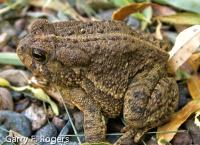
The photograph shows a palm-sized Rocky Mountain Toad.  In spring, it cries its nasal “waaah” mating call from the banks of Arizona’s streams, lakes, and temporary rain pools.  On warm moist nights, one or more of these small predators will often sit beneath outdoor lights and windows where insects congregate. Continue reading

Black-Hawk Raids GBH Nests

1-IMG_0431-001Yesterday (04/02/13), a Common Black-Hawk (Buteogallus anthracinus) raided the two Great Blue Heron nests over my stock pound.  I heard the screams and croaks, and later saw the hawk sitting in one of the heron nests.  Today, I saw the hawk flying through the cottonwood grove beyond the heron nests, but the herons are gone.

Common Black-Hawks are not very common.  The Arizona Game and Fish Department considers them “vulnerable to extirpation.”  Black-Hawks are probably imperiled because they don’t tolerate human disturbances very well, and because they depend on cottonwood-willow vegetation in riparian habitats.

A pair of Common Black-Hawks regularly nest in the woods behind my ponds, but the herons started nesting by the ponds in 2011.  It was unfortunate to loose the herons, but I have to choose the Black-Hawk.  Herons are much more adaptable and widespread.  They will be around after the Black-Hawks are all gone.