Vote for Corr Syl at Booktown
You could help me win October Book of the Month for Corr Syl.
 Please vote for Corr Syl the Warrior for October Book of the Month on Booktown. Corr Syl Reviews
You could help me win October Book of the Month for Corr Syl.
Please vote for Corr Syl the Warrior for October Book of the Month on Booktown. Corr Syl Reviews
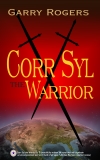 Indie authors read a lot about the promotional value of reviews. Here I wanted to comment on the feedback I have received.
First, it is worth noting that early book reviews sometimes influence later ones. The influence appears in the similarity of the topics mentioned and even the phrases used. Still, there is collective value in the insights the reviews provide.
It is also worth noting that Corr Syl is my first novel. I have much to learn, and the value I derive from reviews will probably increase as my knowledge and experience increase.
Most of the 17 book reviews of Corr Syl has received mention the book’s conservation theme. I had worked to keep the theme firmly in the background, and expected that Immediacy, the Tsaeb philosophy of consequences would receive more attention. Immediacy indirectly explains humanities many flaws. Didn’t happen, but I am relieved that none of the reviewers felt that the way I presented the conservation theme was so didactic that it interfered with their enjoyment of the story.
One of the book’s other themes is Corr Syl’s “coming of age” experience. This is a steady influence throughout the novel, and it is one of the factors in determining the conclusion. Nevertheless, only one reviewer picked it out as a principal element, and most don’t mention it. It is a common story element, however, and is probably essential even if not remarkable.
Reviewers mentioned some of the other important elements of the story–the nature of perception and of intelligence, and Corr Syl’s plan for repairing human society–but they said little about them. I am eager to see what other reviewers will say about these topics.
Some of the reviewers noted that the story is hard science fiction, but others called it fantasy or mixed the two types. The difference, of course, is that all the propositions contained within a science fiction story must have explanations that meet the testability criterion. If the events and features have no testable explanations, they aren’t science, and the story is fantasy or magic. Stories often contain a mix of testable and untestable ideas, and are properly called “science fiction and fantasy.” Unlike hard science fiction author, Robert Forward who commented that his story provided a basic lesson in physics, I did not try to explain the evolutionary processes that could produce my principal story elements. But I tried to stay within the limits of what was actually possible.
Another interesting thing about these first 17 reviews, is that most of them mention that Corr Syl and the other characters are well-developed. As I worked on the story, I learned that I am more of a plot than a character writer. I always felt that the characters needed better back-stories and traits of their own, or as Kris Neri says better “hidden” stories. Nancy Kress teaches that back-stories determine character traits and reactions. The back-stories need to be clear in the writer’s mind. If not, inconsistent behavior can occur and distract readers. Since my characters are acceptable to some critics, I am further convinced that Roy Peter Clark must be right, writing can be learned.
Readers’ Favorite sent Corr Syl the Warrior out for review in September. The five reviews received include three 5-star and two 4-star reviews. Click here to read Lit Amri’s review and the comments by Bill Howard and others
Corr Syl the Warrior is in the Booktown Book of the Month contest. You can vote for it here (scroll down when you get to Booktown’s site).
I am happy to send free books to reviewers. If you want to review Corr Syl the Warrior, use the comment form to send me your email address for a Kindle eBook, or your mailing address for a paperback. The books ship direct from Amazon. Amazon is the best place to post reviews. You have to mention that you received a complimentary copy from the author.

See on Scoop.it – Nature Conservation & Science Fiction: #EcoSciFi
In today’s comments we fretted over the definition of average, oohed and aahed over some DIY costume skills, and (with the help of Gravity’s science advisor) teased out the precise intersection of science and story-telling.
When the science is inaccurate the story is no longer science fiction. It becomes fantasy. That’s fine, but even fantasy has rules. Departure from accuracy without new rules can get you bad reviews.
See on io9.com
See on Scoop.it – Nature Conservation & Science Fiction: #EcoSciFi
 Taking this side of the question is Clive Thompson, author of the new book Smarter Than You Think: How Technology Is Changing Our Minds for the Better. Thompson says he is “regularly astonished by the quality and length of expression I find online, the majority of which is done by amateurs in their spare time.”
The length part, at least, is inarguable. Thompson, a journalist who has specialized in covering technology, asserts, “Before the Internet came along, most people rarely wrote anything at all for pleasure or intellectual satisfaction after graduating from high school or college.” Now, according to his back-of-the-envelope cyphering, people compose about 3.6 trillion words a day via e-mail, blogs, and social media—the equivalent of 36 million books, give or take.
So, does frequent writing provide beneficial practice and improvement regardless of length?
See on chronicle.com
Diane Lockward provides a list of print journals that accept online submissions. As of  September 28, 2013, the list included 133 journals.
Go to Diane’s website for updates.
 Recent reviews:
1. A free promotion for SciFi and Fantasy authors begins tomorrow. Sign up now.
CommuniCATE has free promotions for other genre. Find the details here.

Corr Syl the Warrior is a finalist in the Arizona Authors Association 2013 Literary Contest. Places will be announced at the annual awards banquet in November. Wish me luck.


 Welcome to my blog about nature conservation. I call it #EcoSciFi because I use science fiction as well as non fiction to express the blog’s underlying nature conservation theme. Check out my new novel to see how I’m doing. Continue reading

 GarryRogers Nature Conservation