Invasive Species and the Bighorn Sheep Die-off in Montana Mountains, Nevada

Invasive Species

GarryRogersGR: Human-introduced animals, plants, and disease organisms have destroyed many species and ecosystems. This aspect of the human impact on nature became a global disaster in the 1500’s as we began crossing the oceans. In the lands we reached, we rampaged about with no thought of the seeds stuck to our boots or the diseases carried by our livestock. Then we developed nature. We cut the soil and filled it with pipes and wires and then we entombed its microorganism ecosystem with pavement. We damned streams, dried up springs, cut the forests, stripped the land with cattle and sheep, and we poisoned the water and air. Now comes our grand slam: We’ve added sufficient greenhouse gasses to the atmosphere to give our climate warmer temperatures, droughts, fires, and stronger storms.

How do we react to all that we’ve done? In the current time of competition between oil producers, for example, the temptation to burn more of the cheaper gasoline doesn’t horrify us, no, we call the lower prices a consumer blessing. Fuels Supplied

And so, in all that we do, our species appears to be striving for maximum destruction of earth ecosystems. Here are a few essays I wrote about how this works with invasive plants.

The following article is by Ken Cole on the Wildlife News website (February 19, 2016).
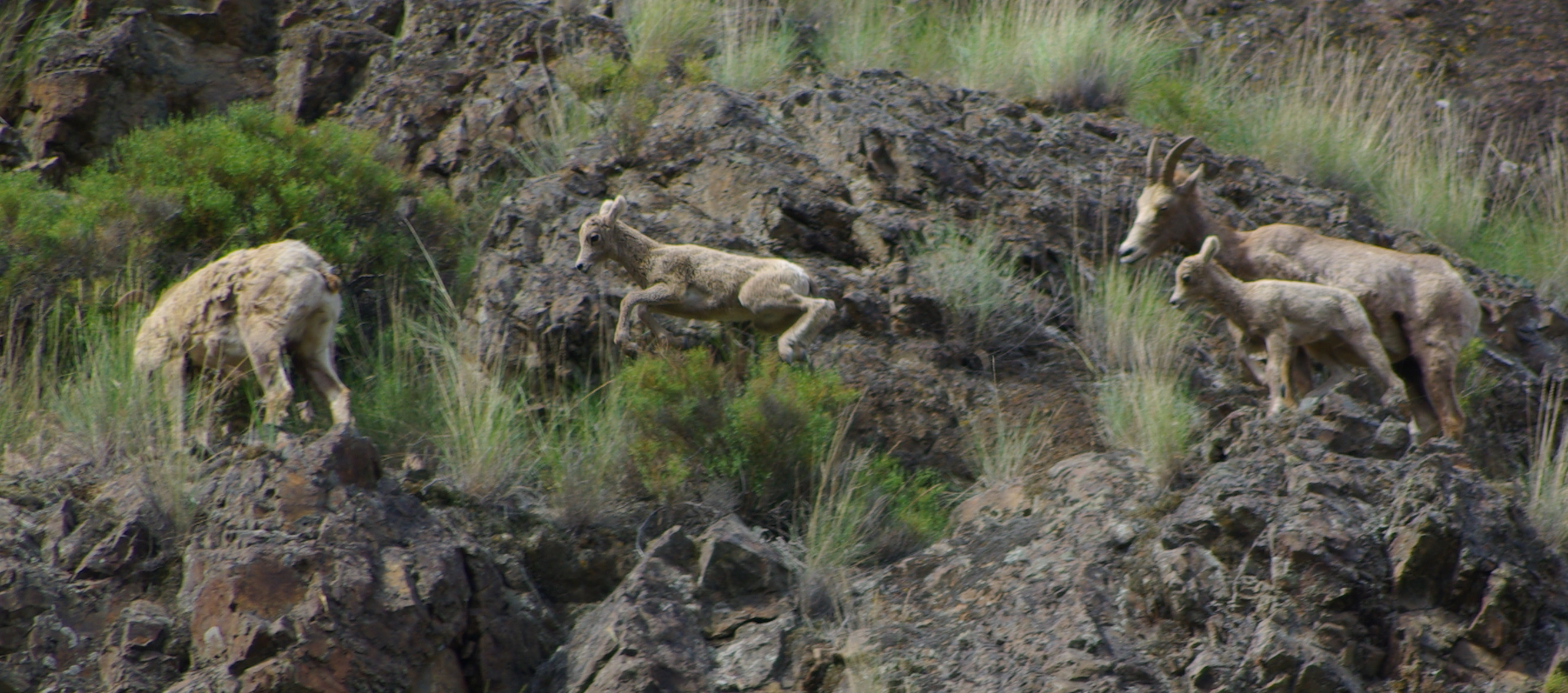
Bighorn sheep by Ken Cole

Bighorn sheep photo copyright by Ken Cole

“On Sunday and Monday, February 14-15, 2016, USDA Wildlife Services took to the skies and shot the remaining 24 bighorn sheep in the Montana Mountains of northwest Nevada at the request of Nevada Department of Wildlife.

“While the exact source of the disease outbreak is not known, it is not surprising that the bighorn sheep in this area are suffering this fate because there are two domestic sheep grazing allotments – the Bilk Creek allotment and the Wilder-Quinn allotment – in the middle of this area and BLM ignored the disease threat that they pose to bighorn sheep.

“In 2012 the BLM began the permit renewal process for one of the allotments – the Bilk Creek allotment – and Western Watersheds Project submitted comments notifying them of our concern about the risk that domestic sheep posed to bighorn sheep in this area. It is well know that domestic sheep are carriers of pathogens that result in deadly pneumonia to bighorn sheep and that even just one nose-to-nose contact between these related species can result in a disease outbreak that commonly kills up to 90% of a herd and kills the offspring of the remaining animals for up to a decade.

“In 2013 the BLM issued the Final Environmental Assessment that dismissed those concerns . . . . ”  Read more at:  http://www.thewildlifenews.com/2016/02/19/bighorn-sheep-die-off-in-montana-mountains-nevada-is-it-any-wonder.

Wildlife: Wintry weather to take toll on Colorado mule deer

“Harsh winter conditions in northwestern Colorado may take a toll on already struggling mule deer herds, state biologists said last week, explaining that they’ve started a limited feeding program to try and keep ungulates from invading cattle grazing areas.”  From: summitcountyvoice.com

GR:  The following was NOT overheard in a U. S. Forest Service Office:  “Deer might die, but please don’t feed them. They must not develop any dependency on us.  Moreover, you can rest assured that we will not let them eat a single weed that a cow might want.  The deer might die, but that’s nature.  They’re used to harsh winters, and we must protect the valuable cows.”

AZGFD.gov Sunday is last day to hunt Arizona’s quail

PHOENIX — “With nothing but sunshine and spring-like temperatures in the weather forecast for this weekend, there’s really no excuse for hunters not to get out in the field and chase quail one last time.
“The season for the state’s three main species – Gambel’s, scaled and Mearns’ – ends Sunday, Feb. 7. The general bag limit is 15 quail per day in the aggregate, of which no more than eight may be Mearns’ quail. The general possession limit is 45 quail in the aggregate, of which no more than 15 Gambel’s, scaled or California quail in the aggregate may be taken in any one day. The 45-quail possession limit may include 24 Mearns’ quail, of which no more than eight may be taken in any one day.”  azgfd.net

GR:  Many of these beautiful birds will die over the next 72 hours.  Shouldn’t killers be given psychiatric treatment rather than living targets?

Arizona Game & Fish Department – Off Highway Vehicles

“Off-highway vehicle (OHV) recreation is one of the most popular recreational activities taking place on public and state lands in Arizona. Please obey the laws, stay on designated open roads and trails, and ride safely and responsibly.”  www.azgfd.com

GR:  The sights and sounds of humans on foot and on wheeled vehicles are disruptive to wildlife.  Numerous studies have shown their harmful effects on foraging and reproductive success.  So why would a wildlife management agency promote such behavior?  Why in the midst of the great mass extinction of life on Earth would a government agency promote activities harmful to wildlife?  Oh, wait a minute, is it for money?  Crazy.  Will voters ever come to respect wildlife and require their management agency to dedicate its efforts to protection?

Mali’s Desert Elephants Face Extinction in 3 Years

“DAKAR, Jan 28 (Reuters) – Mali’s elephants, one of just two remaining desert herds in the world, will be gone in three years unless the government does more to protect them, a conservation group said on Thursday.

“Poachers have taken advantage of the chaos from a growing Islamist insurgency and other unrest in the lawless north to step up ivory trafficking – a trade that the United Nations says funds militants.

“Sixteen elephants have been killed so far this month, adding to more than 80 slaughtered in 2015, said Susan Canney, director of Mali Elephant Project for the WILD Foundation.”  www.scientificamerican.com

GR:  These great animals indicate the consequences of our lack of concern for other species.  Instead of protecting our fellow creatures, we eat up their habitats and harvest their body parts.

Save Hundreds of Thousands of Squirrels From Being Murdered

Target: European Union Director-General for Environment, Daniel Calleja Crespo

Goal: Stop the planned taxpayer-funded cull of grey squirrels.

Hundreds of thousands of squirrels will be killed in 2016, thanks to recently approved legislation by the EU. Under this new EU law, the United Kingdom, Ireland and Italy must organize and carry out the slaughter of grey squirrels from next year onwards using methods that include bludgeoning, poisoning and shooting the animals. This cruel practice will be funded by taxpayer money from all EU countries.

Moreover, the cull will continue into the time of year when female squirrels are nursing their young. Thus, the mass murder of nursing females will cause hundreds of thousands of baby squirrels to starve to death. This practice is therefore illegal, as starving animals is considered torture and is in breach of the animal welfare standards set by the World Organization for Animal Health.  From: forcechange.com

Please sign the petition.

Making Friends With Crows

GR:  Here’s an excellent DIY post for all you biophiliacs.  We have ravens (also corvids) around Coldwater Farm, but they will probably respond just as the crows do.

Feeding and watching wildlife can be worthwhile, but can lead to problems. Here are two links to the laws and advice concerning wildlife in Arizona:  FAQ (covers laws),   Living With Wildlife (covers individual species).

Crow“It’s a lot of fun to feel like you have wild friends, and feeding birds is a great way to connect with nature.  I’ve been asked many times how to make friends with local corvids, crows in particular.  While this post is mostly aimed at American crows in North America, it’s applicable to most corvids.  However, please be aware of local laws regarding feeding birds.

“The best way to get on a crow’s good side is through their stomach.  Unsalted peanuts in-shell work wonders (i.e. crow crack).  The best thing you can do is put out peanuts consistently and don’t look directly at the birds when you do so (at least initially).  Be conspicuous about you being the one to drop the food, but do not throw the food toward the crows or look at them initially, but do make sure they are in the area.  Then, go back inside.  It may take them no time at all to come to your food, or it may take them a while before they trust it.  Crows are very neophobic and suspicious, and even if it’s a food they love, they will be careful simply because it came from a human.  (I suspect if you live in an area with high traffic or restaurants nearby, they will take less time to come to your offering than if you live in a quiet, low-traffic suburban area.)”  From:  The Corvid Blog By Jennifer Campbell-Smith

Homes and companies should be built on flood plains despite risks, says panel

Homes and businesses should continue to be built on flood plains across the UK, despite the increasing risks this would involve for future residents, according to the government’s advisors on climate change.  From: enjeuxenergies.wordpress.com

GR:  In the UK, flood damage insurance is paid for by the government.  Encouraging building in floodplains might not appeal to you if you live in an upland area since you will be paying for damage to homes built in the floodplains.

However, building in floodplains is a bad idea mainly because the richest, most diverse, wildlife habitats are found there. In the midst of the great global wildlife extinction being caused by people, it seems sensible to preserve, not develop floodplains.

How ‘Natural Geoengineering’ Can Help Slow Global Warming by Oswald J. Schmitz: Yale Environment 360

“An overlooked tool in fighting climate change is enhancing biodiversity to maximize the ability of ecosystems to store carbon. Key to that strategy is preserving top predators to control populations of herbivores, whose grazing reduces the amount of CO2 that ecosystems absorb.
by oswald j. schmitz

“As natural wonders go, perhaps the most awe-inspiring is the annual migration of 1.2 million wildebeest flowing across East Africa’s vast Serengeti grassland. It would be a tragedy to lose these animals. But we almost did in the mid-20th century when, decimated by disease and poaching, their numbers crashed to 300,000.

“The consequences of that collapse were profound. Much of the Serengeti ecosystem remained ungrazed. The accumulating dead and dried grass in turn became fuel for massive wildfires, which annually burned up to 80 percent of the area, making the Serengeti an important regional source of carbon dioxide emissions.” e360.yale.edu

GR:  This is a good argument for nature conservation. If we studied, restored, and protected natural ecosystems, the Earth could tolerate and mitigate more human impact. Of course, Earth’s natural systems can’t withstand the growing demands for food and space the massive human population is making. I believe we have to get our population growth reversed if we hope to save natural ecosystems (https://garryrogers.com/2015/10/19/population-2).