#EcoSciFi and #Climate-Change)
 The Tsaeb warriors appeared at a time when Earth’s intelligent creatures were endangering their own existence. War and environmental pollution were destroying the planet. These destructive forces were also sorting out Earth’s intelligent species by extinguishing those least able to compete. Evolutionary trial and error favored the swift and strong, and it favored species with a long-term view of their lives and instinctive acceptance of responsibility for their behavior. The rabbits were the first evolving species to understand and reject the destructive effects of industry and war; they formed the warrior guild and began helping evolution weed out irresponsible species.

Great Basin shrubland replaced by fire-prone invasive weeds.
In Corr Syl’s time and in ours, Humans are endangering their own existence. Unchecked, the Human population is spreading across the land plowing and bulldozing natural ecosystems. We are introducing invasive species, and harvesting plants and animals so fast that nature can’t recover. It is not surprising that wildlife biologists report that the numbers of many animal and plant species are sinking toward extinction.
 The lands that we do not destroy, we pollute with artificial fertilizers, pesticides, and a plethora of chemicals in municipal wastes. However, the most widespread and deadly pollutants of all are the big-molecule greenhouse gasses emitted by our industries, automobiles, and fires. CO2 is the principal culprit among these gasses. When we burn fuels such as wood, coal, or gasoline, oxygen from the air combines with the carbon in the fuel. A 6.3-pound gallon of gas produces about 20 pounds of carbon dioxide (CO2) when burned. Though the new big CO2 molecules float in the atmosphere, they weigh more than the original carbon atoms in the fuel. Here’s a clear explanation of what happens from the U. S. Department of Energy.
CO2 drifts up into the air where it admits light from the sun and blocks heat radiating back from Earth’s warmed surface. The oceans absorb some of the CO2 and this causes seawater to become more acidic.
The oceans also absorb some of the heat trapped in the atmosphere by CO2. Since the Industrial Revolution when our CO2 production shot up, the oceans have protected Earth’s climate by absorbing CO2 and heat.
The atmosphere and the oceans are warming. As they warm—and it takes only a few degrees—mountain glaciers and the great polar ice sheets begin to melt. This adds fresh water to the oceans, diluting their salinity and further increasing acidity. Rising ocean acidity is reaching the point where it is beginning to kill corals and shellfish. At the same time, our harvest of fish from the oceans has substantially reduced many species’ numbers. Since all sea creatures, like all land creatures, depend on one another, numbers of many species are falling.

“Very hot temperature anomalies throughout the Eastern Pacific running from Equator to Northern Hemisphere Pole were a major contributor to record-breaking global heat during June. Still warming waters in the Equatorial zone are likely to pump still more heat into an atmosphere overburdened with human greenhouse gas emissions through at least early 2016”–Robert Scribbler. Image source: Earth Nullschool
As the atmosphere and oceans warm, changes occur in the great atmospheric pressure systems that steer cyclones and hurricanes. The North Polar Region is becoming warmer even more rapidly than other latitudes. In the past, cold heavy air at the pole blocked warm moist air from the south. Now, that air flows farther north than it used to and the global pattern of atmospheric and oceanic circulation is changing.
We are entering a period when evaporation from the warmed oceans is increasing, and the oceans are returning stored heat to the atmosphere. Storms, floods, droughts, cold spells, and heat waves are growing stronger.
Evolution took millions of years to cull the Tsaeb for species capable of living as stable elements of Earth’s ecosystems. I wrote that the Tsaeb wars were terrible, but I let them run for millions of years without destroying the Earth. Had they been as destructive as the side effects of our current population growth and pollution, there wouldn’t have been time for evolution to select for wisdom. The challenge for Humans today is greater than it was for the Tsaeb. Our impact on the Earth is far more abrupt than the damage caused by Tsaeb wars. In hundreds, not millions, of years, our pollution and habitat destruction will transform Earth into a barren planet with few species, little soil, and horrible storms. We’ve known this for only a few decades. Now we have only decades to change our ways and save our forests, seas, and ourselves.
What’s Next for Earth?
Some believe that we already have the wisdom needed to take the long view of things and change our way of life. If you agree and you want to help, you may wish to begin by acquiring a general picture of what’s happening. Some of the best sources are those that fuel the Rebel Mouse newsletters on my website. Go to https://garryrogers.com/climate-news, and https://garryrogers.com/natcon-news. Many of the sources I use for the newsletters have excellent libraries of reviews and information. For more combined climate and nature-conservation news and information try http://www.scoop.it/t/ecoscifi. One of the sources is the blog by Robert Scribbler.
There are many good books on human impacts. Here are two on climate change that I like.
• This Changes Everything: Capitalism vs. The Climate by Naomi Klein
• Storms Of My Grandchildren: Truth About The Climate Catastrophe And Our Last Chance To Save Humanity by James Hansen
Header Image
From near my home in central Arizona, left to right: 1) Long strands of algae in stream water polluted by fertilizer runoff from farms. 2) Total algae cover of pond polluted by fertilizer runoff from farms. 3) Land with its surface scraped in preparation for destruction by houses and streets. 4) Jet condensation trails. 5) Recreation destruction of a stream bank.
 “Wildlife Services funds the lethal control methods, but they don’t fund the nonlethal,” says Fox. “That in and of itself disincentivizes nonlethal methods, and incentivizes the reliance on the federal government for predator control. The reliance on an agency for that kind of subsidy is really, really hard to counter.” www.theguardian.com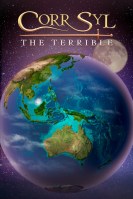


 rr Syl and Rhya Bright are Tsaeb warriors. They are rabbit descendants with gray fur, auburn eyes, and long whiskers. Like all Tsaeb, they love humor. Corr is a becoming a master of the corny one-liner–If at first you don’t succeed, don’t try skydiving—that’s Corr.


 Arizona State Library 2014 OneBookAZ Teen Literature.



 GarryRogers Nature Conservation