6,000 grizzly bears left–End the Transport of Canadian Animal Hunting ‘Trophies’

“Air Canada and WestJet have banned the transport of big game out of Africa, but continue to allow the transport of Canadian animal ‘trophies’, such as black bears, grizzly bears, polar bears and wolves.

“Sign and share this petition to tell Air Canada and WestJet they should be taking a stand against trophy hunting in their own backyard.

“On August 4, Air Canada and WestJet banned the shipment of big game trophies after the brutal killing of Cecil the lion in Zimbabwe in early July drew international attention and sparked a media outcry.

“What about in our own backyard?

“British Columbia is one of the last refuges of the grizzly bear, which once roamed widely across North America. Though listed as a species of special concern by the Committee on the Status of Endangered Wildlife in Canada, the province still allows a Limited Entry Hunt for grizzly bear trophy hunters twice a year.”  Sourced through Scoop.it from: exposingthebiggame.wordpress.com

GR:  Habitat loss is causing a fall in the numbers of most wildlife species.  Grizzly bears and other species do not need additional losses merely for entertainment or memento collections.  The hunters I know could easily switch their goals and become avid supporters of wildlife.  They could look at the causes of declining numbers and ask their local, state, and national representatives to begin combating those causes.

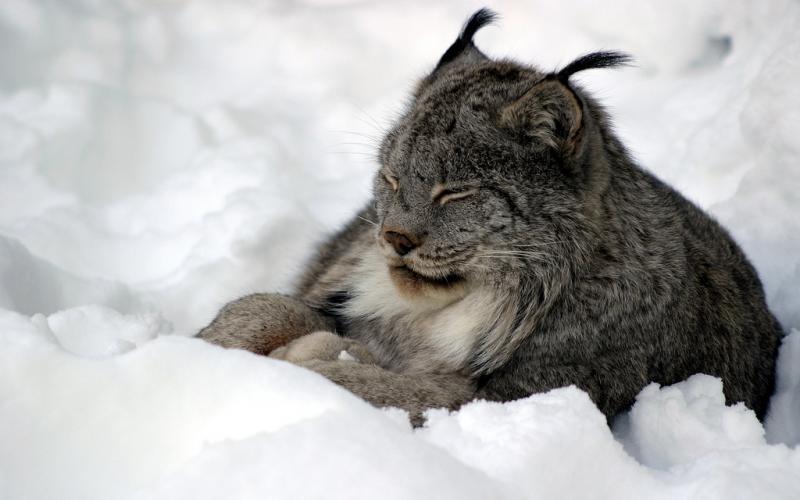
Lawsuit Filed to Protect Canada Lynx from Trapping Deaths, Injuries in Maine

Government natural resource managers indeed do a haphazard job even when they aren’t purposefully mismanaging for the benefit of special interests.

Exposing the Big Game's avatarExposing the Big Game

https://awionline.org/content/lawsuit-filed-protect-canada-lynx-trapping-deaths-injuries-maine

Monday, August 17, 2015

Lawsuit Filed to Protect Canada Lynx from Trapping Deaths, Injuries in Maine . Photo by Carl Robidoux.AUGUSTA, ME—Wildlife conservation and animal welfare organizations filed a lawsuit today against the US Fish and Wildlife Service (USFWS) for allowing trappers in Maine to seriously injure and kill Canada lynx, a federally protected cat. Plaintiffs include the Animal Welfare Institute (AWI), the Center for Biological Diversity, and the Wildlife Alliance of Maine (WAM).

Each year Maine trappers targeting coyotes, foxes, mink and other furbearing wildlife seriously injure and kill Canada lynx, one of the rarest wild cats in the United States. Because lynx are protected under the Endangered Species Act (ESA), the state cannot authorize such “incidental” harm to lynx without an incidental take permit issued by the USFWS. Today’s lawsuit challenges the USFWS’ permit issued to the Maine Department of Inland Fisheries and Wildlife last year, which was intended to cover the state’s trapping programs.

“I’m outraged that endangered lynx continue…

View original post 595 more words

Dolphin health predicts human health

Dolphins are known to marine biologists as sentinel animals, if they are ailing, we humans may be next. The Indian River Lagoon, an ecologically diverse estuary that covers 40 percent of Florida’s east coast, is ailing. The area is home to a large human population who live near its shores and plays a significant part in the area’s economy. The lagoon’s nitrogen-saturated waters—due to fertilizer run-off and other pollution—is likely promoting the algae blooms that are toxic to marine mammals and birds.

Florida Institute of Technology assistant professor Spencer Fire and researchers from lead agency Georgia Aquarium and other conservation partners recently completed a study to better understand the health of Atlantic bottlenose dolphins in the IRL, and the data collected from the dolphins is expected to help researchers understand how toxic algal blooms can harm wildlife.  Sourced through Scoop.it from: phys.org

GR:  Another innocent canary in our exploding coal mine.

Zen for Rhinos

Vietnam is the country responsible for the most demand in rhino horn.

75% of Vietnam is Buddhist.

Recently the International Buddhist Confederation (IBC) announced they would actively promote guidelines and awareness toward the illegal and immoral use of rhino horn.

According to the IBC newsletter, “We should move from Compassion to Action…putting forth the need for a pioneering Buddhist initiative that translates Buddha’s teachings of compassion and wisdom into action for the good of all sentient beings.”

Vietnam’s Buddhist leadership has agreed to launch a comprehensive public outreach campaign against the use of rhino horn on the grounds that it is steeped in violence towards animals, biodiversity and human beings (poachers, rangers, and the victims of illegal trafficking in drugs, arms and people).

It’s consumption therefore is unacceptable for any Buddhist and has to stop.  Sourced through Scoop.it from: fightforrhinos.com

8 incredible animals being hunted into extinction

Along with habitat destruction, hunting and the wildlife trade could put an end to the existence of these great creatures.  Sourced through Scoop.it from: www.treehugger.com

Wildlife Weekly Wrap-Up

Idaho Says It Won’t Kill Wolves in the Frank Church this Winter: Yesterday, the Forest Service announced that Idaho Department of Fish and Game (IDFG) will not engage in any wolf killing in the federally-protected Frank Church-River of No Return…  Sourced through Scoop.it from: www.defendersblog.org

Mercury Contamination of Arizona Fish

#Mercury #Contamination of #Fish in Bartlett Lake, Arizona

Bass - Largemouth

Largemouth Bass

Channel cat

Channel Catfish

Here is another threat to Arizona wildlife. Because it threatens humans, the state government is acknowledging it publicly. According to an email sent this morning by the Arizona Game and Fish Department (AZGFD), “the Arizona Department of Environmental Quality (ADEQ), in association with the AZGFD, has issued a fish consumption advisory recommending that people limit consumption of channel catfish and largemouth bass caught from Bartlett Lake [an artificial reservoir on the Verde River] in Maricopa County. ADEQ is issuing this advisory because recent fish tissue samples from Bartlett Lake contained elevated levels of mercury.”

“ADEQ recommends that adults limit consumption of channel catfish and largemouth bass to 2.4 ounces (uncooked weight) per week and children 12 years of age and under limit consumption to two ounces per month (uncooked weight). 
This advisory does not limit the use of this water body for fishing, bird watching, swimming, or other recreational uses. In general, the level of contaminants in fish is several folds higher than levels found in water.”

“Any health risks associated with eating fish from this advisory area are based on long term consumption and are not representative of risk from eating fish occasionally.  Fish are an excellent source of protein and can be an important part of a healthy, diverse diet as they are low in saturated fat and high in omega-3 fatty acids.  The American Heart Association recommends that individuals eat at least two fish or seafood meals weekly.”

Bald-Eagle-And-BabiesGR:  Unfortunately, wildlife eat these mercury-contaminated fish their whole lives. Unlike humans, they can’t “limit their consumption.” Mercury pollution is nothing new in Bartlett Lake or many other streams and lakes in Arizona.  It and the many other pollutants that wash into the State’s waters are helping destroy Arizona wildlife. The Bass and Catfish covered in the advisory are not native Arizona species, but they are often eaten by native amphibians, birds, fish, mammals, snakes, and turtles that live in around the lake. Thus, mercury works its way into the food chain and causes illness and shortened lives. Bald Eagles, for example have mercury in their eggs and tissues (Driscoll et al. 2006).  According to Robin Silver, Southwest Center for Biological Diversity, this mercury contamination is “worrisome.” You could also call it “harmful” or “deadly.”

What is the Origin of Mercury?

Mercury washes into streams and lakes after exposure by floods, mining, and construction.  Some probably comes from roads and urban wastes around and upstream from the lake.  And some comes from power plants in and around Arizona:  “Mercury is one of the most harmful pollutants faced by fish and wildlife. Toxic mercury is released from coal burning power plants across the country and accumulates in rivers, lakes, and forests.” — National Wildlife Federation.

Mercury is just one of many pollutants that humans feed into the Verde River and Bartlett Lake. Worldwide, human wastes are a major cause of wildlife disease and decline.  ADEQ makes little or no effort to regulate the sources of pollutants, but as wildlife declines and extinctions become public knowledge, the agency may have to step up and face the developers and . . . . Well, that’s not going to happen.  Not until private citizens force their political representatives to ignore their donors and future employers and direct the agency to say “enough is enough” without fear of retribution.

References

  • Driscoll, et al. 2006. Conservation assessment and strategy for the Bald Eagle in Arizona. Tech Rept 173, Nongame and Endangered Wildlife Program, AZGFD, Phoenix, AZ, 69 p.
  • ADEQ. 2015. Arizona Fish Consumption Advisories – July 2015. Lists 15 waterbodies of concern.

Endangered and Threatened Arizona Species Qualifying for Endangered-Species-Act Protection

A Small Subset of Arizona’s #EndangeredSpecies

The Arizona Game and Fish Department provided this photo of an endangered ocelot spotted Feb. 8, 2011, in the Huachuca Mountains of southeastern Arizona.

The Arizona Game and Fish Department provided this photo of an endangered ocelot.

Many Arizona species with shrinking populations will never receive protection under the U. S. Endangered Species Act.  Some are doing well outside Arizona, but the principal reason for the absence of protection is that many Arizona species have not been identified. Of those that biologists have identified, most have not been studied in enough detail to know how well they are doing. This tragic lack of data is true of most wild species worldwide.

Click here for lists of some of Arizona’s other endangered species.

According to the U. S. Fish and Wildlife Service (FWS), the list below, updated 02/13/2015,

  • shows listed species or populations believed to or known to occur in Arizona
  • does not include experimental populations and similarity-of-appearance listings.
  • includes species or populations under the sole jurisdiction of the National Marine Fisheries Service.

The list includes 21 plants and 44 animals.  The links for the species scientific names connect to official details for the listing. The linked pages include maps and some photos.  More species photos and other information are found at:  FWS Digital Media Library. However, the best resource for photos is a simple Google Image search.

E = Endangered

T = Threatened

Arizona #Endangered and #Threatened Animals (44)

     ..
E Ambersnail, Kanab Entire (Oxyloma haydeni kanabensis)
E Bat, lesser long-nosed Entire (Leptonycteris curasoae yerbabuenae)
E Bobwhite, masked (quail) Entire (Colinus virginianus ridgwayi)
T Catfish, Yaqui Entire (Ictalurus pricei)
E Chub, bonytail Entire (Gila elegans)
E Chub, Gila Entire (Gila intermedia)
E Chub, humpback Entire (Gila cypha)
T Chub, Sonora Entire (Gila ditaenia)
E Chub, Virgin River Entire (Gila seminuda (=robusta))
E Chub, Yaqui Entire (Gila purpurea)
E Condor, California Entire, except where listed as an experimental population (Gymnogyps californianus)
T Cuckoo, yellow-billed Western U.S. DPS (Coccyzus americanus)
E Ferret, black-footed entire population, except where EXPN (Mustela nigripes)
E Flycatcher, southwestern willow Entire (Empidonax traillii extimus)
T Frog, Chiricahua leopard Entire (Rana chiricahuensis)
T gartersnake, northern Mexican  (Thamnophis eques megalops)
E Jaguar U.S.A(AZ,CA,LA,NM,TX),Mexico,Central and South America (Panthera onca)
E Minnow, loach Entire (Tiaroga cobitis)
E Mouse, New Mexico meadow jumping  (Zapus hudsonius luteus)
E Ocelot U.S.A.(AZ, TX) to Central and South America (Leopardus (=Felis) pardalis)
T Owl, Mexican spotted Entire (Strix occidentalis lucida)
E Pikeminnow (=squawfish), Colorado Entire, except EXPN (Ptychocheilus lucius)
E Pronghorn, Sonoran Entire (Antilocapra americana sonoriensis)
E Pupfish, desert Entire (Cyprinodon macularius)
E Rail, Yuma clapper U.S.A. only (Rallus longirostris yumanensis)
T Rattlesnake, New Mexican ridge-nosed Entire (Crotalus willardi obscurus)
E Salamander, Sonora tiger Entire (Ambystoma tigrinum stebbinsi)
T Shiner, beautiful Entire (Cyprinella formosa)
T Snake, narrow-headed garter  (Thamnophis rufipunctatus)
E Spikedace Entire (Meda fulgida)
T Spinedace, Little Colorado Entire (Lepidomeda vittata)
T springsnail, San Bernardino Entire (Pyrgulopsis bernardina)
E Springsnail, Three Forks Entire (Pyrgulopsis trivialis)
E Squirrel, Mount Graham red Entire (Tamiasciurus hudsonicus grahamensis)
E Sucker, razorback Entire (Xyrauchen texanus)
E Sucker, Zuni bluehead  (Catostomus discobolus yarrowi)
E Tern, California least  (Sterna antillarum browni)
E Topminnow, Gila (incl. Yaqui) U.S.A. only (Poeciliopsis occidentalis)
T Tortoise, desert U.S.A., except in Sonoran Desert (Gopherus agassizii)
T Trout, Apache Entire (Oncorhynchus apache)
T Trout, Gila Entire (Oncorhynchus gilae)
E Vole, Hualapai Mexican Entire (Microtus mexicanus hualpaiensis)
E Wolf, Mexican gray Entire, except where an experimental population (Canis lupus baileyi)
E Woundfin Entire, except EXPN (Plagopterus argentissimus)

Arizona Endangered and Threatened Plants (21)

E Blue-star, Kearney’s (Amsonia kearneyana)
E Cactus, Acuna (Echinomastus erectocentrus var. acunensis)
E Cactus, Arizona hedgehog (Echinocereus triglochidiatus var. arizonicus)
E Cactus, Brady pincushion (Pediocactus bradyi)
T Cactus, Cochise pincushion (Coryphantha robbinsiorum)
E Cactus, Fickeisen plains (Pediocactus peeblesianus fickeiseniae)
E Cactus, Nichol’s Turk’s head (Echinocactus horizonthalonius var. nicholii)
E Cactus, Peebles Navajo (Pediocactus peeblesianus var. peeblesianus)
E Cactus, Pima pineapple (Coryphantha scheeri var. robustispina)
T Cactus, Siler pincushion (Pediocactus (=Echinocactus,=Utahia) sileri)
E Cliff-rose, Arizona (Purshia (=Cowania) subintegra)
T Cycladenia, Jones (Cycladenia humilis var. jonesii)
T Fleabane, Zuni (Erigeron rhizomatus)
E Ladies’-tresses, Canelo Hills (Spiranthes delitescens)
E mallow, Gierisch (Sphaeralcea gierischii)
E Milk-vetch, Holmgren (Astragalus holmgreniorum)
E Milk-vetch, Sentry (Astragalus cremnophylax var. cremnophylax)
T Milkweed, Welsh’s (Asclepias welshii)
T Ragwort, San Francisco Peaks (Packera franciscana)
T Sedge, Navajo (Carex specuicola)
E Water-umbel, Huachuca (Lilaeopsis schaffneriana var. recurva)

Extinction Resources: Information, Opinion, Ideas, & Questions

Extinction Information Resources

PassengerPigeon

Passenger Pigeon

Stopping human-caused extinction of Earth’s plant and animal species is the greatest challenge of our time. This post provides access to the latest articles on extinction. The first item (Ceballos et al. 2015) is the latest detailed report on what we know and how we acquired the information.

 Ceballos, Gerardo, Paul R. Ehrlich, Anthony D. Barnosky, Andrés García, Robert M. Pringle, and Todd M. Palmer. 19 June 2015. Accelerated modern human–induced species losses: Entering the sixth mass extinction. Science Advances Vol. 1, no. 5 (e1400253, DOI: 10.1126/sciadv.1400253). Corresponding author. E-mail: gceballo@ecologia.unam.mx.

More than a thousand recent articles are linked to my blog (https://garryrogers.com/blog):

Causes of Extinction

My blog covers the things that people do to cause extinctions and reduce biodiversity. These deeds of ours are woven into individual and our collective habits and beliefs. Stopping them will alter our society and our culture. It will be difficult. Our population must be reduced, our food choices must change, and our resource harvest must decline. Nothing less will succeed. Search the blog using the following terms for recent reports:  Burning, Coal, Construction, Deforestation, Desertification, Energy, Farming, Fishing, Fracking, Grazing, Hunting, Invasive Species, Logging, Mining, Oil, Pesticides, Pet Trade, Pollution, Population, Roads, and Soil.

Climate change will become the major cause of extinction.  Here’s its search link on my blog:  Climate Change.

For more reading, my Internet newsletters include a wider variety of articles than my blog.