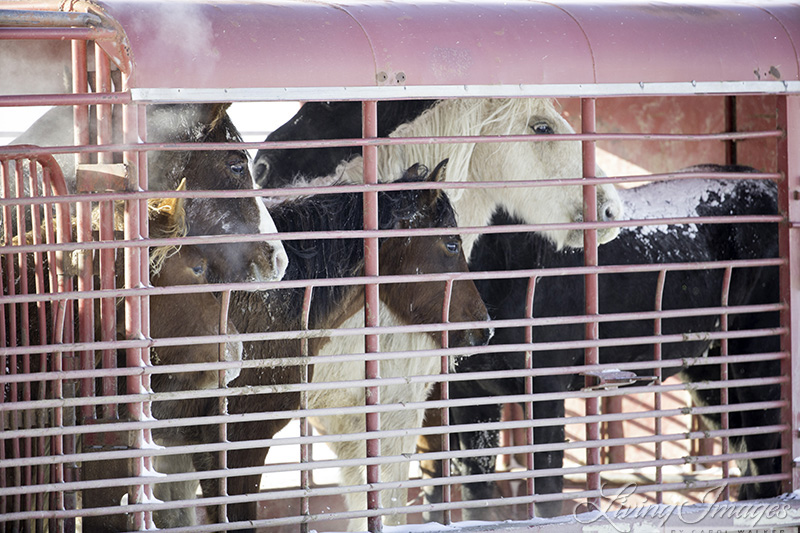
Forbes Billionaires Top US Welfare Ranchers List

welfare ranchingWhat do the Koch Brothers, Ted Turner, and the Hilton family have in common with Cliven Bundy? They’re among a group of powerful welfare ranchers that take from the public and keep for themselves.

Source: dailypitchfork.org

GR:  Effective lobbying to control Congress requires lots of money. So it’s no surprise that much of the subsidized rangeland is owned by the ultra-rich.
The photograph illustrates one of the devastating aspects of ranching on the western US ranges. After rains, ranchers haul in livestock and water so the cows can clean up the weeds and grasses that spring up. When the new growth is gone, it’s back to the feedlot. The problem is that wild horses, pronghorn antelope, deer, rabbits, mice and many more needed that flush of growth to survive. It’s not surprising that their numbers are declining.

Benefits of Removing Livestock from Rangelands to Sequester Carbon

f623b855-d229-4a32-abb2-770f8b14a604George Wuerthner:  “Rangelands make up a large proportion of the Earth’s surface, and the soils hold a significant amount of sequestered carbon. Rangelands are estimated to contain more than one-third of the world’s above and below ground carbon reserves.[i] As a consequence, there is interest in determining the potential for soil carbon sequestration in rangeland soils, and whether livestock grazing helps or hinders this sequestration.

“Given the existing condition of many rangelands, the biggest concern is maintaining current carbon, and avoiding losses through soil erosion, degradation of plant productivity and other changes that lead to soil carbon losses. In other words, the best way to reduce CO2 emissions from rangelands globally is to reduce rangeland degradation. Since livestock grazing is frequently the major source of rangeland degradation, a reduction in grazing pressure, can in many ecosystems, potentially preserve more soil carbon”  Source: www.thewildlifenews.com.

GR:  Excellent article.  Cites evidence showing that livestock grazing reduces soil CO2.  Moreover, domestic grazers remove plants that wildlife need, and they damage soil microorganisms that enrich and stabilize the soil and help block weed invasions.

Study: Livestock Grazing on Public Lands Cost Taxpayers $1 Billion Over Past Decade

cattleRanchers I’ve known receive public funds to build livestock management facilities on public lands. When ranchers do the work themselves, the income can equal income from cattle sales. Only the ranchers benefit from the facilities. At the same time, the ranchers complain about government regulations. They threaten to take their guns to town, and sometimes they do go armed to meetings with BLM and FS managers.

R.T. Fitch's avatarStraight from the Horse's Heart

Information supplied by The Center for Biological Diversity

BLM’s Welfare Ranching Bedfellows come with a huge price tag…

WASHINGTON— A new analysis  finds U.S. taxpayers have lost more than $1 billion over the past decade on a program that allows cows and sheep to graze on public land. Last year alone taxpayers lost $125 million in grazing subsidies on federal land. Had the federal government charged fees similar to grazing rates on non-irrigated private land, the program would have made $261 million a year on average rather than operate at a staggering loss, the analysis finds.

Click Image to Download Full Report Click Image to Download Full Report

The study, Costs and Consequences: The Real Price of Livestock Grazing on America’s Public Lands, comes as the Obama administration prepares Friday to announce grazing fees for the upcoming year on 229 million acres of publicly owned land, most of it in the West. The…

View original post 444 more words

Westerners want to save the sage-grouse (and so do I) – Defenders of Wildlife Blog

In the West we still have a chance to conserve sage-grouse, the Sagebrush Sea and all its inhabitants.

“A new poll conducted by Tulchin Research for Defenders of Wildlife found that the majority of voters in western states want to see sage-grouse protected, even if that means listing the bird under the Endangered Species Act (ESA). Add to that one New Jerseyan. I didn’t know what a sage-grouse was before I began working for Defenders of Wildlife. Now I consider myself, like the majority of westerners, an advocate for their protection.

“Sage-grouse are a special bird. They have a long and storied history in our country and are an iconic ambassador of a quintessentially western landscape, the Sagebrush Sea. Today, greater sage-grouse range has been reduced by nearly half and populations have declined by up to 90 percent.”

Source: www.defendersblog.org

GR:  Beautiful birds.  In the western U. S., saving any part of nature is a struggle.  During the past century of human occupation, the sagebrush landscape has taken a severe beating.  Invasive plants and relentless livestock grazing have destroyed much of the original vegetation.  Saving the sage-grouse is a battle that, if it is won, will save some of the native plants and animals that create the magnetic charm of the sagebrush sea’s quiet solitude.

PEER – BLM Grazing Reform

GR:  PEER’s interactive maps give you BLM’s land health assessment, and let you zoom in to see actual conditions on the ground.

In 2012, BLM respond to a PEER statement that grazing allotment health was not accurately reported (http://www.blm.gov/wo/st/en/prog/grazing.html). The BLM did not explain why many allotments described as healthy have large areas that have been overgrazed and trampled excessively.

A highly degraded allotment in OR that BLM records as "All Standards Met" (Photo from PEER.org.

A highly degraded allotment in OR that BLM records as “All Standards Met” (Photo from PEER.org).

Using the Peer maps, citizen naturalists can visit nearby BLM grazing allotments and perform their own assessment.  Weeds, trampled shrubs, barren trails, and more are visual testaments to excessive cattle use.  Once problems are reported, BLM will make necessary corrections.

Thanks to Ralph Maughan of The Wildlife News for spotting the PEER maps.

The following is from PEER.org.

“On more than 250 million acres of public lands in the American West, grazing by domestic livestock constitutes by far the most widespread human-caused impact on fundamental range conditions, including habitat quality, riparian functioning, and endangered species. More extensive than the impacts of logging and mining combined, commercial livestock grazing exacts an enormous toll on native ecosystems and wildlife throughout the American West. It is a contributing factor to the endangerment of 22 percent of all federally listed threatened and endangered species, and a major contributor to non-point source water pollution and desertification.

“The U.S. Bureau of Land Management (BLM), the nation’s largest public lands-managing agency and administrator of grazing permits, is required to monitor the ecological impacts of grazing on its lands. BLM conducts evaluations of whether its grazing allotments meet “Land Health Standards” (LHS), but until now the results of these evaluations have been largely inaccessible to those outside the agency and their results have escaped independent review.”

Source: www.peer.org


Wild Horses a Problem for Ranchers? Wolves Could Fix That

I agree with Mr. Conniff’s response that predators could control the horse problem. First, the cattle have to go. The cattle use range resources that should support pronghorn and other wildlife species.
Cattle are probably as adapted to predators as other species, but as a preferred species, cattle numbers are artificially high. The result is that cattle, and more recently horses, have overused the range and eliminated other species.
Analysts report that cattle numbers on the ranges have been declining, and currently represent a tiny fraction of the national economy. No significant number of jobs or other economic or political issues would be impacted if we shutdown cattle ranching. Perhaps it’s time that we hired ranchers to become conservationists and work to maintain the range for wildlife. The ranchers I’ve met claim to know and care for the land. So why not suspend cattle grazing on the public lands and hire the ranchers as stewards of the land. This would give ranchers stable income, and it would benefit the national economy.

Richard Conniff's avatarstrange behaviors

wild_horses_0Today’s New York Times has a report on the wild horse population boom in the American West, and for once, I agree with the ranchers:  Bizarre federal policies over the last 40 years have caused wild horses to run out of control, causing rampant overgrazing while also running up out-of-control costs (currently $50 million a year) to house horses that have been taken off the land, but can’t be euthanized.

The federal policies are the result of misguided sentimental attitudes about a favored species, the same sort of attitudes that cause city people to feed feral cats in parks that would otherwise be havens for wildlife. If animal rights activists want to protect excess horses from being euthanized, or sold for meat, they should be picking up that $50 million cost of housing them, not taxpayers.

And here’s an idea for the ranchers: If you want to keep down the…

View original post 376 more words

BLM, Cattle, Wild Horses, and Biodiversity on Western U. S. Ranges

BLM and Biodiversity on Public Lands

Mustang photo by John Harwood

GR:  The U. S. Bureau of Land Management (BLM) protects livestock ranching interests while seeking to balance other public land uses. Public interest has forced BLM to remove and board cattle-competing wild horses and burros instead of thinning them. Today, BLM is boarding almost 50,000 horses and burros and the number is increasing. For 2013, the total cost was $7.8 million.

I love horses.  As an advocate for non-human animal rights and species equity, I also care about the other species sharing the public lands. Are we sacrificing vegetation, soil, and biodiversity in the western U. S. to protect cattle?  In consideration of the general decline of birds, frogs, insects, mammals, and turtles, is it time to give the BLM a new mandate?  Should we direct the BLM to give its highest priority to protecting diversity?
There is no end in sight for the cattle/wild-horse conflict.  According to Wild Hoofbeats, the BLM is planning a heavy 2014 Roundup Schedule for the Red Desert of Wyoming (Source for the following:  Wild Hoofbeats).

Mares rounded up in Salt Wells Creek in December 2013

“The BLM has finally released its roundup schedule for 2014:  On this schedule are three roundups in Wyoming:

  1. Adobe Town 8/20 – 8/24, plan to remove 177 wild horses
  2. Salt Wells Creek 8/24 – 8-28, plan to remove 228 wild horses
  3. Great Divide Basin 8/28 – 9/10,  plan to remove 541 wild horses

“This is despite having just rounded up and removed 586 wild horses from Salt Wells Creek and Adobe Town in December 2013.

“Looking at the numbers provided by the BLM, Great Divide Basin will be virtually zeroed out after this roundup and removal. The Appropriate Management Level (AML) for the area is 415-600 wild horses. At their May 2013 count they said there were 439 horses and they estimated that there would be 579 in the summer of 2014.  Removing 541 would be almost all,  if not all, of them.

“In Salt Wells Creek, the AML is 251-365. In their projected estimate before the 2013 roundup the BLM said there were 823 wild horses, they removed 586,  and they plan to remove 228. Even estimating a 20% population increase this year, this would bring the population below low AML.

“In Adobe Town, the AML is 610-800 wild horses. The BLM projected the population to be 624 in 2013, they removed 14 in 2013 and they plan to remove 177, Even estimating a 20% increase in population this year, this would bring the population below low AML.

“Currently, BLM is revising the Resource Management Plans for both the Rock Springs and Rawlins Areas (RMP). It is during the revision process AML’s can be changed to herd management areas and herd management areas can be changed to herd areas, allowing them to be zeroed out. This process has NOT happened yet.

“The BLM is acting precipitously, working to zero out Great Divide Basin and bringing Salt Wells Creek and Adobe Town below low AML before the RMP can be completed. Clearly, appeasing the Rock Springs Grazing Association is an “emergency” just like drought to the BLM. Despite lamenting the high cost of holding 50,000 wild horses in captivity (46 million dollars annually) in this roundup document, the BLM is determined to remove 2400 wild horses from their homes and possibly their families this year.

“Environmental Assessments for the roundups of the three herd management areas in Wyoming have NOT been issued or made available to the public for comment yet.  Please check back to see when these will be available for comment.”
Does Livestock Grazing Cause Plant Invasions?

By Garry Rogers

Livestock and Plant Invasions

Using natural landscapes for any purpose requires caution to prevent plant invasions.  An essential task for nature conservation is explaining this to the public.

Cattle in the Sonoran Desert.  Heavily trampled soil without soil microorganisms that can absorb and store moisture, convert solar energy to nutrients, increase plant root efficiency, and protect the soil surface from erosion and invasive plants. Photo by George Wuerthner.

Cattle in the Sonoran Desert. Heavily trampled soil without soil microorganisms that can absorb and store moisture, convert solar energy to nutrients, increase plant root efficiency, and protect the soil surface from erosion and invasive plants. Photo by George Wuerthner.

Most investigations of plant invasions assign responsibility to Humans.  In our ignorance, we introduce potentially invasive plants from foreign ecosystems, and then we disturb native ecosystems and help the introduced plants get established and spread.  We have learned that diseases, predators, competitors, and supportive soil microorganisms control plant growth.  Move plants to new locations where their natural controls aren’t present and they sometimes explode across the landscape.  Continue reading