Please Sign Petition to Stop Wildlife “Services” From Killing Canada Geese | Exposing the Big Game

“USDA Wildlife Services has been lethally removing Canada Geese from the Puget Sound area for 13 years under an interlocal agreement between several cities and entities within the region.  The geese are being rounded up in our parks and gassed to death or shot on Lake Washington, as well as elsewhere.  In 2013, nearly 1200 were killed by Wildlife Services in just King County alone.

“Many humane solutions mitigate conflicts with geese in urban areas.  These include reduction of populations through egg adding, use of OvoControl-G (a proven oral birth control method for geese), and sterilization.  Various other measures to cut conflicts include: landscape changes, goose deterrent products and control techniques, automated devices to clean up goose droppings, and education and public outreach on the need to stop feeding waterfowl in our parks.”

Please Sign Petition to Stop Wildlife “Services” From Killing Canada Geese | Exposing the Big Game.

Help save this critically endangered bird!

“Less than 500 are left, but if the government steps up to increase habitat protections we could save them. (23,536 signatures on petition)”

Source: www.thepetitionsite.com

This Francolin (Francolinus ochropectus) occupies two small areas in Djibouti in the horn of Africa.  It prefers dense African juniper habitat near the coast of the Gulf of Tadjora in the southern Sea of Aden.  Formerly abundant, the Francolin numbers were first reduced by hunting, and then more recently by destruction of the juniper woodland by livestock grazing and fuel-wood gathering.  Climate change appears to be involved too.

The Francolin is surviving in the dying juniper woodland and in less suitable neighboring vegetation. Please sign the petition to the Djiboutian Prime Minister to extend protections back over the Forêt du Day and establish captive breeding programs for the Francolin before this rare species disappears forever.

Captured Birds Fitted with “Geolocators” to Study Migration Flyways

“A new paper by Dr. Jeremy Ross from the University of Oklahoma describes the use of tiny devices strapped to birds’ backs called geolocators, which capture the individual migration routes of  lark sparrows in North America. By sensing the light levels, these backpacks can pinpoint the location of a bird anywhere in the world, even if retrieving the data-logger can sometimes pose a major problem.”

Source: newsofbird.com

GR:  Animal cruelty outside the lab?  Does the geolocator bother the bird at all? Is it irritating or physically limiting?  Were its capture and the geolocator installation traumatic? It seems unlikely that any bird would volunteer to carry a backpack for the rest of its life just so someone could satisfy his curiosity. Oh, you say the researchers are acquiring knowledge that can be used to protect birds?  So why are so many bird species declining? Could it choose, the bird might prefer that the researchers seek to find ways to preserve essential habitat and eliminate the herbicides and insecticides that poison its food.

Other animal research posts

Drought and Shrinking Western Wood Peewee Habitat

Western Wood Peewee (Contopus sordidulus) Takes Over West Lawn

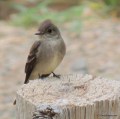
A new visitor to my lawn this spring, a Western Wood Peewee, has begun capturing the aerial insects on the west side of the house.  Two pairs of Black Phoebes (Sayornis nigricans) patrolled the yards last year.  Until four years ago, my pastures were irrigated and there was only one Phoebe pair in the yard.  Others hunted over the pastures and ponds.  Peewees sometimes perched on the pasture fence, but I never saw one in the yard before this year.  Now the pastures are all dry and some crowding is inevitable, but will three flycatcher families be too many?

The Western and Eastern Wood Peewees are very similar.  Both have relatively short legs and dull eye rings, but their songs are distinctive.  Of course the WWP is best :).

This Peewee is ranked S5 by the Arizona Game and Fish Department, meaning that it is not in danger of extinction.  As the regional drought continues, however, this and many other species that prefer riparian areas may begin to decline.  Read more about Arizona bird conservation status.

Consumers: Refuse To Purchase Captive Birds

Cruelty Of International Bird Trade People are fascinated at the sight and chirping of birds in pet shops and are willing to pay huge sums just to own an exotic species. But “bird lovers” show hard…

See on havehest.wordpress.com

Idaho Sage Grouse Decision Looms

Don’t Let Idaho Wolf Management Become a Distraction from Idaho’s Sage Grouse Management

Reblogged from article by Ken Cole in The Wildlife News

“With all of the horrible things happening in Idaho’s wolf management, it is hard to focus on other, perhaps more, important issues facing Idaho wildlife.  With a deadline of 2015 bearing down for the US Fish and Wildlife Service (USFWS) to make a decision about whether the greater sage grouse should receive protection under the Endangered Species Act, the BLM and US Forest Service are engaging in a process to update the land use plans that define objectives and future management for sage grouse on the respective BLM districts and National Forests.  What is happening now is a giant shell game that will result in further declines in sage grouse and their habitat. Continue reading

Cambridge Declaration on Consciousness

Cambridge Declaration on Consciousness*

Believing that non-human consciousness exists is like believing the Earth orbits the Sun.

1-20041127-0411__2728

Oliver

The Cambridge Declaration summarizes and affirms non-human consciousness by a group of respected scientists.  The Declaration clearly states that the neocortex, the thin layer of cells covering mature mammalian brains is unnecessary for consciousness.

In my novel Corr Syl the Warrior, I assumed that consciousness appeared among the first complex creatures 500 million years ago and evolved and expanded.  It probably did.  But I also assumed that the process would lead to intelligence similar to human intelligence.  I made this unimaginative assumption so that I could stage conversations between species.  We will probably discover that divergent paths of evolving intelligence will always limit interspecific communication.

The arguments contained in the Declaration are founded upon empirical evidence.  Of course, questions remain, and pseudo-scientific deniers are always with us.  Nevertheless, the Declaration gives us scientific justification for humane treatment of non-humans.  The Declaration follows as originally published.

Continue reading

Is Outdoor Observation Still Relevant for Nature Conservation?

Nature Conservation Needs More Observers

Ben Kilham argues that simple observations are still an important component of conservation science.  Everyone can learn to recognize birds and butterflies and note when and where they’re seen.  This is the argument I made in the Arizona Wildlife Notebook.  The notebook gives Arizona residents and visitors a practical tool for recording animal sightings.

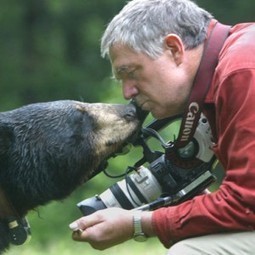
As conservation science increasingly draws from sophisticated models and genomics, does natural history still have relevance? Benjamin Kilham, a dyslexic who has made significant contributions to bear research, builds a powerful case for field observation in his book, “Out on a Limb.”

See on blog.nature.org

Legislative Effort to Reduce Drought Impact on California Birds

Step in the Right Direction to Reduce Drought Impact on California Birds

February 19th, 2014 · by Garrison Frost
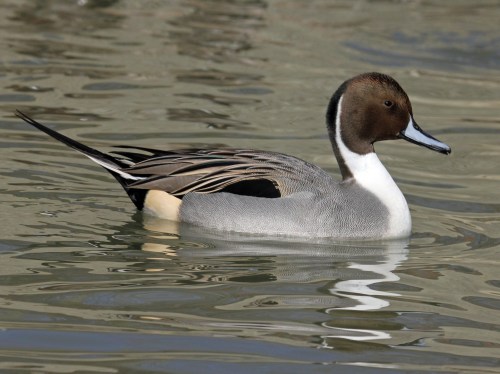
Northern Pintail (Wikimedia Commons)

Northern Pintail (Wikimedia Commons)

<

p>Audubon California today expressed support for new legislation authored by California Senate Leader pro tem Darrell Steinberg and Assembly Speaker John Pérez to address impacts from the California drought. The legislation would allocate about $680 million toward a variety of programs to alleviate the impacts of the drought on communities, farmers and the environment that supports birds.

“California’s drought impacts everyone, and the legislative package announced today represents an effort to offer support to the hardest hit areas,” said Brigid McCormack, executive director of Audubon California. “We’re pleased to see these steps being taken to alleviate the tremendous human toll that the drought is taking on families and the economy, especially in disadvantaged communities. We’re also pleased that the bill considers urgent bird habitat needs – and would certainly like to see more attention paid in this area.”

McCormack noted that while the drought relief package offers a number of short-term solutions, it does not create the same kind of long-term problems created by legislation recently passed out of the House of Representatives. That bill would upend longstanding agreements on water policy, suspend Endangered Species Act protections and roll back the restoration of the San Joaquin River. A subsequent bill out of the Senate showed more promise, and Audubon California is looking forward to working with the authors on that bill.

California’s network of refuges and wildlife areas have been hit particularly hard by the drought and McCormack noted her organization’s interest in seeing more water allocated to these vital habitats for birds.

“Central Valley refuges depend on full allocations of water to support the millions of birds that need them for breeding and migration,” said McCormack. “Congress made a promise to these natural places that it needs to keep.”

About Audubon California
Audubon California is building a better future for California by bringing people together to appreciate, enjoy and protect our spectacular outdoor treasures. With more than 50,000 members in California and an affiliated 48 local Audubon chapters, Audubon California is a field program of the National Audubon Society.

More information is available at http://www.ca.audubon.org.