Deer Decline in Western U. S. as Drought Continues

Deer in Arizona

Mule Deer Mother and Daughter at Coldwater Farm (Garry Rogers April, 2014)

Mule Deer Mother and Daughter at Coldwater Farm (Garry Rogers April, 2014)

The Arizona deer “harvest” is declining as the drought deepens.  Though the Arizona Game and Fish Department now places no limits on the number of deer hunting licenses sold, the number of deer that hunters kill is shrinking as the deer population shrinks.

Last year, wildlife managers warned that deer would start showing up in towns where there are irrigated lawns and gardens.  That certainly was true for Coldwater Farm where the first repeated deer visit occurred and a fawn was born.  More deer are coming to the Farm this year, and we are expecting more births.

The deer are coming for water and to eat our flowers, vegetables, and weeds.  We are delighted, and would rather see deer than tomatoes.  If necessary, we can fence our garden. There are two problems:  1) we do not want to spoil the deer ability to live in the forest when the drought fades (if it does).   2) Some of our neighbors prefer tomatoes over deer and may call Animal Control (Wildlife Services?) to remove the deer.

Problem 1) is insignificant.  Because of local geology, the river has carried surface water through the site of Coldwater Farm for tens of thousands of years.  Deer have probably come for the water and riparian vegetation many times in the past and returned to the chaparral and forest when rains returned.

Problem 2) is more significant.  Already two neighbors report “shooing” deer from their garden.  Climate forecasts predict that our drought will continue for many years.  Deer could join the smaller mammals to become a permanent part of our small town biosphere.  How long before Humans demand that the deer are removed?  What will I have to do to protect their right to water and food?

Deer in Colorado

“The number of deer in Colorado and other parts of the West is rapidly declining, including a 36 percent drop among mule deer in the Centennial State from 2005 through last year, and a reported drop of at least 10 percent throughout the region.

“Brutal winters followed by extremely dry summers, loss of habitat due to commercial and residential development and predators like coyotes and mountain lions are factors in the decline, Matt Robbins, spokesman for Colorado Parks and Wildlife, told FoxNews.com.

“It’s a culmination of things,” Robbins said. “Weather has absolutely been a factor; we’ve had very harsh winters and then very dry summers, and we’re always very conscious of chronic wasting disease, loss of habitat, highway mortalities, predators and oil and gas development.”
Arizona Game & Fish Dept Seeks Comments on Hunt/Capture Regs

Comments sought on reptile, raptor, amphibian and mollusk regulations

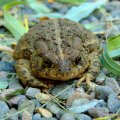
Rocky Mountain Toad

Rocky Mountain Toad

(This information is from a June 6, 2014 Email from AZGFD.)

The Arizona Game and Fish Department (AZGFD) is seeking public comments on draft 2015-2016 regulations for reptiles, raptors, crustaceans and mollusks, and amphibians. You may comment  from June 6 through July 11, 2014. 
.
The Rocky Mountain Toad in the photo is not imperiled, but how does someone justify killing or capturing 10 (the proposed limit)?..
.
(GR:  The regulations apply to species that the AZGFD itself considers imperiled and critically imperiled.  Permitting killing and capturing will only increase the likelihood of extinction.  For example, the regulations allow all licensed hunters to capture or kill four (4) Rosy Boas (Lichanura trivirgata), a species considered critically imperiled by AZGFD and “a species of concern” under the U. S. Endangered Species Act. Moreover, killing and capturing wild animals for fun is unethical, cruel, and a violation of animal rights.)
.
Special:  The proposed changes being considered for the 2015-2016 commission orders include:
  • In Commission Order 25, a reduced bag limit for the nonresident peregrine falcon hunt, adjustment of the hunt units for ferruginous hawks, and clarification of peregrine falcon harvest capture age.
  • In Commission Order 43, a reduced bag limit for Sonora mud turtle from four to two (possession limit remains the same), and changing “Limited Weapon” season to “Limited Weapon Hand or Hand-held Implement” season, which opens more of the state to traditional means of hunting reptiles.

To see the draft commission orders for most species, click the following links:

For more information, call (623) 236-7507. Comment by e-mail to: CommOrd25@azgfd.gov  (Raptors); CommOrd41&43@azgfd.gov (Amphibians and Reptiles); and CommOrd42@azgfd.gov  (Crustaceans and Mollusks), or by mail to: Nongame and Endangered Wildlife Program, Arizona Game and Fish Department, 5000 W. Carefree Highway, Phoenix, Arizona 85086.

Help save the grasslands – Prescott, Arizona

A consortium of government agencies wants to hear from the public about its plan to try to protect and restore Central Arizona’s dwindling grasslands.

The meeting is in Prescott, AZ on Thursday, June 5.

“The health of these grasslands is critical for a number of species,” said Dee Kephart, habitat specialist for the Game and Fish Department’s Region 3 office.

The agencies signed the grasslands strategy in 2010 and update it every year so they can work together on common goals. The strategy covers about 750,000 acres and uses pronghorn antelope as an indicator species about the health of local grasslands.

“Pronghorn are an ideal species to examine because they are so closely tied to this type of habitat,” Kephart said. “They are heavily dependant on their eyesight, so open spaces are critical.”

North America’s central grasslands are considered one of the most threatened ecosystems on the continent and in the world, the strategy notes.

See on www.prescottaz.com


Drought and Shrinking Western Wood Peewee Habitat

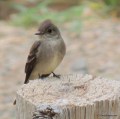
Western Wood Peewee (Contopus sordidulus) Takes Over West Lawn

A new visitor to my lawn this spring, a Western Wood Peewee, has begun capturing the aerial insects on the west side of the house.  Two pairs of Black Phoebes (Sayornis nigricans) patrolled the yards last year.  Until four years ago, my pastures were irrigated and there was only one Phoebe pair in the yard.  Others hunted over the pastures and ponds.  Peewees sometimes perched on the pasture fence, but I never saw one in the yard before this year.  Now the pastures are all dry and some crowding is inevitable, but will three flycatcher families be too many?

The Western and Eastern Wood Peewees are very similar.  Both have relatively short legs and dull eye rings, but their songs are distinctive.  Of course the WWP is best :).

This Peewee is ranked S5 by the Arizona Game and Fish Department, meaning that it is not in danger of extinction.  As the regional drought continues, however, this and many other species that prefer riparian areas may begin to decline.  Read more about Arizona bird conservation status.

Jaguar Habitat Protected in U. S.

Habitat for Jaguars in the United States Protected

Areas are Key to Reestablishing Rare Cats in the U.S.

Washington, DC – The U.S. Fish and Wildlife Service at last protected habitat deemed essential for the survival and recovery of the jaguar in the United States. The long-awaited rule designates 764,207 acres in Arizona and New Mexico as “critical habitat” for the imperiled cat. The jaguar was listed as “endangered” under the Endangered Species Act (ESA) throughout its range in 1972, and listed explicitly in the United States in 1997. Continue reading

Is Outdoor Observation Still Relevant for Nature Conservation?

Nature Conservation Needs More Observers

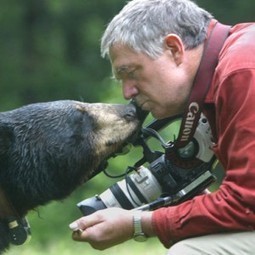
Ben Kilham argues that simple observations are still an important component of conservation science.  Everyone can learn to recognize birds and butterflies and note when and where they’re seen.  This is the argument I made in the Arizona Wildlife Notebook.  The notebook gives Arizona residents and visitors a practical tool for recording animal sightings.

As conservation science increasingly draws from sophisticated models and genomics, does natural history still have relevance? Benjamin Kilham, a dyslexic who has made significant contributions to bear research, builds a powerful case for field observation in his book, “Out on a Limb.”

See on blog.nature.org

For Arizona and New Mexico, Climate Change Produces Winter Fires

See on Scoop.itGarry Rogers Nature Conservation News (#EcoSciFi)

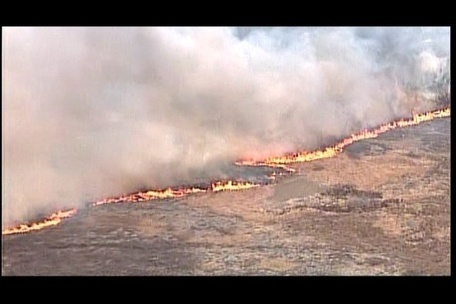
(500 acre wildfire burns near Isleta in New Mexico on February 19th. Image source: KOAT) It’s late winter in Arizona and New Mexico. Or at least that’s what the calendar says. During this time of y…

Garry Rogers insight:

Drought alone can increase fire frequency and size.  In AZ and NM, the continuing increase of fine fuel from alien weeds adds to the drought impact. 

See on robertscribbler.wordpress.com

Mexican Wolves (2) Will be Released in Arizona

 Releases to replace Mexican wolves illegally shot between 2011 and 2013

(from Arizona Game and Fish Department)

The U.S. Fish and Wildlife Service (FWS) and the Arizona Game and Fish Department (AZGFD) have initiated actions for the release of two Mexican wolves in Arizona to replace wolves illegally shot, as directed by the Arizona Game and Fish Commission in 2012 and to increase the genetic diversity of the wild population. Continue reading

Arizona Wildlife Notebook Second Edition

Arizona Wildlife Notebook Introduction

Base Layer for Notebook Cover

Base Layer for Notebook Cover

The second edition of my “Arizona Wildlife Notebook” will be off to the printer (CreateSpace) as soon as I finish the cover.  This edition has introductions and checklists for 12 groups of Arizona animal species:  Amphibians, ants, bats, birds, butterflies and moths, dragonflies and damselflies, fish, grasshoppers, lizards, mammals, snakes, and turtles.  Groups in bold type are new to the Notebook.  The introduction to each group covers the group’s conservation issues and provides references for printed and online field guides.  The checklist for each group includes scientific and common names and conservation status.  I alphabetized each checklist by scientific name, and I included an index for all the common names. Continue reading